Why Retail Chains Fail to Standardize Fixture Reuse Across Multi-Location Rollouts
According to a new Vonklipstein report, store shelving, gondolas, counters, and back-of-house fixtures get reused across multi-location rollouts all the time — but almost never because anyone planned it that way.
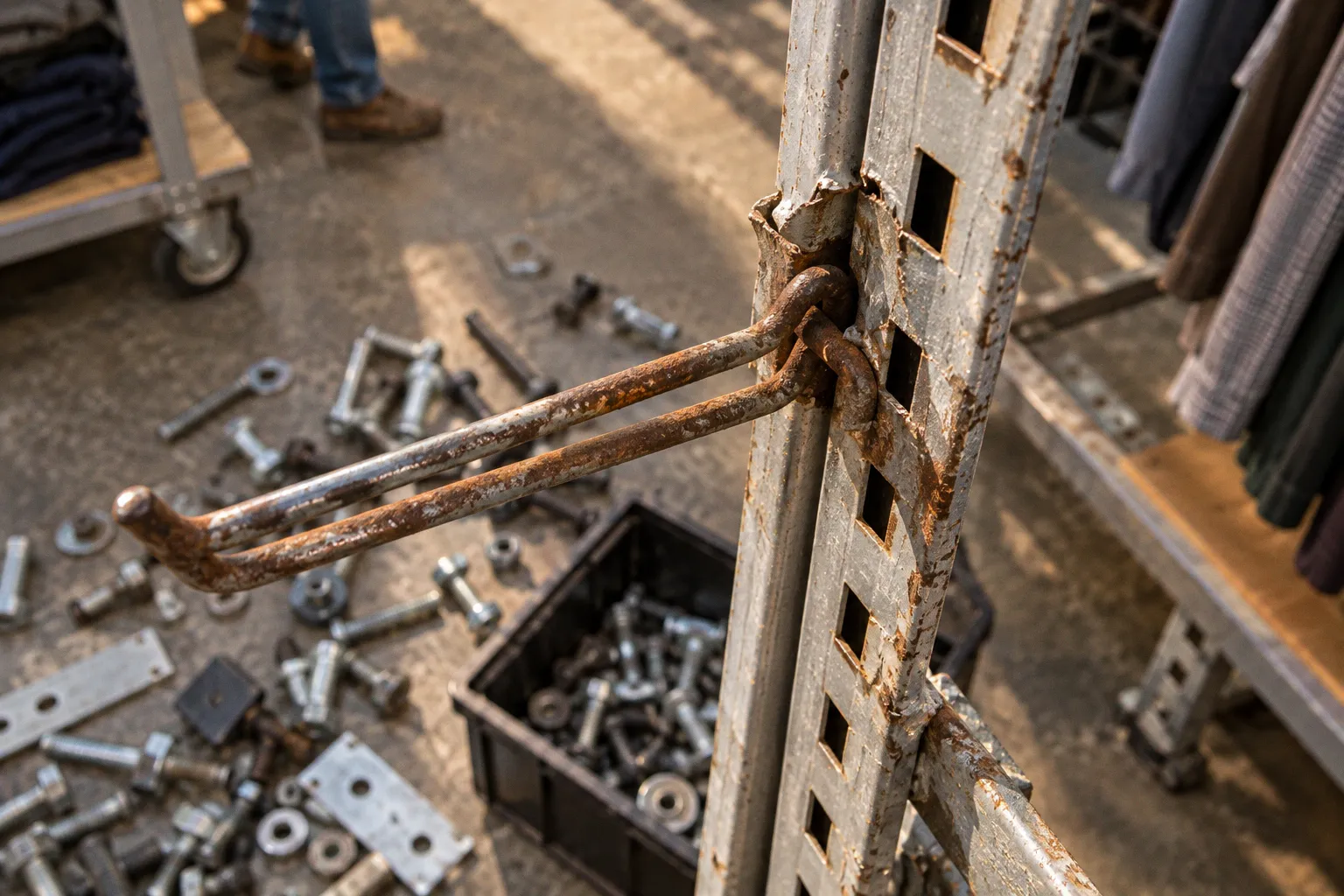
The driver is cost pressure on the next store opening, not a sustainability mandate, and that gap is exactly what's keeping circular fixture programs stuck at the pilot-project stage for chains running 20-plus locations. For anyone reading this who plans endcaps, owns the fixture budget, or signs off on the next planogram reset, this is the rare governance report that actually maps to your P&L.
Where reuse breaks down on the floor
Eleven fit-out decision-makers — from CFOs to ESG leads — told Vonklipstein the same story. Reuse happens locally, inside one project, driven by whoever happens to know which warehouse still has spare uprights or which supplier will take back a gondola run. In four of those interviews, the split was explicit: the rollout budget lives with real estate or expansion, while material selection and deconstruction logic sit with construction, store design, or an outside planner. If you've ever watched a perfect slatwall loadout get scrapped because nobody on the next rollout knew it existed, you've seen this institutionalization deficit — what Vonklipstein calls an "Institutionalisierungsdefizit" — in the wild.
That has real consequences for sightlines, dwell time, and SKU density. When reuse is person-dependent, every new store re-engineers the fixture package from scratch — different bay depths, different shelf increments, different bracket spacing — and your merchandising team inherits a floor that's inconsistent from Location 47 to Location 112. Planogram integrity collapses, reset labor balloons, and the brand experience drifts store to store.
What to actually fix before the next rollout
Three things on your checklist:
- Document the fixture inventory at the object level, not the building level. The report flags that valuation models like the Ellen MacArthur Foundation and Arup residual-value approach only calculate per building, which means a 200-store chain has no portfolio-wide view of what it already owns. If you can't see the stockpile, you can't spec from it.
- Build disassembly into the design brief. Vonklipstein names two technical preconditions for reuse — material purity ("Sortenreinheit"), meaning components that aren't glued or bonded into inseparable hybrids, and circularity compatibility ("Kreislaufkompatibilität"), meaning the fixture was designed to come apart in the first place. If those calls happen at design, they cost pennies. If they happen at demolition, they don't happen.
- Pull fixture decisions into the same budget line as real estate. Until whoever owns the rollout also owns the material choice — or at least shares accountability through a cross-functional sign-off — reuse will stay a hero project run by the one project manager who happens to care. A 2025 guideline on reused load-bearing components from KIT and the state of Baden-Württemberg, referenced in the report, makes the same point for structural engineering: without consistent documentation, every reuse instance becomes a fresh case-by-case review.
Here's the closer that matters: if your chain wants circular fixtures to scale past one flagship, stop treating reuse as a sustainability initiative and start treating it as a merchandising KPI. The fixtures are already moving between stores — the system just isn't built to know it.