How to Standardize Retail Display Rollouts Across Multiple Store Locations
SEKO Logistics laid out a fresh playbook on standardizing retail display rollouts, and if you've ever watched a campaign ship out beautifully in one store and fall apart in another, you'll understand…
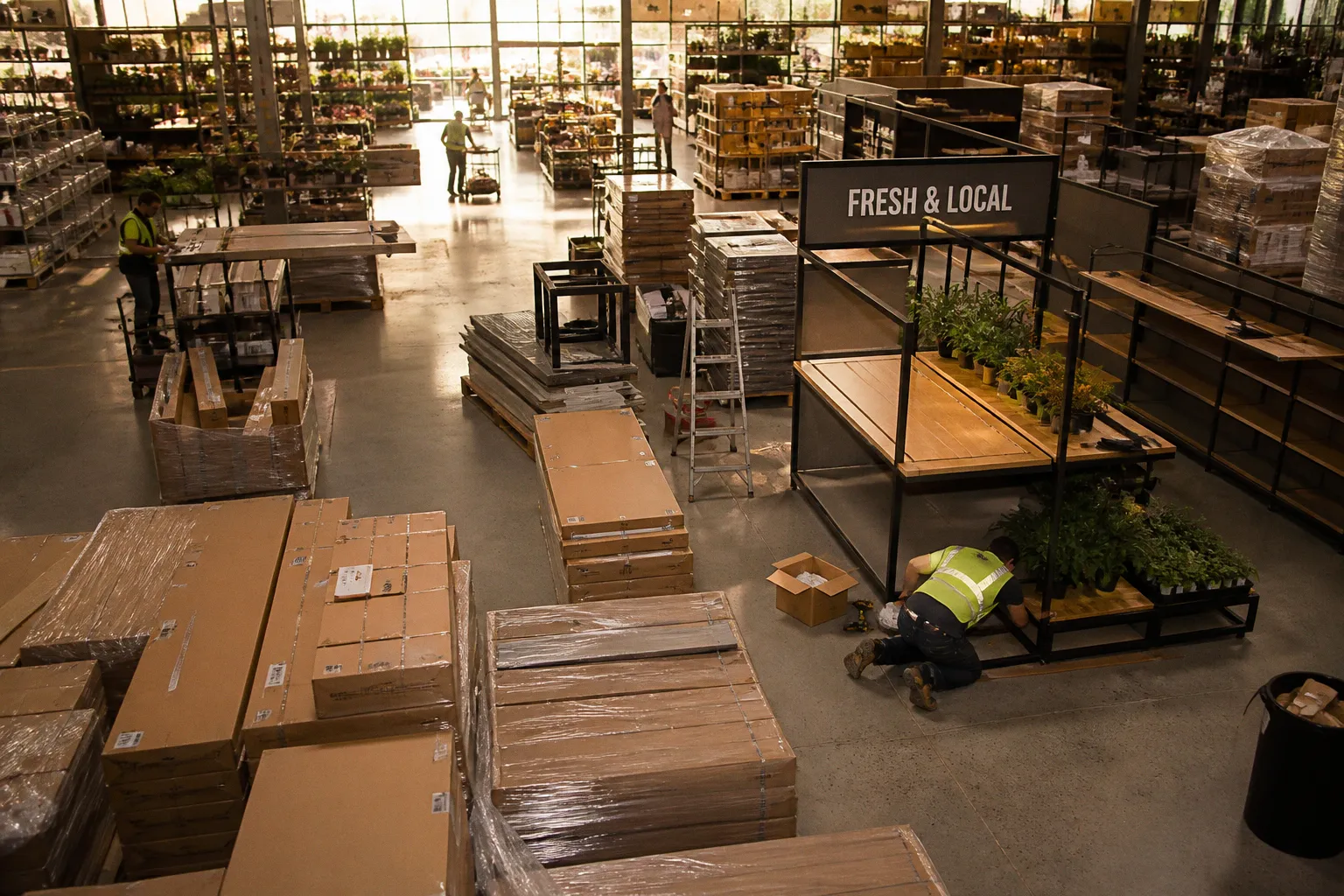
SEKO Logistics laid out a fresh playbook on standardizing retail display rollouts, and if you've ever watched a campaign ship out beautifully in one store and fall apart in another, you'll understand why this one matters. We're talking about centralized delivery plans, master fixture lists, and packaging standards — the unglamorous infrastructure that decides whether your endcaps, signage, and promotional islands actually look the same at 5 a.m. on launch day in every zip code.
Why Standardization Breaks the Moment It Hits the Loading Dock
Here's the tension we see on the floor every time a rollout goes sideways: a plan built purely for consistency snaps the second it meets a store that doesn't match the prototype, but a plan built purely for local flexibility loses the brand cohesion that made the rollout worth funding in the first place. Square footage varies, ceiling heights vary, loading dock windows vary, and the staff available to unpack varies — even within the same chain. A single delayed shipment is a minor inconvenience. A single delayed shipment multiplied across fifty stores, each with its own carrier and dock schedule, becomes a coordination problem that no individual store manager can solve.
The compounding effect is where dwell time and sightlines start to leak. Fixtures and signage that arrive in the wrong sequence force teams to hold inventory in the back room, which pushes installation off the calendar, which means your customer walks past an incomplete display and your conversion rate takes a hit you won't see in any weekly recap.
What a Centralized Plan Has to Lock Down
According to SEKO's framing, the fix starts before any truck leaves the warehouse, with a documented plan that defines what is non-negotiable and what can flex by location. Think of it as a planogram for the rollout itself. A master fixture and signage list applies to every store in the rollout; defined delivery windows tie to each store's operating hours and staffing reality; packaging and labeling standards let floor teams identify components without guesswork, which keeps SKU density at the fixture level intact instead of improvising with what's left in the box.
That's also where packaging standards quietly do their work. Mislabeled pallets and short-shipped components don't stay isolated at network scale — they multiply, and your opening-day sightlines fracture store by store until the campaign reads as a patchwork rather than a brand.
What to Put on Your Pre-Rollout Checklist
If you're staring down a multi-store rollout in the next quarter, here's the floor-level checklist we run before we greenlight a campaign: confirm every store has a written window inside the master delivery schedule; audit the master fixture list against your actual endcaps and gondolas so nothing ships to a fixture that doesn't exist on site; package and label every component by store so the receiving team isn't sorting blind; and protect sequencing on the truck so signage arrives with the fixture it mounts to, not three days ahead of it. Track rollout completion by store against launch date and watch the close rate — that's the KPI that tells you whether standardization is doing its job or just looking good on paper.