Why Gondola Shelving Remains the Gold Standard for Retail Floor Efficiency
Gondola shelving has always done the heavy lifting on retail floors, but a fresh industry analysis from Rack Leaders puts the numbers behind what we've known intuitively for years — versatility is…
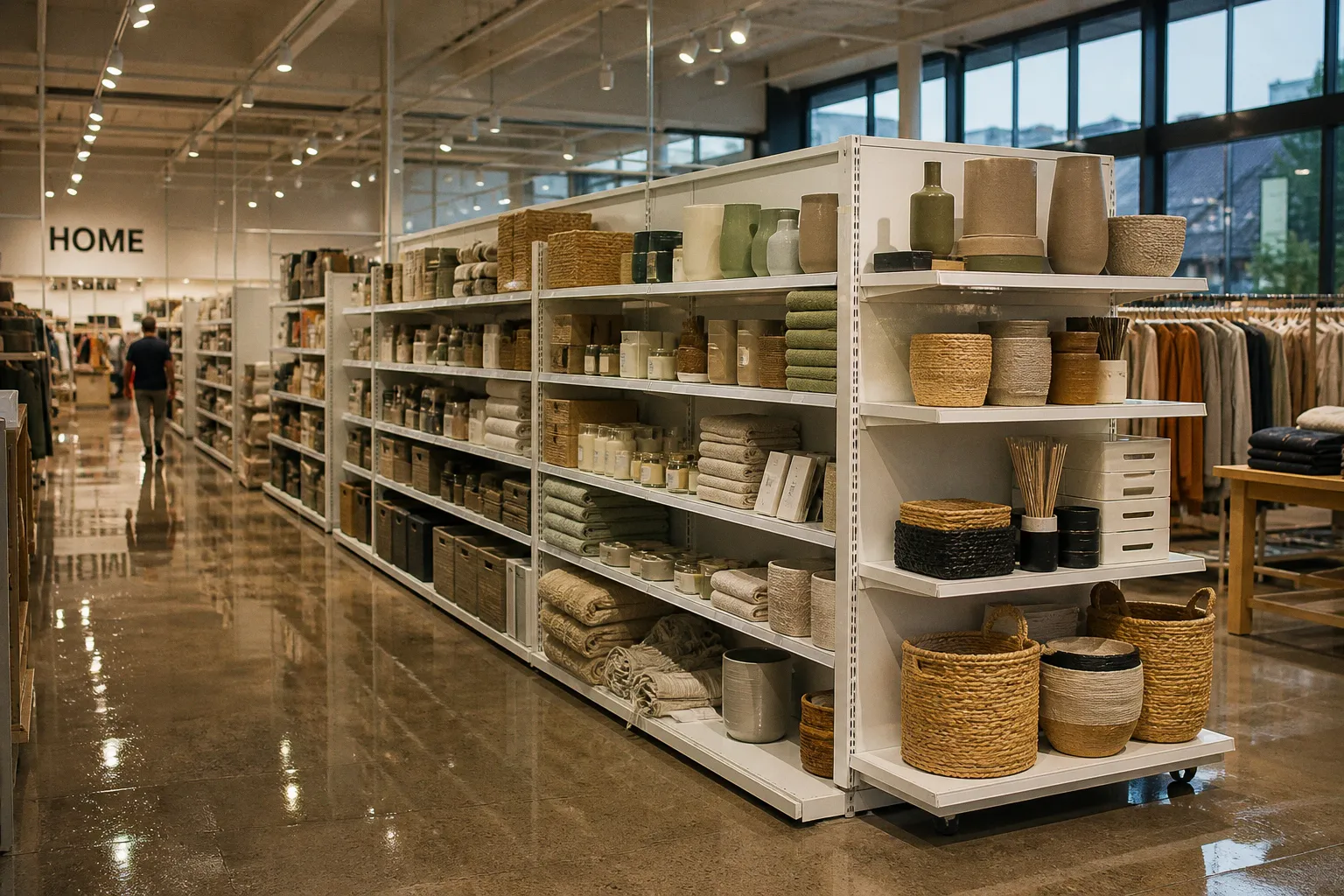
Gondola shelving has always done the heavy lifting on retail floors, but a fresh industry analysis from Rack Leaders puts the numbers behind what we've known intuitively for years — versatility is the feature that actually pays the rent. According to the report, adjustable shelf positions paired with three core configurations (single-sided runs along the wall, double-sided islands in open floor, and end caps closing each aisle) let one steel system optimize sightlines and SKU density across virtually any footprint.
The Configurations That Move the Needle
Single-sided gondolas hug the perimeter and free up the sales floor for clean traffic flow — a smart move when you want customers moving in a planned loop rather than weaving past dead zones. Double-sided units do the opposite work: they build aisles out of the same frame, doubling product capacity per square foot without expanding the building. And end caps? That's where dwell time spikes, because the geometry naturally pulls the eye at the moment a shopper turns a corner. Use that real estate for promotions, seasonal drops, or category cross-sells, and you'll feel it in conversion before the weekend is over.
The Long-Term Math Behind the Steel
A separate industry report from Blazer Store Fixtures backs the durability argument with a longer lens. Lozier-style shelving, the report notes, carries durable steel construction and a modular design that lets retailers reconfigure as inventory shifts — new SKUs arrive, seasonal categories swell, and promotions demand different display logic. Rather than treating shelving as a one-time capex, the framing positions it as infrastructure that absorbs change. For an opening store or a renovation, that flexibility is the difference between a fixture that survives one reset cycle and one that lasts a decade on the floor.
A Quick Floor Audit Before You Re-Merchandise
Here's the checklist I'd run before you touch a single shelf:
- Walk every aisle and score sightline blockage — if a customer can't read the third shelf from four feet back, your planogram is too dense for the run.
- Test dwell time at each end cap; if associates aren't rotating featured merchandise weekly, you're leaving conversion on the floor where it's hardest to spot.
- Confirm shelf adjustability hasn't calcified — a unit that won't re-shelf cleanly is no longer a gondola, it's a fixed install in disguise.
- Map SKU density per linear foot; if your double-sided run under the highest-velocity category isn't earning double the turns of the wall run, rebalance before the next reset.
The pattern across both reports is the same: the retailers who treat gondola as a living system — one that breathes with the assortment and the customer — outperform the ones who treat it as background furniture. The steel doesn't care what you put on it. Your floor plan, however, cares about everything.