Vermeer Centrum Delft tickets: booking traps and storage rules
The primary operational fact about Vermeer Centrum Delft is also the one most likely to be misunderstood: the center does not display original Vermeer canvases. It presents full-scale digital reproductions of all 37 known paintings by Johannes Vermeer.
That makes the visit an interpretive and technical presentation of the artist’s work, not an original-painting collection.
Tickets and prices
Vermeer Centrum Delft
I
Save
Box office and online booking
- Adult €3
- Child €2
- Reduced €11
€3
Official websiteII
entry ticket
Entry ticket with audioguide and activities
See reproductions of all the Dutch artist's paintings and learn about his life, techniques, and paintings with an audioguide and activities.
€15
Check availabilityThe second relevant fact concerns admission logistics. Visitors can buy tickets online or at the entrance. A timed entry slot is not mandatory. The practical risk is therefore not a failed reservation window. It is arriving with the wrong expectation about the collection, carrying restricted items into the exhibition, or treating a flexible admission system as if it were a fixed museum booking.
What the Vermeer Centrum Delft actually displays
Vermeer Centrum Delft is dedicated to Johannes Vermeer, the Delft painter associated with the Dutch Golden Age. Its exhibition system uses full-size digital reproductions rather than original oil paintings. The distinction affects the entire planning decision.
Visitors looking for original works such as Girl with a Pearl Earring or View of Delft will not find Vermeer’s original canvases here. The center’s function is different. It assembles reproductions at the scale of the known works and places them within a broader explanation of Vermeer’s life, working methods, visual structure, and Delft context.
All 37 known Vermeer paintings are represented in reproduction form. This gives the center a specific advantage: the complete known body of work can be examined in one location and at a consistent scale. It also removes one common museum assumption—the expectation that the value of the visit depends on access to original pigment, canvas, or conservation details.
The exhibition should be assessed as a study environment. The visual material is stable, comprehensive, and designed for comparison. The original-versus-reproduction distinction remains non-negotiable. It should be clear before purchasing Vermeer Centrum Delft tickets.
This is not an original-canvas collection. It is a full-scale visual survey of Vermeer’s known works, supported by interpretation and audio guidance.
The center is located at Voldersgracht 21 in Delft. That address places the visit inside the city’s Vermeer context rather than in a remote museum complex. The building is part of a compact urban itinerary, so admission planning usually concerns timing, walking sequence, and storage rather than long-distance transit between galleries.
Tickets, discounts, and the absence of a timed-entry requirement
The center uses a relatively simple admission model. Standard admission is available for adults, with separate categories for younger visitors. Children aged 0–6 enter free, while visitors aged 7–12 and 13–18 fall into separate youth categories.
Museumkaart holders, CJP Cultuurkaart holders, and students with valid identification receive reduced admission. The reduction is not the same as free entry. Museumkaart holders must still pay the applicable reduced rate. This is a frequent source of planning errors because many Dutch museums accept the Museumkaart without an additional admission charge, while Vermeer Centrum Delft applies a discounted paid rate.
Groups are handled separately. The group category applies from a minimum of 10 people. A private guided tour is also available as an additional format. The correct choice depends on whether the group requires a guide-led interpretation or whether the included audio tour is sufficient.
The ticket structure can be summarized as follows:
| Visitor type or booking format | Operational rule |
|---|---|
| Adult visitor | Standard admission category |
| Youth aged 13–18 | Separate reduced youth category |
| Child aged 7–12 | Separate child category |
| Child aged 0–6 | Free admission |
| Museumkaart holder | Reduced paid admission, not free entry |
| CJP Cultuurkaart holder | Reduced admission with valid card |
| Student | Reduced admission with valid student identification |
| Group | Group category available from 10 visitors |
| Private guided tour | Available as a separate paid tour format |
| Timed entry | Not mandatory for standard admission |
| Entrance purchase | Tickets can be bought at the desk on arrival |
Online booking remains useful when the visit is part of a larger Delft itinerary or when the visitor wants the admission decision settled before arrival. It is not, however, a technical requirement for access. The center also sells tickets directly at the entrance.
This matters because some attraction-booking systems create artificial urgency around time slots. Vermeer Centrum Delft does not require visitors to reserve a fixed entry window in advance. Buying online may improve organization, but it does not convert the visit into a timed museum appointment.
What to carry for a discounted ticket
Visitors using a reduced admission category should carry the relevant proof. That includes the Museumkaart, CJP Cultuurkaart, or valid student identification, depending on the category selected.
The discount is an eligibility rule, not a visual estimate. Staff may need to verify the card or document at entry. Selecting a reduced ticket without the corresponding proof creates a preventable delay at the desk. The same principle applies to age categories: the visitor’s age must correspond to the ticket category selected.
Opening hours and arrival planning
Vermeer Centrum Delft is open daily from 10:00 to 17:00 under the regular schedule. It is closed on December 25.
The holiday schedule is not identical to the normal schedule. On December 24 and December 31, the center closes earlier, at 16:00. On December 26 and January 1, opening begins later than normal, with the published holiday schedule using a later morning start before the regular 17:00 closing time. Visitors planning a holiday visit should verify the current schedule rather than applying the daily 10:00 opening time automatically.
The operational window is seven hours on a standard day. That is sufficient for a controlled visit, but the useful duration depends on the visitor’s reading speed, audio-tour use, and interest in comparing the reproductions. A short visit can cover the main exhibition. A slower visit requires more time for the contextual material and the complete sequence of works.
A practical arrival sequence is straightforward:
1. Confirm the date and the regular or holiday schedule. December 25 is a closure date, while other late-December and New Year dates use adjusted hours.
2. Select the correct admission category. Separate categories exist for adults, children, youth, students, card holders, groups, and private guided formats.
3. Decide whether online purchase is useful. It is optional for entry, not a mandatory timed reservation.
4. Keep eligibility documents accessible. Reduced admission depends on valid proof.
5. Plan storage before entering the exhibition. Large bags and outside food or drinks are not permitted in the exhibition spaces.
6. Use the audio tour if language support or structured interpretation is required. It is included with admission.
There is no need to construct the visit around a narrow entry slot. The more relevant constraint is the center’s closing time and the visitor’s intended depth of inspection.
The cloakroom and locker rules
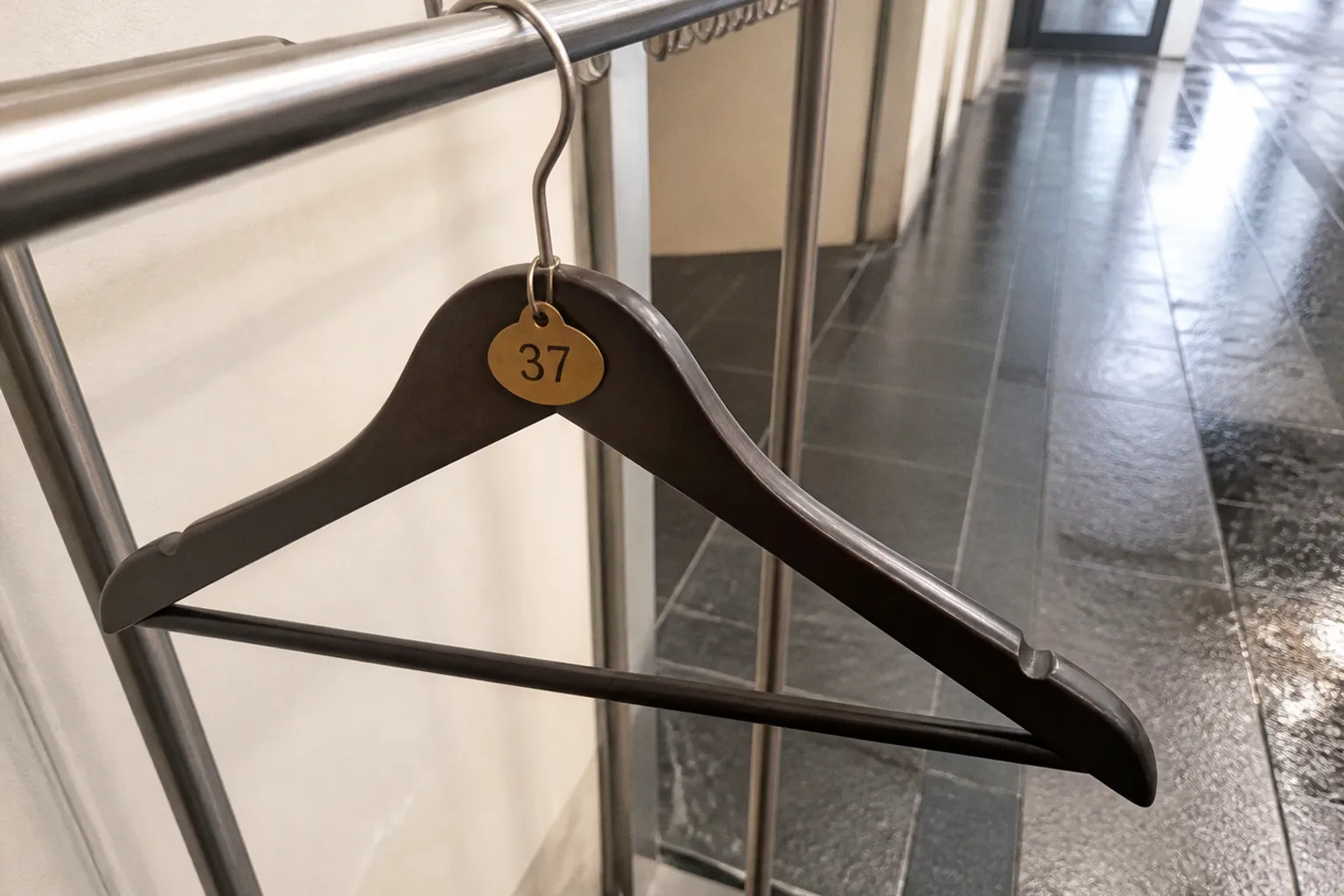
Vermeer Centrum Delft provides free lockers for personal items and small bags. This is the center’s basic storage solution for visitors who need to remove belongings before entering the exhibition areas.
Large bags are prohibited inside the exhibition spaces. Outside food and drinks are also prohibited. These are not cosmetic rules. They reduce contact risk, obstruction, and contamination inside a controlled indoor environment. The center maintains a constant indoor climate of 21°C, and the storage policy supports the stability of that environment as well as the protection of the exhibition setup.
The published information does not establish an exact dimensional threshold for every bag that can be placed in the on-site lockers. Visitors should therefore avoid treating the lockers as luggage storage. A small personal bag is within the stated use case. A suitcase, large backpack, or heavy travel case may exceed the practical capacity of the facility.
The Vermeer Centrum Delft cloakroom arrangement should be understood as a local locker provision, not as a staffed baggage office. If a visitor is moving through Delft with substantial luggage, the railway station may be the more appropriate storage point. The exact boundary between a small bag and an oversized item is not specified, so carrying large luggage to the entrance introduces an avoidable uncertainty.
What the locker policy means in practice
The storage rules are simple when reduced to load and volume:
- Small personal bags: suitable for the free on-site lockers.
- Large bags: not permitted in the exhibition spaces and may not fit the lockers.
- Outside food and drinks: not permitted inside the exhibition areas.
- Valuable or fragile items: should not be left without considering the locker’s intended function and the visitor’s own responsibility.
- Suitcases and substantial luggage: better stored before reaching the center, subject to the facilities available elsewhere in Delft.
Do not rely on the phrase “cloakroom” to mean full luggage handling. The available fact is free lockers for personal items and small bags. The exact maximum bag dimensions are not established.
The locker is a volume-control system for small personal items, not a substitute for station luggage storage.
Visitors should also avoid entering with more equipment than the visit requires. A phone, wallet, identification, admission proof, and perhaps a compact layer of clothing are operationally sufficient for most visits. The less material carried into the center, the lower the risk of storage refusal or delay.
The included audio tour and language coverage
Every admission ticket includes a free audio tour. It is available in eight languages:
- Dutch
- English
- German
- French
- Italian
- Spanish
- Japanese
- Chinese
This is not an optional premium upgrade. It is part of the admission package. Visitors should account for it when estimating the duration and structure of the visit.
The audio tour changes the function of the exhibition. Without guidance, the 37 reproduced works can be treated as a visual sequence. With audio interpretation, the visit becomes more analytical. The visitor can move from individual images to recurring subjects, interior arrangements, perspective, light, domestic settings, and the relationship between Vermeer’s Delft environment and the paintings associated with him.
The audio tour is especially useful for visitors who are not already familiar with the Guild of Saint Luke, Delft’s artistic setting, or the technical discussions surrounding the camera obscura. It provides a controlled information layer without requiring a private guide.
A private guided tour remains available for visitors who need a more structured group format. That option is relevant for organized groups, educational visits, or guests who want direct interpretation rather than an individual audio sequence. For independent visitors, the included audio tour usually removes the need to pay for additional guidance unless there is a specific requirement for a live guide.
The language selection is broad enough to cover the main visitor groups. Selecting the audio language at the beginning is more efficient than entering the exhibition without a plan and interrupting the sequence later.
Digital reproductions, camera obscura, and the technical question of authenticity
The center’s digital reproductions should not be evaluated by the same criteria as original works. A reproduction cannot provide direct evidence of original paint thickness, support aging, varnish condition, craquelure, or the physical surface of a seventeenth-century canvas. It does provide scale, composition, and comparative access across Vermeer’s known output.
That distinction is particularly relevant for discussions of the camera obscura. The device is often invoked in accounts of Vermeer’s optical practice, but visual similarity to a photographic or projected image does not by itself establish a complete production method. The center’s value is in presenting the relevant works and interpretive framework together, not in converting a debated technical hypothesis into a laboratory finding.
A visitor interested in material analysis should therefore separate three layers:
1. The historical works. The original paintings exist elsewhere and have their own conservation histories.
2. The reproduced images. These provide full-scale visual access to the known corpus inside Delft.
3. The interpretation. This connects Vermeer’s paintings to his city, artistic environment, and possible working methods.
That separation prevents the most common category error: assuming that a full-size reproduction is equivalent to the original object. It is not. It serves another purpose.
The center is strongest when the visitor wants coverage and comparison. It is not the correct destination for direct examination of original materials. That conclusion does not reduce the usefulness of the visit. It defines it accurately.
How to build a Delft visit around the center
The Vermeer Centrum Delft is suited to an itinerary that begins with the center’s complete visual survey and continues through Delft’s historical environment. The visit can function as a reference layer before walking through the city.
A technically efficient sequence is:
- Start with the center’s introduction and contextual material. Establish the basic chronology and Delft setting before focusing on individual reproductions.
- Use the audio tour through the main body of the exhibition. This prevents the 37 works from becoming an unstructured image list.
- Record the works that require closer attention. The purpose is comparison, not simply completion.
- Move through Delft afterward. Use the city as geographic context for the artist’s environment rather than expecting the urban walk to reproduce a seventeenth-century view exactly.
- Keep the admission format in perspective. The center provides a focused Vermeer interpretation; it is one component of a Delft visit, not a conventional collection of original Dutch Golden Age paintings.
The lack of a mandatory timed slot makes this sequence easier to manage. A visitor can place the center before another appointment without needing to defend a narrow reservation time. The fixed constraints are opening hours, holiday changes, admission eligibility, and baggage restrictions.
For groups of 10 or more, advance coordination is more rational than treating the visit as a series of individual walk-ins. A private guided tour may also be justified where the group requires one interpretation path and controlled pacing. For a small independent party, standard admission and the included audio tour are the lower-complexity configuration.
Common booking errors
The booking errors at Vermeer Centrum Delft are administrative, not technical. They are caused by incorrect assumptions.
Assuming the Museumkaart provides free entry
It does not. Museumkaart holders receive a reduced paid admission rate. The card should be carried, but the visitor should still expect an admission charge.
Booking a timed slot that is not required
Online tickets may be useful, but standard entry does not require a mandatory time slot. Visitors should not confuse an online purchase option with a fixed reservation system.
Treating the center as a gallery of original Vermeer paintings
The center displays full-size digital reproductions of all 37 known works. It does not house original Vermeer canvases.
Arriving with a suitcase
Free lockers are provided for personal items and small bags. The published rules do not confirm that large luggage will fit. A suitcase should be stored elsewhere before arrival.
Bringing food or drinks into the exhibition
Outside food and drinks are prohibited in the exhibition spaces. This rule should be handled before entry rather than negotiated at the door.
Ignoring holiday hours
The regular 10:00–17:00 schedule does not apply unchanged to every date. December 25 is a closure date, December 24 and December 31 have earlier closing, and December 26 and January 1 begin later.
Paying for a private guide without checking the included audio tour
The audio tour is included with every admission ticket and supports eight languages. A private tour is an additional format, not the default requirement for interpretation.
Definitive planning rule
Buy tickets for Vermeer Centrum Delft online when advance organization is useful, but do not build the visit around a mandatory time slot. Arrival at the entrance is permitted, subject to opening hours and available admission capacity.
Use the reduced category only when the visitor has valid Museumkaart, CJP Cultuurkaart, or student identification. Treat the center as a full-scale digital survey of Vermeer’s 37 known paintings, not as a venue for original canvases. Use the free lockers for small personal items. Store large luggage elsewhere. Do not bring outside food or drinks into the exhibition.
For a standard visit, the correct configuration is therefore precise: arrive during the operating window, carry the required proof, leave large baggage outside the center, and use the included multilingual audio tour. The center’s value lies in complete visual coverage and structured interpretation. Its limitations are equally clear. Plan for what the building actually contains, not for the museum category visitors may assume from the name.
Practical info
Currency: EUR
Driving: on the right
Emergency number: 112