St. Nicholas Bell Tower tickets: entry options and storage
A visit to St. Nicholas Bell Tower in Prague is easy to underestimate. The ticket purchase is straightforward; the logistics are not.
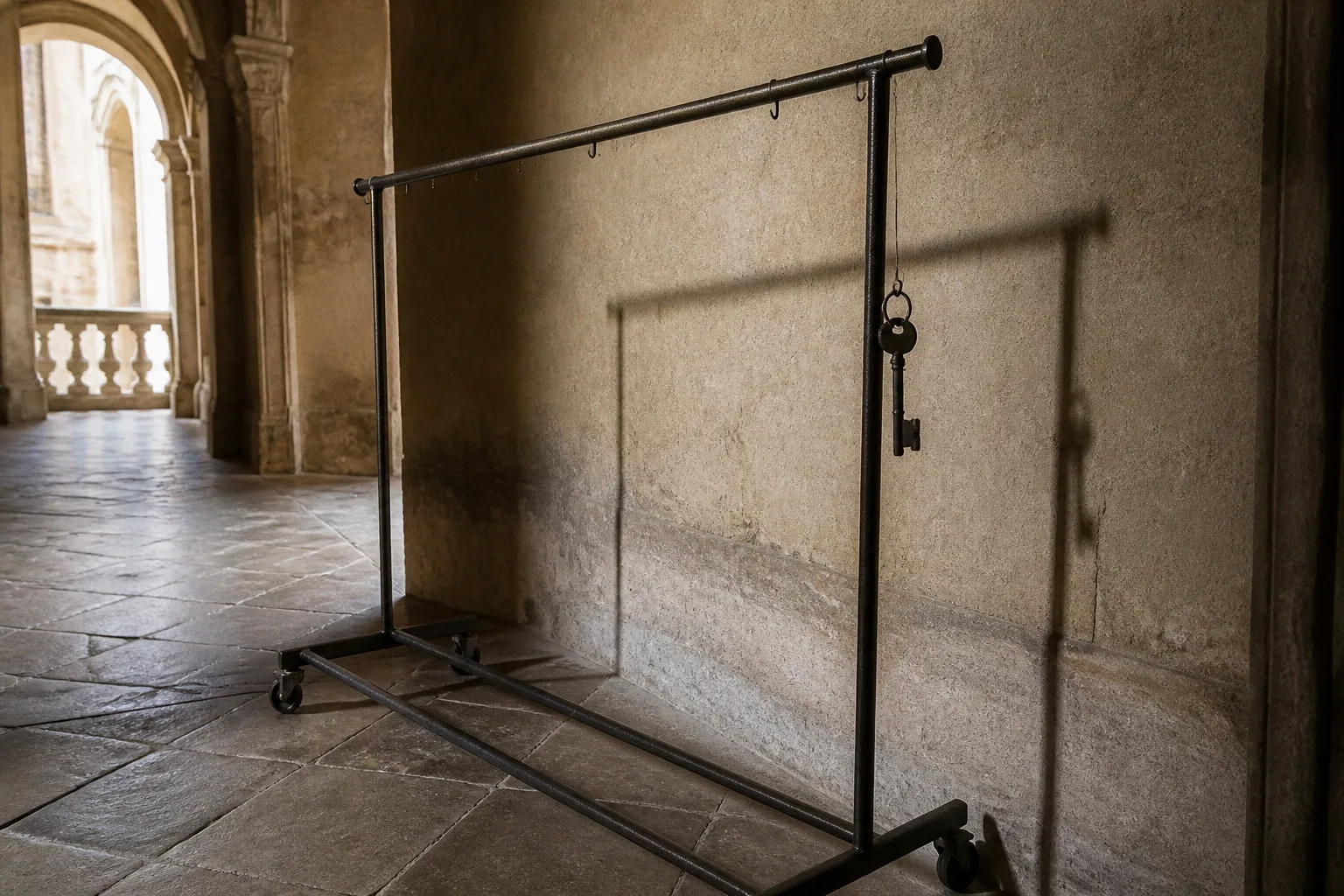
The tower's gallery sits 65 metres above Malá Strana, the climb runs through a narrow historic stairway, and large suitcases or oversized bags are not permitted inside. If you arrive with luggage and no storage plan, the ticket is the least of your problems.

Tickets and prices
Available at short noticePrices recorded on August 05, 2026 — today's fare on the partner page.
- Official ticket — basic admissionfromCZK200
Prices are a guide only: the final fare and open dates appear on the partner page.
Booking through our partner GetYourGuideThe good news is that the tower has several practical entry routes: standard admission, reduced tickets for eligible visitors, early-opening discounts, and free entry for holders of an activated Prague Visitor Pass. The right choice depends less on the headline ticket type than on your route through Prague, your arrival time, and whether you are carrying a daypack or a full-size suitcase.
Choose the ticket route before you reach Malá Strana
When visitors search for how to buy tickets for St. Nicholas Bell Tower, they are usually solving one of three problems: they want the simplest admission, they are trying to reduce the cost of a multi-attraction day, or they need to fit the tower into a tightly timed Prague itinerary.
The standard ticket is the cleanest option if you are visiting the tower on its own. It avoids the commitment of a broader sightseeing pass and works well when the bell tower is one stop among several in Malá Strana. Adult, student, and child categories are available, so bring whatever proof of eligibility is required for a reduced fare rather than assuming the lower category will be accepted without documentation.
A second route is the Prague Visitor Pass. Entry to St. Nicholas Bell Tower is included at no additional charge once the pass has been activated. That changes the calculation completely: if you already plan to use the pass for several included attractions and transport benefits, the tower becomes an easy addition to the day rather than a separate purchase decision. If the tower is your only planned attraction, however, buying a pass solely for this stop may not be the most efficient use of it.
There is also an early-opening incentive. Visitors who enter during the first hour after opening can receive a substantial reduction on the regular ticket price. This is particularly useful in the high season, when the tower remains open late but the most popular central Prague routes become increasingly crowded as the day develops.
The practical decision tree looks like this:
1. You are visiting only St. Nicholas Bell Tower: choose the regular admission route and confirm the day's opening time.
2. You qualify for a reduced category: select the appropriate student or child ticket and carry supporting identification if needed.
3. You already have an activated Prague Visitor Pass: use the included entry rather than purchasing a separate ticket.
4. You can arrive during the first opening hour: check whether the early-bird discount applies before paying full admission.
5. You are travelling with large luggage: solve storage first, then buy or schedule the visit.
The best ticket is the one that matches your route through Prague; the worst one is any ticket purchased before you discover that your suitcase cannot follow you into the tower.
What to confirm during the booking process
Ticket availability and booking interfaces can change, particularly during the tourist season, so treat the online listing as an operational tool rather than a permanent schedule carved into stone. Before you commit, look for:
- The selected date and whether entry is flexible or tied to a particular time.
- The admission category that matches your party.
- Whether the ticket is for the bell tower itself or bundled with a wider tour.
- The cancellation or change conditions attached to the booking.
- Any notes about access restrictions, stairs, or luggage.
- The final arrival instructions, including where the entrance is located in relation to St. Nicholas Church.
A separate guided experience may be worthwhile if you want historical interpretation, but do not confuse a tour listing with a different access standard. A guide can improve the visit; it does not remove the physical constraints of a historic Baroque bell tower, where the staircase is part of the attraction rather than a problem to route around.
Seasonal hours change the value of your ticket
St. Nicholas Bell Tower operates on a seasonal timetable, and the difference between a summer and winter visit is large enough to affect how you plan the entire day.
During June through September, the tower opens from 9:00 AM to 8:30 PM. In April and May, the operating window is shorter, from 10:00 AM to 7:00 PM. December hours run from 10:00 AM to 7:30 PM, while January through March and October through November generally follow the shortest schedule, from 10:00 AM to 6:00 PM.
That matters for both crowd flow and daylight. In summer, you have room to position the tower at the beginning, middle, or end of a walking route through Malá Strana. In winter, a late-afternoon visit may still be possible, but you should not assume the same flexibility you would have in June.
| Season | Opening hours | Planning implication |
|---|---|---|
| June–September | 9:00 AM–8:30 PM | Best flexibility for an early visit, afternoon route, or evening viewpoint |
| April–May | 10:00 AM–7:00 PM | Comfortable daytime window, but less room for a last-minute stop |
| December | 10:00 AM–7:30 PM | Useful for combining the tower with winter sightseeing and evening plans |
| January–March, October–November | 10:00 AM–6:00 PM | Schedule deliberately; late arrival leaves little recovery time |
If your priority is a quieter ascent and the early-bird ticket reduction, opening time is the obvious play. The first hour gives you a cleaner sightline through the stairway, less friction at the entrance, and a better chance of reaching the gallery before the main sightseeing wave arrives.
If your priority is atmosphere, the later hours can be attractive, especially in summer when the tower stays open into the evening. But the closing time is not the same thing as a guaranteed sunset experience. Prague weather, seasonal daylight, queueing, and the time required for the climb all affect what you will actually see. Give yourself a buffer instead of arriving at the final possible minute.
Use the tower as an anchor, not an afterthought
St. Nicholas Bell Tower sits in one of Prague's most walkable visitor zones, close to Charles Bridge and the streets of Malá Strana. That makes it tempting to leave the visit unscheduled and simply decide when you are nearby. This works only if your day is light, your bags are manageable, and you are comfortable with the possibility of adjusting around the seasonal closing time.
For a more controlled itinerary, use the tower as an anchor attraction:
- Morning anchor: arrive near opening, take advantage of the first-hour discount, and continue through Malá Strana while the streets are still relatively calm.
- Midday anchor: pair the climb with nearby church, palace, or riverside sightseeing, but leave enough time for the ascent rather than treating it as a ten-minute photo stop.
- Late-day anchor: use the longer summer schedule for a slower walking route, while keeping a firm cut-off for entry and the climb.
The operational rule is simple: if your day contains timed admissions elsewhere, place the bell tower either before them or well after them. Do not build a chain of back-to-back reservations around a climb whose pace depends on stairs, visitor density, and how long you want to spend at the top.
The 215-step climb is part of the admission decision
The gallery is reached by climbing 215 steps. There is no reason to dramatize that number, but there is every reason to plan around it. This is not a lift-access viewpoint where you step out at the top and decide whether to linger. The physical experience is inseparable from the attraction.
The staircase is narrow, and the historic Baroque structure does not provide the same circulation capacity as a modern observation tower. You may encounter visitors moving in the opposite direction, pauses on landings, and sections where the passage feels tighter than expected. The result is a climb that can take more effort than the raw number of steps suggests, particularly on a hot day or after several hours of walking around Prague.
Approach the visit as a short vertical route rather than a quick indoor attraction:
- Wear shoes with a secure grip; polished city footwear is less useful than stable soles on an old stairway.
- Carry water, but keep the bottle compact and easy to manage.
- Avoid filling your backpack with items you will not use at the tower.
- If one member of your group climbs more slowly, allow the party to move at that person's pace.
- Leave time at the gallery instead of rushing up for a single view and immediately descending.
- If stairs are a serious mobility concern, assess the access conditions before buying; do not assume there is elevator access to the main viewing gallery.
The tower's height gives the view its value, but the stairs determine whether you can enjoy it. In retail terms, the gallery is the conversion point and the staircase is the customer journey: if the route is poorly planned, the final experience suffers before the visitor reaches the product.
A viewpoint visit begins before the view: your footwear, bag size, arrival time, and pace all determine how much of the gallery experience you actually get.
St. Nicholas Bell Tower's bag policy is a logistics issue, not a footnote
Large suitcases and bulky luggage are not allowed inside historic Prague towers. At St. Nicholas Bell Tower, the restriction is especially practical: the staircases are narrow, the circulation space is limited, and a large case creates a problem for both the person carrying it and everyone trying to pass.
A small daypack may be manageable, but the decisive distinction is size and bulk, not whether the bag has wheels. A wheeled suitcase remains oversized even if you can pull it neatly behind you. A large travel backpack can create the same obstruction on a confined staircase.
There is no confirmed basis for promising an on-site cloakroom or official luggage counter at the tower. Plan on the assumption that storage must be arranged elsewhere. That means station lockers, hotel storage, or a dedicated off-site luggage service may need to be part of your route.
Build storage into the route
The most common mistake is to schedule the bell tower between hotel checkout and a train departure, then discover that the luggage cannot come inside. By that point, the visitor is forced into one of three poor choices: return across the city, search for storage under time pressure, or abandon the climb.
A better route starts with the bag:
1. Identify the luggage handoff point. This may be your hotel, accommodation reception, a station locker, or an external luggage-storage service.
2. Calculate the extra walking and transit time. Malá Strana is compact on a map, but bridges, tram stops, cobbled streets, and pedestrian traffic can stretch a short route.
3. Leave a recovery window. Storage services may involve check-in, identity confirmation, or a walk to a separate location.
4. Only then choose the tower time. The first opening hour is attractive, but not if reaching it requires dragging a suitcase across Prague.
5. Keep essentials in a small personal bag. Tickets, phone, wallet, water, and a light layer should remain with you.
If your luggage plan depends on a station, be precise about which station and which direction you will travel afterward. A storage point that looks convenient for arriving in Prague may be inefficient for a later train, airport transfer, or hotel check-in. The cheapest storage option is not necessarily the best one if it adds a long backtrack and turns the tower into a race against the clock.
What you can reasonably carry inside
A compact personal bag is the sensible target. Keep the load narrow enough to move comfortably through the stairway and light enough that you do not need to set it down in a passing area. Avoid packing shopping bags, camera cases, large umbrellas, or extra clothing into one oversized bundle.
This is also where the customer-experience logic matters. The tower is a public attraction, and every visitor is sharing a constrained route. A bag that is technically portable can still reduce circulation, catch on railings, or make it harder for others to pass. Pack for movement, not for the entire day.
The Prague Visitor Pass can simplify the visit
For travellers using multiple participating attractions, the Prague Visitor Pass offers a different kind of value: not just a possible saving, but less decision friction. Once activated, it includes free entry to St. Nicholas Bell Tower, allowing you to add the climb to an existing sightseeing route without another admission purchase.
That works particularly well when the tower is not the central purpose of the day. You can make a weather-dependent decision, fit the attraction between other stops, or use it as a nearby addition while exploring Malá Strana. The pass also makes it easier to think in terms of route density: how many included attractions can you realistically reach without turning the day into a transfer schedule?
Do not treat the pass as a reason to overpack your itinerary. A tower visit takes more than the nominal time spent at the gallery because the ascent and descent shape the pace. If you already have several timed activities, use the pass for flexibility rather than trying to extract maximum theoretical value from every hour.
Before relying on the pass, confirm that it is activated and valid for the date of your visit. An inactive pass is not the same as an eligible pass at the entrance. Keep the digital or physical access method ready before you reach the ticket point, especially during busy periods when stopping to troubleshoot a phone app creates avoidable congestion.
A practical itinerary for different visitor types
The best entry option changes with the type of day you are having. Here is how we would lay out the route on the floor.
If you are travelling with a suitcase
Do not make the bell tower your first stop after leaving accommodation unless storage is already confirmed. Drop the suitcase at your hotel or an appropriate off-site facility, then continue to Malá Strana with a compact personal bag. If that is not possible, move the tower to a later point in the itinerary rather than hoping the entrance staff will find somewhere to keep the case.
If you are visiting Prague for one day
The early opening window is valuable because it protects the rest of your schedule. Climb first, then move toward Charles Bridge and the surrounding streets while your route is still open. A standard ticket may be more efficient than purchasing a city pass solely for one attraction, unless the pass is already part of your wider plan.
If you are using a Prague Visitor Pass
Activate the pass before arrival, confirm that the tower is included for your visit date, and treat the admission as a flexible route element. You can place it around weather and crowd conditions, but keep the seasonal closing time visible in your plan.
If you want photographs or a longer gallery visit
Arrive with enough daylight and avoid building the visit into the final minutes of operation. In summer, the longer opening schedule creates more options, but a popular viewpoint can still feel pressured if you arrive during a crowded window. Early entry gives you the cleanest operational conditions; late entry may provide a different city atmosphere, but with less recovery time if your route runs late.
If stairs may be physically demanding
Review the access conditions before purchasing and be honest about the return journey as well as the ascent. Reaching the gallery is only half the question; descending on tired legs through the same narrow spiral is the other half. Factor both into your decision, and consider whether a hilltop viewpoint elsewhere in Prague might serve the same purpose without the climb.
How to think about the whole ticket decision
What the bell tower is really selling is not the admission itself but the combination of a Baroque shell, a 215-step route, and a 65-metre vantage point over Malá Strana. The ticket types and the seasonal timetable only matter once you know how that combination fits into your day.
Start with the largest constraint first. If you are carrying a large bag, no ticket choice matters until the bag has somewhere to go. If stairs are a real obstacle, the cleanest ticket in the world is still the wrong product. If both of those are manageable, then compare the standard ticket against the early-bird window and the Prague Visitor Pass on the actual merits of your itinerary rather than on the headline price.
A bell tower ticket rewards visitors who treat the climb and the bag problem as part of the same plan. Everything else is simply paperwork.
Practical info
Currency: CZK
Driving: on the right
Emergency number: 112