IKONO Budapest: essential checklist for your immersive visit
I have walked through enough “immersive experiences” to know that many of them are really just dim rooms, dramatic lighting, and a queue that moves slower than the elevator at the Marriott.
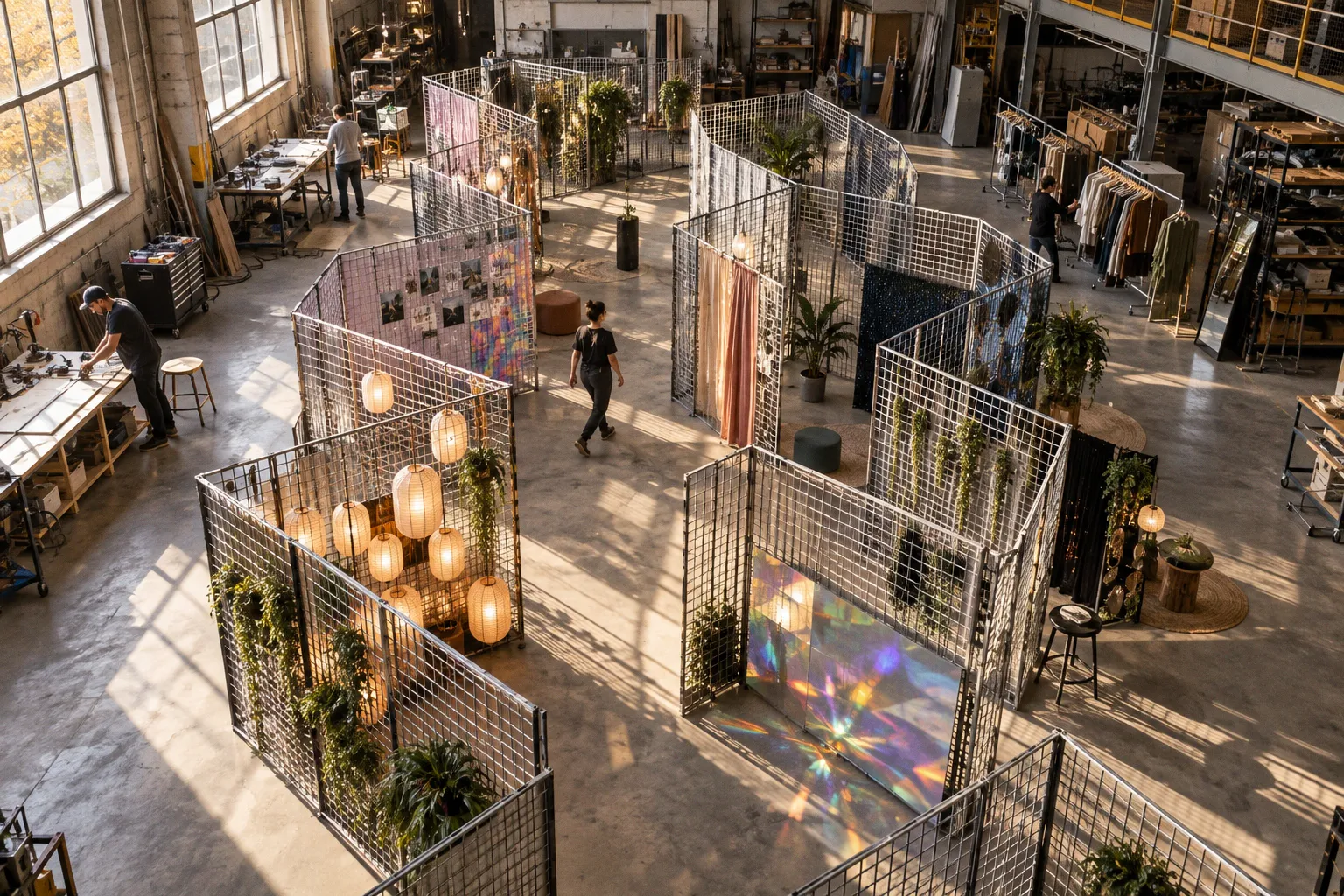
The thing that separates a smooth visit from a wasted afternoon in Budapest is rarely the art itself. It is the booking window, the lateness policy, and whether you know what you are walking into before you hand over your phone for a QR scan.
Tickets and prices
IKONO
I
Save
Box office and online booking
- Adult €6400
€6400
Official websiteII
entry ticket
Entry Ticket · 1-Day Validity
This entry ticket reservation provides admission valid for a duration of 1 day.
HUF6200.68
Check availabilityIKONO Budapest is easy to fit into a city itinerary, but it is not an attraction to approach casually if your schedule is tight. You need a timed entry, a charged phone, a little patience with central Budapest foot traffic, and a realistic idea of how long the experience takes. The rest is straightforward.
No marketing poetry about stepping into another world. This is the useful version: how to book tickets for IKONO, what the 12+ rooms are like, how much time to allow, and which small restrictions can turn into large annoyances if you discover them at the entrance.
Securing your entry: online booking and digital tickets
IKONO Budapest is at Váci utca 27, in the middle of the shopping district and within walking distance of Ferenciek tere and Március 15. tér. The address is convenient, which is precisely why you should not assume that arriving without a plan will be effortless. A central location gives you plenty of ways to reach the venue, but it also means busy pavements, tourists moving at different speeds, and the usual inner-city problem of underestimating the final few hundred metres.
The venue uses timed-entry reservations. You choose an available slot, arrive with the digital ticket, and present the QR code for scanning at the entrance. Advance booking gives you prioritised entry and makes the visit easier to plan. It does not mean that every walk-in visitor will be turned away, but walk-up availability should not be treated as a reliable substitute for a reservation, particularly when your Budapest itinerary is built around a specific hour.
That distinction matters. Booking a timed slot is not a magic guarantee that nothing will delay you, but it gives the visit a defined place in your day. Without one, you are depending on the capacity available when you arrive. Sometimes that works. Sometimes you spend the first part of the afternoon standing near the entrance and trying to rearrange lunch, transport, and the next attraction.
Your ticket is tied to the selected time. If you arrive more than ten minutes after the reserved slot begins, entry is no longer guaranteed. That is the practical rule to plan around. It does not necessarily mean the booking is automatically cancelled the instant the tenth minute passes, and it does not promise that staff will be able to move you into another slot. It means that late arrival creates a real risk of losing the smooth entry you booked.
Read that twice if you are the kind of traveller who considers a fifteen-minute buffer generous. The clock starts with the entry time, not when you finish your coffee around the corner.
Book ahead when the visit matters to your schedule. The reservation protects your plan; it does not remove the need to arrive on time.
The most sensible booking sequence
For a low-friction visit, handle the practical steps in this order:
1. Choose the date before planning the rest of the afternoon. Check which time slots are available rather than assuming the attraction can absorb you whenever you appear.
2. Select the correct ticket category. Adult, child, infant, and any applicable concession categories are not interchangeable at the entrance.
3. Save the confirmation email. Keep the QR code easy to reach, either in your email app or in a saved mobile pass if the booking system provides one.
4. Check the route from your actual starting point. The nearest metro or tram stop is only part of the journey; the final walk through the busy centre is where a tight schedule tends to disappear.
5. Aim to arrive a little early. You do not need to turn up absurdly far in advance, but you should not be running onto Váci utca as your slot begins.
The useful phrase here is “book tickets IKONO” before the rest of your day hardens around restaurant reservations and other timed attractions. A ticket is easier to fit into a plan when it is the first fixed point, not the leftover activity squeezed between everything else.
Pricing structure for weekday and weekend visits
IKONO uses different pricing levels for weekday and weekend visits. Weekday admission is generally the lower tier, while Friday through Sunday and holidays are priced higher. The exact amount can change, so the booking page should be treated as the current reference rather than relying on an old guide, a screenshot, or a price remembered from someone else’s trip.
That structure is useful when you have flexibility. If the experience is one part of a longer Budapest stay, a weekday slot may give you both a lower price and a calmer fit in the itinerary. If you are visiting only for a weekend, the higher tier is part of the cost of choosing the busiest days, not a surprise that should appear at the entrance.
Children’s pricing applies approximately to ages 4–13, while infants aged 0–3 enter free. Visitors aged 14 and over fall into the adult category. If your group includes several ages, check the categories while booking rather than trying to sort them out at the door. The age brackets are simple enough when you are looking at them calmly and much less interesting when a timed slot is already running.
Some visitors may also qualify for a discount at the venue or through Budapest Card promotions, including visitors with disabilities. Eligibility and conditions should be confirmed through the current booking information. Do not assume that a discount can be combined with every other offer or that the same proof requirements apply in every channel.
What to compare before paying
The cheapest visible ticket is not automatically the most useful one. Look at:
- The day of the week: weekday and weekend pricing are not the same.
- The time slot: choose one that leaves enough room for transport and the rest of the day.
- The age categories: make sure every member of the group is assigned correctly.
- Any available concession: check whether a Budapest Card or disability-related discount applies.
- The cancellation or change conditions: these matter more when your itinerary depends on several timed attractions.
The goal is not to optimise every last amount. It is to buy the ticket that matches the day you can actually attend. A lower-priced slot that forces you to cross the city in a rush is not a particularly good bargain.
Navigating the 12+ immersive rooms and experience duration
IKONO Budapest is organised around 12+ immersive rooms with sensory, visual, and interactive elements. This is not a gallery where you move quietly from one framed work to the next. In several rooms, the visitor is part of the image: touching, moving through, reflecting, climbing into, or otherwise interacting with the installation.
The distinction is important when you plan the visit. If you want a calm, linear museum experience, IKONO may feel more active than expected. If you are visiting for photographs, the format makes sense immediately. The rooms are designed to be experienced physically and photographed from inside rather than observed from a fixed position.
The Giant Ball Pit is one of the signature installations. The Room of Endless Lanterns and the Light Painting room are also built around participation and visual effects. You do not need to treat every room like a photo studio, but it is reasonable to expect people to pause, take pictures, and repeat an interaction because the first attempt did not produce the image they wanted.
That affects the pace. The full walk-through usually takes roughly 45 minutes to one hour. A visitor who moves steadily and treats the rooms as a continuous experience can finish closer to the shorter end. A group taking photographs, waiting for a lighting effect, or allowing children to explore each installation will need more time.
The one-hour figure is best understood as the time inside the experience, not the complete door-to-door commitment. Add the walk from public transport, a little time to find the entrance, the entry process, and the possibility of waiting briefly around your scheduled arrival. For an afternoon itinerary, a 90-minute block is more comfortable than trying to squeeze the visit into exactly sixty minutes.
How the rooms affect your pace
There is no single correct way to move through IKONO, but your group should decide what kind of visit it wants before entering.
- A quick visual visit works if you want to see every room, take a few photographs, and continue to the next attraction.
- A photography-focused visit takes longer because the group will stop at the installations, adjust angles, and wait for a less crowded moment.
- A family visit tends to move unevenly. Children may want to repeat the most physical rooms while adults are ready to continue.
- A social visit often includes helping other visitors take photos, especially in installations where one person’s image depends on someone else standing in the right place.
Phones remain useful throughout the experience. You will use yours for the entrance QR code, photographs, and possibly navigation afterwards. That makes a charged battery more important than a printed confirmation.
The experience is social in a way that a conventional museum is not. Visitors may ask one another to take a picture, particularly in the ball pit or in rooms where the full visual effect is difficult to capture alone. You do not have to become the unofficial photographer for everyone in Budapest, but expect a little more interaction than you would get beside a painting behind glass.
Plan for the 12+ rooms, not just the headline duration. The difference between a quick visit and a relaxed one is usually photography, children, and how often your group stops.
Photography without turning the visit into a production
The visual installations invite photographs, but that does not mean every room needs a full shoot. If you are travelling with friends, decide whether the priority is seeing the complete experience or getting a carefully composed image in each space. Trying to do both at maximum intensity is how a 45-minute visit becomes an unplanned afternoon.
It is also worth remembering that other visitors are using the same installations. A room may look empty in promotional material while being occupied by several groups taking turns with the most obvious photo position. Waiting is part of the format, not necessarily a sign that the venue is badly organised.
A small amount of courtesy helps. Take the photograph you need, avoid blocking an installation after your turn, and be prepared to help another visitor if their image depends on someone standing in a particular place. The rooms work better when people treat them as shared interactive spaces rather than private studios.
Arrival logistics: location, timing, and entry policies
Váci utca 27 is on a pedestrian-heavy central street. Ferenciek tere and Március 15. tér are the two nearby public transport reference points mentioned most often for reaching the venue, and both involve a short walk. The exact journey depends on where you are staying and which line you use, but the final approach deserves its own margin.
Budapest’s central transport network is efficient enough to make a route look shorter on a map than it feels with luggage, children, shopping bags, or a group that keeps stopping to check directions. Coming out of a metro station also does not always place you on the side of the street you expected. If your slot is early in the day or closely followed by another booking, build in time for the exit from the station and the walk itself.
Do not confuse an easy address with an automatic entrance. The street is central, and the entrance may not be surrounded by a dramatic museum-style queue. People can be waiting because their time has not arrived, because staff are managing the flow inside, or simply because they reached the venue early. A short-looking line is not a reason to cut your arrival margin.
The safest approach is simple: arrive in the area before the slot, then use the remaining minutes to locate the entrance and get the QR code ready. That is much less stressful than trying to navigate the last turn while watching the booking time disappear.
Digital tickets and the entrance process
Your ticket arrives as a digital QR code by email and can be scanned from your phone. Printing the confirmation is unnecessary unless you have a specific reason to carry paper. The practical priority is not paper versus screen; it is making sure the screen can display the code clearly and that your phone still has enough battery to show it.
Before leaving your hotel, check:
- the booking email is easy to open;
- the QR code is visible without searching through several inboxes;
- your phone is charged;
- mobile data or access to the saved confirmation will work if the signal is weak;
- the date and time on the booking match the visit you planned.
A screenshot or saved confirmation can be useful as a backup, but keep the original booking details available as well. If the ticketing platform includes conditions or category information, that is the material to refer to if anything about your booking is unclear.
The same advice applies if one person is carrying every ticket for a group. That arrangement is convenient until the phone battery drops, the email is buried under travel messages, or the person with the booking steps away to take a photograph. Sharing the confirmation with at least one other member of the group is a sensible backup.
Visitor restrictions and accessibility considerations
The two restrictions most likely to affect an otherwise ordinary visit are straightforward:
- Baby strollers are not allowed. If you are travelling with a toddler who still uses one, plan to use a carrier or leave the stroller elsewhere. The interactive rooms and visitor movement are not arranged around wide-wheeled equipment.
- Pets are not allowed. Registered assistance dogs are the recognised exception.
These rules are easy to overlook because IKONO feels informal and playful. It is still a venue with controlled visitor movement, narrow transitions between installations, and objects that people are expected to approach at close range. Bringing less with you makes the visit easier for everyone.
Flashing lights, strobe effects, and high-contrast visual changes are part of some immersive installations. If you or someone in your group is sensitive to flashing lights or has a history of photosensitive epilepsy, take that into account before booking. This is not the sort of environment to treat as a completely neutral museum visit. If you need specific accessibility information, contact the venue or check the current visitor guidance before you commit to a time slot.
Accessibility is not only about whether you can reach the front door. It is also about how comfortable you will be moving through rooms that may include changing light levels, physical interaction, crowds, and visitors stopping for photographs. A companion may need to help with navigation or with the practical side of moving through the installations. It is better to resolve those questions before arrival than to discover at the first room that the format does not suit someone in the group.
Clothing, bags, and the physical experience
Wear comfortable shoes. The visit is not a hike, but you will be standing and moving through several rooms, with pauses that can make an hour on your feet feel longer than expected. A small bag is easier than a large one, particularly when you are trying to take pictures or move through an installation without bumping into other visitors.
Do not arrive expecting to hand over every personal item and walk through with empty hands. The practical assumption should be that you will carry what you bring unless the current venue guidance says otherwise. That is another reason to avoid unnecessary luggage and bulky shopping bags.
The rooms are designed to be used, not merely viewed. Depending on the installation, you may bend, step around objects, enter a ball pit, or stand close to other visitors taking photographs. Clothing that allows easy movement is sensible. This is not a formal dress-code issue; it is simply a better match for the format.
The friction points nobody mentions on the website
A few details are not exactly hidden, but they rarely appear in promotional language because none of them are selling points.
Late arrival is a risk, not a minor inconvenience
If you arrive more than ten minutes after your reserved time, entry is no longer guaranteed. That is the part that matters. Staff may be able to advise you about the available options, but you should not plan on being moved automatically into another slot or admitted whenever you happen to arrive.
Treat the ten-minute threshold as a planning limit, not as extra time included in the ticket. If a delayed train, a wrong turn, or a long coffee stop puts you close to that limit, contact the venue if possible and prepare for the possibility that the original entry will not be available.
The visit is shorter than a half-day attraction
Forty-five to sixty minutes inside the experience is enough for many visitors, but it is not a reason to treat IKONO as a five-minute stop between unrelated plans. The entrance process, walking time, photographs, and the movement of other groups all belong in the schedule.
This is particularly relevant if you are visiting Budapest with children. The rooms may be compact, but the experience can still become tiring when everyone is carrying bags, waiting for turns, and moving between different light and sound environments. A relaxed 90-minute block is usually easier to manage than a plan that allows exactly the advertised duration and nothing else.
Opening hours are part of the booking decision
Check the current opening hours before fixing the rest of your day. Opening schedules and ticket availability are connected: an attraction may technically be open while the most convenient time slots are already unavailable. The booking calendar is therefore more useful than a generic statement that the venue opens on a particular day.
This is also why an old visitor guide can be misleading even when the address and room descriptions remain accurate. Pricing, available slots, concessions, and operating hours are the details most likely to change. Use current booking information for those points, then use a visitor guide to understand the practical experience.
Planning a visit to IKONO Budapest without overcomplicating it
The best plan is not elaborate. Pick a slot that fits the actual geography of your day, leave enough time to reach Váci utca 27, and keep the digital ticket available before you reach the entrance. Once inside, allow the 12+ rooms to set their own pace instead of trying to force every group member through at the same speed.
For most visitors, the sensible sequence looks like this:
1. Book the timed entry in advance, especially if the visit is tied to a weekend itinerary or another reservation.
2. Choose the weekday or weekend tier knowingly, rather than discovering the difference after the date is fixed.
3. Allow roughly 45–60 minutes inside, with additional time for the walk, entry, and photographs.
4. Arrive before the scheduled time, treating the ten-minute late-arrival threshold as a genuine limit.
5. Bring a charged phone and a manageable amount of luggage.
6. Consider the restrictions before travelling, particularly the stroller rule, pet policy, flashing effects, and movement through interactive rooms.
None of this is complicated. It is simply the difference between experiencing IKONO as a playful sequence of installations and experiencing it as another appointment you are late for.
IKONO Budapest works best when you understand its format before you arrive. It is active, photograph-friendly, and more physical than a conventional gallery. Book tickets IKONO around the rest of your day, not as an afterthought; check the current conditions rather than trusting a remembered price or opening time; and give yourself enough margin to reach the entrance without sprinting through the centre.
The art will take care of the atmosphere. Your part is to arrive on time, with the QR code ready, and with realistic expectations about what a 12+ room immersive visit actually demands.
Practical info
Currency: HUF
Driving: on the right
Emergency number: 112