Handbag display racks: storage paths for luxury closets
A luxury handbag can lose its shape long before it looks visibly damaged. The usual culprit is not dramatic mishandling; it is a storage decision that seems harmless on day one: a strap left under…
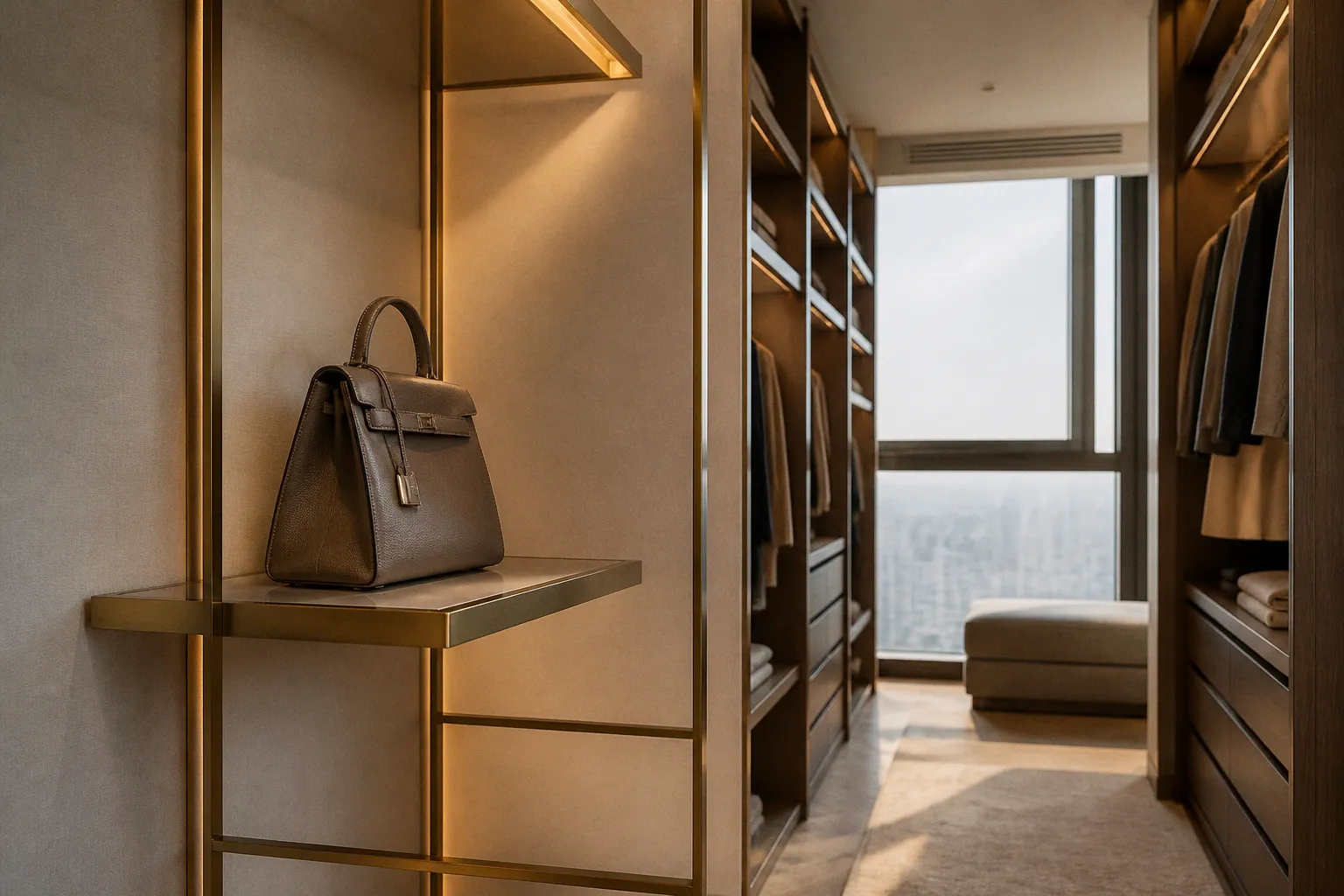
A luxury handbag can lose its shape long before it looks visibly damaged. The usual culprit is not dramatic mishandling; it is a storage decision that seems harmless on day one: a strap left under tension, a shelf that forces the bag to lean, a closet with too much direct light, or a sealed plastic bin where humidity quietly accumulates.
Compare car rental deals in United Kingdom
See available offersPartner link — DiscoverCars comparisonThat is why the right handbag display rack for home storage is not simply a matter of choosing between black metal and brass, open shelving and glass doors. The rack becomes part of the preservation system. It carries the bag’s weight, controls how the leather rests, determines whether hardware rubs against adjacent pieces, and decides how quickly you can see and use what you own. In a high-end closet, storage has to perform two jobs at once: protect the collection and make the next purchase, outfit, or styling decision frictionless.
We can borrow a useful principle from retail merchandising: the product that is visible, accessible, and presented at the right height gets used. A beautiful bag hidden behind three boxes is not really part of the wardrobe. It is inventory in a dead zone.
The structural problem with hanging luxury handbags
Hanging purse racks for closet use can appear efficient because they turn unused vertical space into storage. For lightweight fabric totes or temporary organization, that may be perfectly reasonable. Luxury leather handbags are a different category. Their handles and straps are designed to carry the bag during use, not to suspend its full weight for months at a time from one narrow point.
When a bag hangs by its straps, the load concentrates at the handle attachments. Over time, that tension can stretch the leather, distort the handle, and create a permanent change in the bag’s silhouette. Structured designs are especially vulnerable because their shape depends on internal reinforcement, firm panels, and carefully balanced construction. A shelf that supports the base distributes weight; a hook transfers it to the most exposed components.
We should also consider the way bags behave when they hang close together. A chain strap may press into the leather of the bag below it. A metal clasp can leave a shallow indentation. Two handbags may swing against each other whenever the closet door opens. In a retail environment, we would never leave high-value accessories touching in an uncontrolled cluster because the visual presentation would deteriorate and the products would create their own wear points. The same logic applies at home.
For long-term storage, support the handbag from below, not from the most delicate point above.
The safer baseline is upright shelf placement, with each handbag standing on a stable base and retaining its original silhouette. That does not mean every bag needs a separate custom cabinet. It means the rack or shelving system should be designed around the dimensions and behavior of the collection rather than around a generic closet grid.
Hanging versus upright storage
| Storage path | Best use | Main advantage | Main risk |
|---|---|---|---|
| Hanging purse rack | Lightweight, frequently rotated fabric bags | Uses vertical space and keeps items visible | Can stretch handles and distort leather over time |
| Open cubby shelving | Structured leather handbags and daily-use collections | Supports the base and provides fast access | Exposes bags to dust and indoor light |
| Glass or acrylic display case | Rare, high-value, or light-sensitive pieces | Adds protection while preserving visibility | Costs more and requires careful ventilation and cleaning |
| Adjustable metal stands | Individual presentation within a shelf or cabinet | Raises bags into a controlled sightline | Stability depends on the base and fit; weight limits vary |
| Deep storage bin | Temporary transport or short-term rotation | Keeps pieces together | Sealed plastic can trap moisture and encourage mold |
The comparison is not about declaring one format universally superior. We want the rack to match the collection’s operating pattern. If you reach for a bag every morning, open shelving usually wins because access matters. If the bag is carried twice a year and has delicate leather or embellished hardware, a protected display case may justify the extra footprint.
Climate control is part of the rack strategy
A closet can look perfectly dry and still be a poor environment for leather. Temperature and relative humidity influence how the material ages, how adhesives behave, and whether mold has a chance to develop in seams and hidden compartments.
For luxury leather handbags, a stable environment around 60°F to 75°F, or approximately 15°C to 24°C, is a sensible target. Relative humidity should generally remain between 40% and 55%. The word “stable” matters here. A closet that moves sharply between damp and dry conditions can be harder on leather than one that stays slightly imperfect but consistent.
Once relative humidity rises above roughly 60% to 65%, the risk of mold and mildew increases materially, especially where air cannot circulate: the bottom of a bag, the inside of a pocket, or the narrow gap between a handbag and a solid wall. At the other extreme, overly dry conditions can contribute to leather drying and cracking. We should not treat a handful of desiccant packets as a complete climate plan either. Excessive moisture absorption in a very dry space may create a new problem rather than solve the original one.
This is where open versus enclosed handbag display rack home storage options need a more precise comparison.
An open rack gives you better airflow and easier visual access, but it leaves the collection more exposed to dust, sunlight, and fluctuating room conditions. An enclosed cabinet offers a physical barrier, but it can become a stagnant microclimate if it is sealed too tightly or placed against a damp exterior wall. The best solution depends on the room, not just the furniture catalog.
Where the rack should live
Place the storage system away from direct sunlight, heating vents, radiators, bathrooms, and exterior walls that regularly experience condensation. Do not position an open display rack directly opposite a bright window simply because that wall has the best visual impact. Indoor UV exposure contributes to fading and premature aging, and leather does not need theatrical lighting to look luxurious.
A wardrobe or dressing room with controlled temperature is preferable to an attic, basement, or garage. Those spaces often experience wider swings in heat and humidity, even when they feel acceptable during a brief visit. If the room has a history of dampness, use a hygrometer and watch the readings over several days rather than making a decision based on one afternoon.
The rack itself cannot correct a poor climate. A beautifully finished shelf in a humid room is still a humid storage environment. We need the furniture and the room to work as one system.
Closet shelving dimensions that actually help
Many closet purse organizer ideas fail because they are built around an arbitrary number of compartments. The result is either wasted vertical volume or cubbies so tight that every bag is pushed against its neighbor. A luxury handbag collection needs a little breathing room because the bags are not uniform boxes. Their handles rise to different heights, their bases vary in depth, and soft leather changes shape when compressed.
A practical starting point for handbag shelving is approximately 12 to 14 inches of width per bag, with 12 to 18 inches of vertical clearance depending on the style. Smaller shoulder bags may use less space, while tall totes and structured top-handle bags may need the upper end of that range. Adjustable shelving is the better long-term investment because the collection will not remain static.
We typically divide the closet into three presentation bands:
1. Daily rotation: Place the bags you use most often between waist and eye level, where they can be reached without bending, climbing, or moving another item. This is the residential equivalent of prime retail real estate.
2. Seasonal rotation: Store less frequently used pieces on higher or lower shelves, but keep them visible enough that they do not disappear from your wardrobe. A clear front edge, consistent spacing, and discreet labels can prevent forgotten inventory.
3. Archive or occasion pieces: Use a more protected cabinet, acrylic case, or dust-cover arrangement for bags that are valuable, delicate, or rarely handled. These should not be buried in deep storage where inspection becomes a chore.
This arrangement does more than improve aesthetics. It reduces dwell time at the closet, shortens the decision path, and makes the collection easier to merchandise around your actual lifestyle. If the bag is visible at the moment you select shoes or a jacket, it has a better chance of being worn. If it is stored in an opaque bin, its practical value drops even while its monetary value remains high.
Base support matters more than decorative styling
A shelf should be rigid enough that it does not bow under the weight of several bags. The load is not only the handbag itself; it may include organizers, dust bags, display inserts, and adjacent accessories. A thin shelf that flexes can cause bags to lean, and leaning creates pressure on side panels and handles.
The front edge should be smooth and free of sharp corners. Metal shelving can work well in a modern closet, but exposed welds, rough powder-coat damage, or unfinished edges should not contact leather. Wood shelves offer a warmer decorative finish, but they need a durable, fully cured surface and enough depth to support the bag without forcing it against the back wall.
If you are using individual height-adjustable metal handbag stands, choose models with a broad, solid base and adjustability suited to the bag rather than the other way around. Common stands may adjust from approximately 13 inches to 28 inches, which can be useful for creating a stepped display inside a cabinet or on a wide shelf. However, the exact weight capacity is not universal, so we should not assume that every stand is suitable for a heavy tote or a bag with substantial hardware.
A stand should lift and present a bag, not become a narrow substitute for a shelf. If the base is unstable, the display is visually elegant but operationally poor.
Open shelving, modular systems, and protected cases
The strongest luxury handbag shelving systems are modular because they allow us to change the planogram as the collection changes. A fixed wall of identical cubbies may look orderly at installation, but it creates a problem when you acquire a tall tote, a wide frame bag, or a piece that needs extra clearance around embellished hardware.
Modularity gives us several useful controls:
- Adjustable shelf heights accommodate different bag silhouettes without stacking one piece on another.
- Removable dividers prevent soft bags from slumping into adjacent compartments.
- Back panels reduce dust but should not block all air movement in a damp room.
- Integrated lighting can improve sightlines, provided it does not create heat or expose leather to excessive brightness.
- Cabinet doors protect against dust and contact, but should open widely enough to prevent handles and chains from catching.
- Mixed-width bays allow the planogram to reflect real product dimensions instead of forcing every handbag into a standard slot.
Open shelving remains the best choice for a collection that is actively used. It offers fast access and lets you see color, scale, and texture at a glance. The trade-off is maintenance: dusting, periodic inspection, and protection from light become part of the routine.
Acrylic cases are useful when the presentation needs a protective layer without losing visibility. Museum-grade UV-blocking acrylic is designed to filter indoor UV exposure while keeping the object visible, making it a strong option for rare or particularly light-sensitive handbags. We should be precise, however: not every clear plastic case offers the same UV protection, and “acrylic” alone is not a guarantee of museum-level performance.
Cases also need enough internal clearance. A bag should not touch the lid, sides, or rear panel, and the case should not compress handles that are meant to stand upright. A small amount of air space around the piece makes inspection easier and prevents contact damage. If the case is airtight, the display may retain moisture instead of protecting against it, so ventilation and room humidity still matter.
The most expensive handbag in the closet should not automatically occupy the highest shelf; it should occupy the safest, most inspectable position.
That is a merchandising decision as much as a preservation decision. A bag that is valuable but difficult to inspect can develop unnoticed problems. A transparent, accessible presentation lets you catch dust, surface changes, hardware tarnish, or shape distortion before they become expensive restoration work.
Internal support: preserve the shape without overstuffing
Upright placement works only when the interior is supported appropriately. Structured handbags, including designs with firm flap construction or reinforced bodies, should be stuffed with clean, acid-free tissue paper, custom felt inserts, or another non-abrasive material that helps the bag hold its intended form.
The objective is gentle support, not maximum fullness. Overstuffing can stretch the leather and place pressure on closures, gussets, and seams. Underfilling can allow the bag to collapse, especially when it remains untouched for a long period. We want the insert to fill empty space without forcing the panels outward.
Avoid newspaper and colored paper. Ink and dye can transfer to the interior lining or leather, particularly when the bag is stored under pressure or in a warm environment. Printed material may seem convenient, but the cleanup cost is not worth the shortcut.
For soft or slouchy bags, the approach changes slightly. We should support the base and maintain a natural shape rather than trying to make the bag rigid. A breathable fabric insert can prevent deep creasing while allowing the leather to rest without unnatural tension. Keep the dust bag as a breathable cover where one is provided, but do not use it as a substitute for structural support.
Chains, clasps, and hardware need their own layer of protection
Metal hardware is often treated as decorative detail, but in storage it becomes a contact surface. A chain strap folded across a flap can press into the leather and leave repeated impressions. A clasp can mark the front panel if it is allowed to swing freely inside the bag.
Wrap chains and detachable hardware in soft tissue or fabric before placing the bag on the shelf. The material should separate metal from leather without creating a bulky knot that changes the bag’s form. If a chain is long enough to hang over the edge of a cubby, reposition it so it rests inside the bag or along a protected surface.
This is also where shelf spacing earns its keep. Tight cubbies encourage hardware to migrate into the neighboring bag. A few inches of clearance can prevent contact, improve sightlines, and make the entire display feel more intentional. In retail, that extra space is often called breathing room. In a home closet, it is damage prevention disguised as good merchandising.
The storage mistakes that quietly reduce a collection’s value
The obvious errors are easy to avoid. Few people deliberately leave a handbag in a leaking basement or place it next to a radiator. The costly mistakes are usually ordinary habits repeated for months.
Suspending every bag from a hook
Hooks are convenient, but convenience is not the same as safe long-term support. Use them for temporary staging or lightweight bags rather than making them the primary storage path for structured leather pieces.
Packing bags tightly into sealed plastic bins
Airtight containers can trap moisture and restrict airflow. That environment is especially risky when a bag enters storage with even a small amount of residual humidity. Breathable covers and climate-controlled shelving are safer for long-term storage.
Treating all handbags as the same size
A one-size-fits-all cubby system creates compression, wasted space, or unstable stacking. Measure the collection by category: compact shoulder bags, medium structured bags, tall totes, evening pieces, and soft hobo styles each need a different amount of clearance.
Choosing a beautiful rack with a weak shelf
Decorative furniture is still load-bearing furniture. If the shelf bows, vibrates, or shifts when a bag is removed, the display is not doing its job. Look for rigid construction, secure wall anchoring where appropriate, and a base that keeps each piece upright.
Using sunlight as the primary display lighting
A bright window can make a closet look dramatic in photographs while accelerating fading in the actual collection. Use controlled, low-heat lighting and place the most light-sensitive pieces away from direct exposure.
Forgetting the back and bottom of the bag
The visible front panel gets all the attention, but the base and rear panel are where dust, dampness, and compression often accumulate. Rotate pieces periodically, inspect hidden areas, and allow enough clearance to lift a bag without scraping it against the shelf.
Building a display path around use, value, and access
The best handbag display rack home storage options are not selected by appearance alone. We start by mapping the collection’s traffic pattern.
If you have a small group of daily-use bags, a low-profile open shelving unit near the dressing area may outperform a large enclosed wardrobe. If you own several rare or high-value pieces, a cabinet with UV-protective acrylic, adjustable shelves, and controlled lighting may offer better protection. If your collection is growing, a modular wall system prevents today’s neat arrangement from becoming tomorrow’s compression problem.
A practical layout might look like this:
- Primary sightline: daily bags, placed between waist and eye level with one-bag-per-compartment spacing.
- Secondary sightline: seasonal colors and occasion bags, stored on adjustable shelves with breathable covers.
- Protected zone: rare, delicate, or light-sensitive pieces in individual acrylic cases or a closed display cabinet.
- Service zone: inserts, dust bags, cleaning cloths, and hardware wraps stored nearby so maintenance does not become a separate project.
- Expansion zone: at least one adjustable bay kept available for a larger tote or an unexpected change in collection size.
This is a planogram for the home, but it is still a planogram. We are deciding which products deserve the first visual contact, which need additional protection, and which should remain easy to retrieve. The payoff is not merely a better-looking closet. It is higher use frequency, fewer handling errors, and a lower chance that a valuable piece spends years in a forgotten dead zone.
A measured way to compare your options
Before buying a rack, measure the bags you actually own rather than relying on advertised “standard” dimensions. Record the widest point, the deepest point, the height including handles, and the space needed for the door or drawer to open without contact.
Then compare the storage path against five operating questions:
1. Does the base carry the weight? If the bag is supported only by handles, straps, or a narrow stand, it is not the right long-term position.
2. Can you remove one bag without disturbing the others? If not, the system will create friction and encourage careless handling.
3. Is there clearance around hardware and edges? A small gap can prevent repeated rubbing, indentations, and scratches.
4. Can the shelf height change later? Adjustable systems protect the investment in the furniture as the collection evolves.
5. Can you inspect the bag quickly? Visibility is a preservation advantage because problems are found earlier when the bag is not buried.
We should also assign each section a realistic capacity rather than filling every available inch. High SKU density is useful in a stockroom when the product is protected and easy to retrieve; it is counterproductive for luxury accessories when density means compression and poor sightlines. The goal is not maximum bag count per linear foot. The goal is maximum usable collection per linear foot.
The final layout decision
For most luxury home closets, the strongest route is a hybrid: adjustable open shelving for daily and seasonal bags, individual upright support for structured pieces, and enclosed UV-protective cases for rare or light-sensitive items. Keep the room between 60°F and 75°F when possible, maintain relative humidity around 40% to 55%, and avoid placing the collection where direct sunlight, heat, or dampness can change the environment.
Use hanging racks selectively rather than automatically. They can solve a vertical-space problem, but they should not carry the long-term load of valuable leather bags by their straps. Let the shelf support the base, let inserts preserve the shape, and let the planogram guide the collection toward regular use.
The measurable result is straightforward: every bag should be visible, individually retrievable, supported from below, and inspectable without unpacking an entire closet. When those four conditions are met, the display rack stops being decorative storage and becomes what a well-designed retail fixture has always been—a sales and preservation tool, adapted for the way you live.