Retail Gondola Shelving: Standard Dimensions and Budgeting Strategies
According to Kollirama’s 2026 guide, the store gondola remains the basic sales unit for planning retail space, with standard heights, module widths and price bands that can quickly shape a fit-out budget.
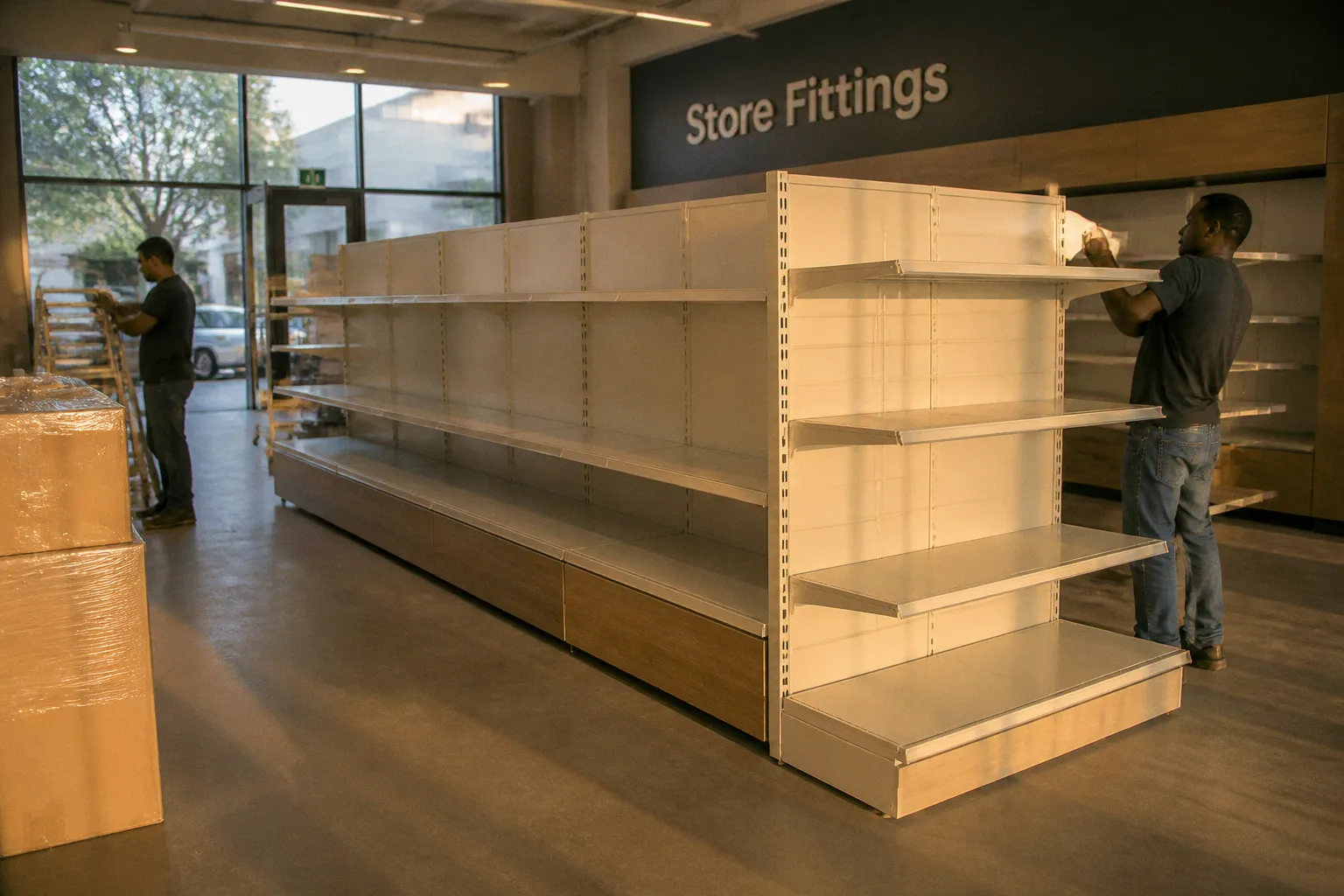
For retailers, the important question is not simply how much shelving costs, but where height, depth, load capacity and aisle clearance will support product visibility without creating dead zones or blocking sightlines.
The 1,000 mm module is the practical starting point
A gondola is a metal racking structure with adjustable shelves, configured either as a single-sided wall unit or a double-sided central unit. The most common module length is 1,000 mm, while 665 mm modules are used for corners and tighter areas, and 1,330 mm modules can reduce the number of uprights across longer runs.
Typical heights range from 1.20 to 1.80 metres. In the centre of the store, the guide recommends staying around 1.20–1.60 metres so customers can see across the sales floor. That matters for more than visual neatness: clear sightlines help shoppers orient themselves, while high central runs can make the store feel fragmented and reduce the impact of promotional zones.
Perimeter gondolas can go higher because they do not cut across the main view. In DIY retail, wall units may reach 2.20–2.40 metres. This is where you can add vertical SKU density without putting a visual wall in the middle of the customer journey.
The gondola end deserves separate attention. Positioned at the end of an island and facing the main flow, it is described as the most visible promotional location. The recommended picking zone is between 0.80 and 1.60 metres—the practical “eye and hand” range where products are easiest to notice and reach.
Price bands depend on the configuration
For the French market, Kollirama reports the following 2026 benchmarks for new metal gondolas, with basic shelves and accessories included:
- Single-sided wall unit: about €100–€250 excluding VAT per linear metre
- Double-sided central unit: about €150–€350 excluding VAT per linear metre
- Gondola end: about €150–€400 excluding VAT per unit
- Standard gondola equipment: about €150–€300 excluding VAT per square metre of sales floor
Transport and installation are excluded from those linear-metre prices. The guide says these services can add roughly 10–20%, depending on the site. Height, shelf depth, finish, back-panel type and permissible load all move the final figure, so a low headline price is not enough for a meaningful comparison.
Load capacity is another point where merchandising plans meet operational reality. Standard shelves are reported at 30–60 kg, while reinforced versions can handle 100 kg or more for DIY, liquids or heavy food products. The permissible load depends on the module span and should be checked in the manufacturer’s documentation rather than assumed from the shelf’s appearance.
For a store opening or remodel, lead time also belongs in the budget conversation. The guide gives a general range of four to ten weeks from order to installation, depending on the manufacturer and finish. If the opening date is fixed, the gondola order cannot sit behind the signage or POS decision; it is part of the critical path.
The layout check comes before the purchase order
Start with the customer journey, then work backward into the planogram. Use lower double-sided gondolas in the centre where you need cross-store visibility, and reserve taller units for perimeter walls where they can increase capacity without interrupting sightlines. Keep main aisles at least 1.80 metres wide and secondary aisles at least 1.40 metres, according to the guide, so trolleys can pass.
Second-hand equipment may reduce the purchase price by two to three times, but the trade-off is compatibility. Gondola column systems from different manufacturers are not interchangeable, meaning shelves and accessories may not transfer from one brand to another. Before buying used, inspect columns and shelves for deflection or corrosion, verify spare-part availability, and request documented load limits.
The commercial KPI is straightforward: more shelf capacity only helps if customers can navigate, see the range and reach the products. Before approving the layout, check four points—module width, central-unit height, aisle clearance and shelf load. If those four variables match the category and traffic pattern, the gondola becomes a flexible sales tool rather than a dense metal obstacle course.