Retail Shelving Strategy: Lessons from the New 2,500 m² bellaflora Installation
When a shopfitting specialist the size of umdasch The Store Makers finishes a full commercial shelving installation across roughly 2,500 square meters of selling floor, the rest of us in retail stop and take notes.
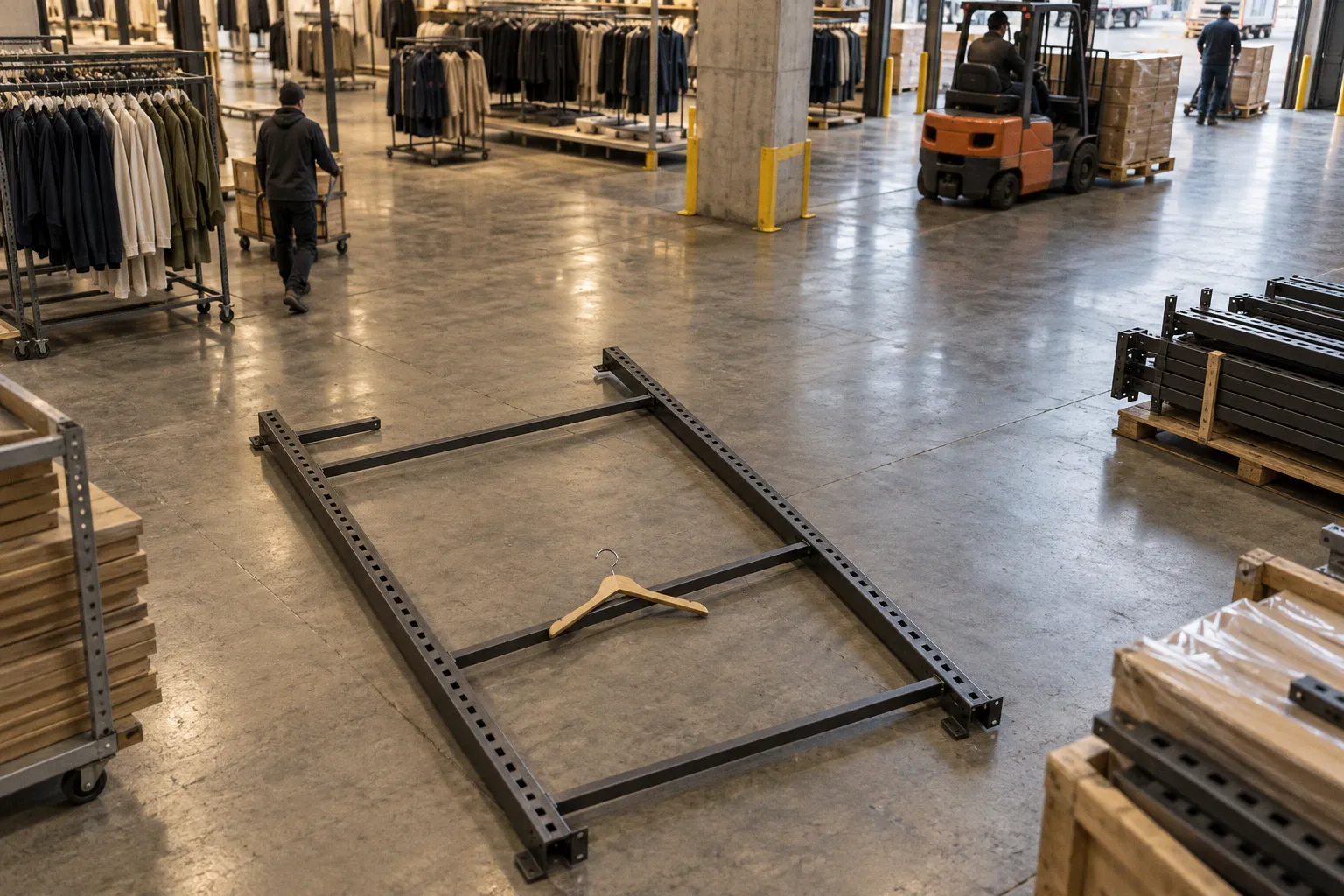
That's exactly what just wrapped at the bellaflora branch in Schwechat — a comprehensive shelving systems deployment that, on paper, is the kind of project we rarely see greenlit these days. For anyone whose daily life is gondolas, endcaps, and planogram revisions, this one is worth dissecting.
The Merchandising Logic Behind a 2,500 m² Install
A rollout at this scale isn't about hanging shelving — it's about engineering sightlines, SKU density, and dwell time across a category-heavy environment. bellaflora's garden-and-living assortment behaves nothing like a fast-fashion grid, and the fixture strategy has to flex between long, heavy-product runs and impulse endcaps near checkout. When the install team is measuring capacity to the square meter, you're looking at decisions about uprights, bracket spacing, and load class that quietly decide whether your back room ever empties or stays permanently stuffed. That's the level where shopfitting stops being carpentry and starts being a conversion lever.
The Other Side of the Same Week
Read that headline against what else is moving on the floor. While umdasch is bolting in fresh gondolas for bellaflora, specialty clothier Scrubs & Beyond is winding down all of its brick-and-mortar locations — over 115 stores across 30 states, including nine in California — and shifting to a digital-only sales model. Cato, by the same token, has bumped up its store closing count and pointed directly at the current economic environment. Same week, opposite playbooks.
So the question we keep fielding from operators is the obvious one: if apparel chains are pulling back, who is still investing in physical shelving? The honest answer is categories with high basket weight, tactile decision-making, or replenishment friction — garden centers, home improvement, specialty grocery, DIY. bellaflora fits that profile neatly. Live goods and bulky accessories don't photograph well, don't ship at friendly flat rates, and customers want to handle them before they buy. That keeps the square meters productive even as some apparel chains find their SKU sets converting better in a warehouse than on a sales floor.
What to Pressure-Test on Your Own Floor
If you're staring at a refresh budget and wondering whether to follow the Scrubs & Beyond route online or follow bellaflora deeper into the store, here's the framework we walk clients through. First, audit your sightlines from the front door — if a customer can't read your category story at a glance, no endcap program is going to bail you out. Second, map SKU density against dwell time in each zone; under-filled gondolas in a slow-traffic aisle are dead zones you can feel in conversion within a quarter. Third, pressure-test your fixture load class against the heaviest SKU on the planogram. If your team is propping up sagging shelves with shims, the shelving spec was wrong before opening day, and the fix is a fixture conversation, not a merchandising one.
A 2,500-square-meter install in Schwechat isn't a vanity project — it's a signal that operators in the right categories still treat the sales floor as the asset. The chains contracting right now aren't retreating because their fixtures failed them. They're retreating because the merchandise and the customer journey outgrew the format. Your job before the next refresh cycle is to know which side of that line you're standing on.