Optimizing Retail Fixture Illumination to Boost Product Visibility and Sales
According to JS Retail Displays, a new technical guide sets out best practices for integrating ambient, accent, and shelf-level lighting into commercial display racks and wall systems.
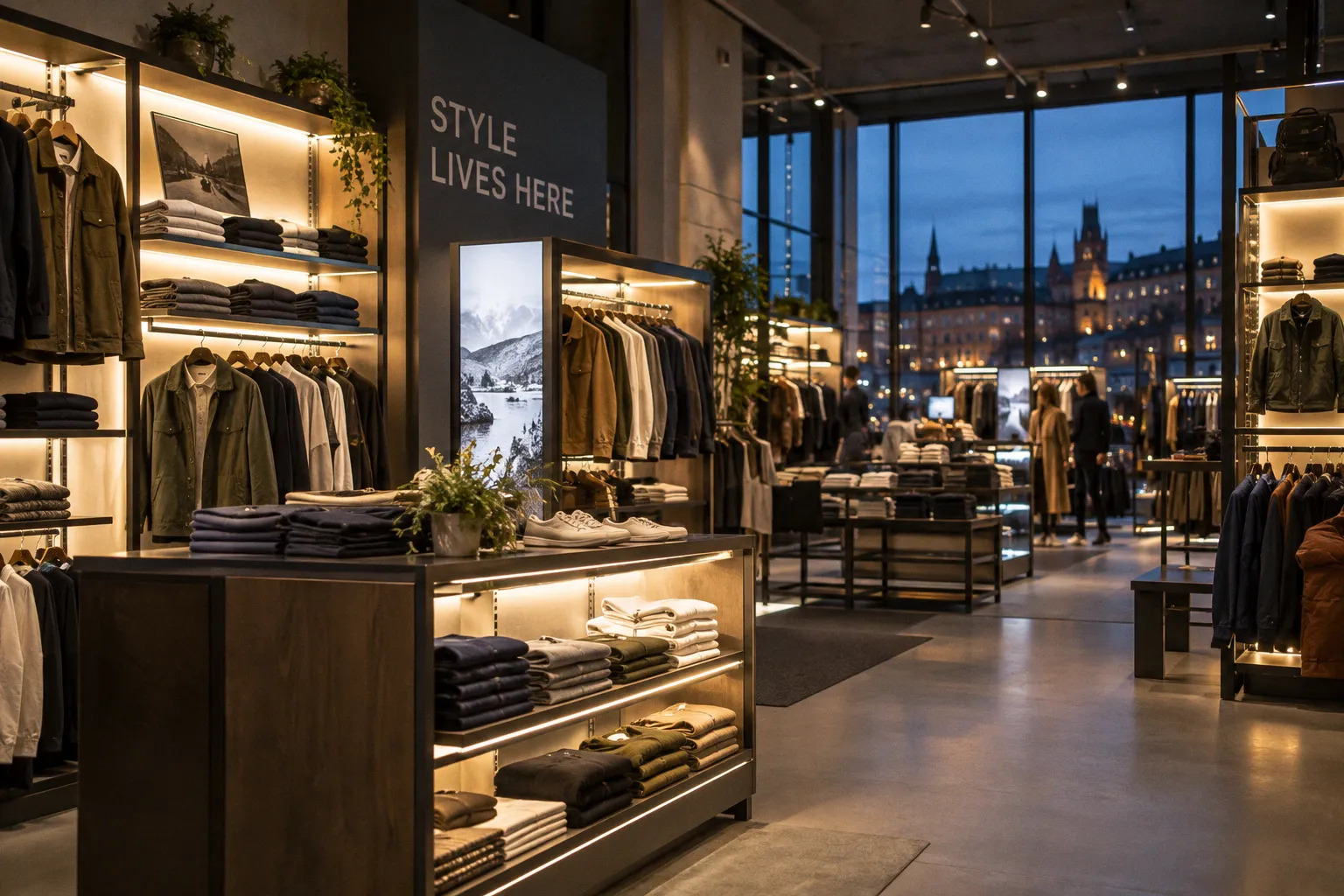
The practical issue is familiar: a fixture can have the right planogram, signage, and assortment yet still lose sales if shoppers cannot see the product hierarchy quickly. For apparel retailers, the guide is particularly relevant because illumination and color temperature affect how garments appear, while stronger end-cap visibility helps priority collections compete for attention.
Put the lighting plan inside the merchandising plan
The guide’s central message is straightforward: lighting should not be treated as a finishing item added after shelving and wall bays are installed. We should map illumination alongside gondolas, fashion walls, promotional endcaps, checkout counters, refrigerated cases, digital screens, and branded signage, then identify where shoppers need to browse, compare, pause, or purchase.
That sequence matters on a retail floor. If we install uniform ceiling lighting first, the best-selling garments may end up in shadow, shelf labels may become difficult to read, and a feature endcap may have no visual advantage over the surrounding aisle. A fashion wall may need focused light to separate a key collection from the background, while a long shelf run needs consistent visibility across its full length.
The guide separates the working scheme into three layers:
- Ambient lighting establishes the store’s general visual baseline.
- Accent lighting directs attention toward priority fixtures and merchandise.
- Shelf-level lighting supports product visibility where shoppers browse and compare.
The balance depends on the retail format. A value-led supermarket may prioritize uniform ambient and shelf illumination, while a cosmetics retailer may put more of its lighting budget into precise accent lighting at wall displays and hero fixtures. For garment storage and apparel display, the useful question is not simply whether the rack is bright, but whether the lighting gives the customer a clear route from the collection to the comparison point and then to purchase.
Brightness should create hierarchy, not glare
The guide recommends planning brightness by retail zone instead of applying one output level across the entire store. When every surface is equally bright, the endcap, new-arrival fixture, or premium cabinet loses its stopping power. When general lighting is too low, shoppers may struggle to compare products, read packaging, or feel comfortable spending time in the store.
The target is controlled contrast rather than a floor full of competing spotlights. Promotional endcaps, new arrivals, premium display cabinets, and branded wall units can use a higher light level to establish visual priority. In apparel, that hierarchy can help customers understand which collection deserves attention before they begin working through SKU density on the rack.
Ceiling height, fixture spacing, surface finishes, and daylight all change the result. A dark-ceiling concept store absorbs more light than a unit with white walls and reflective flooring. Storefront glazing may reduce daytime lighting requirements near the entrance, but it can also introduce glare and uneven contrast. For large-format stores and multi-location rollouts, the guide identifies lighting calculations or on-site mockups as particularly valuable before specifications are finalized.
What to check before specifying fixtures
For procurement teams, the most useful warning is not to compare fixtures by wattage alone. The guide points instead to delivered light on the merchandise and recommends asking for lumen output, photometric data, beam distribution, and recommended mounting distance. Beam angle is also critical: a narrow spread can focus attention on a hero display, while a wider distribution may be more appropriate for a continuous shelf or garment run.
That gives retailers a practical pre-installation checklist:
1. Map lighting zones against the planogram and customer route.
2. Separate ambient, accent, and shelf-level requirements.
3. Identify which endcaps, wall bays, and collections need deliberate contrast.
4. Check apparel color perception and label readability under the proposed lighting.
5. Review ceiling height, daylight, finishes, spacing, and glare risk.
6. Use a mockup or lighting calculation when the rollout is large or repeated across stores.
7. Compare delivered illumination and beam distribution, not wattage alone.
The commercial test is visible on the floor: can shoppers find the priority range, distinguish products accurately, and move from browsing to purchase without fighting shadows or reflections? If the answer is no, the rack configuration may not be the only problem. The lighting plan may be undermining the merchandising plan before the first customer reaches the endcap.