Integrating Digital Displays into Modern Retail Fixtures and Garment Racks
Sintop Fixtures reports that digital retail displays are increasingly being integrated with physical metal racks and gondola shelving, pointing to a broader 2026 shift in how stores combine…
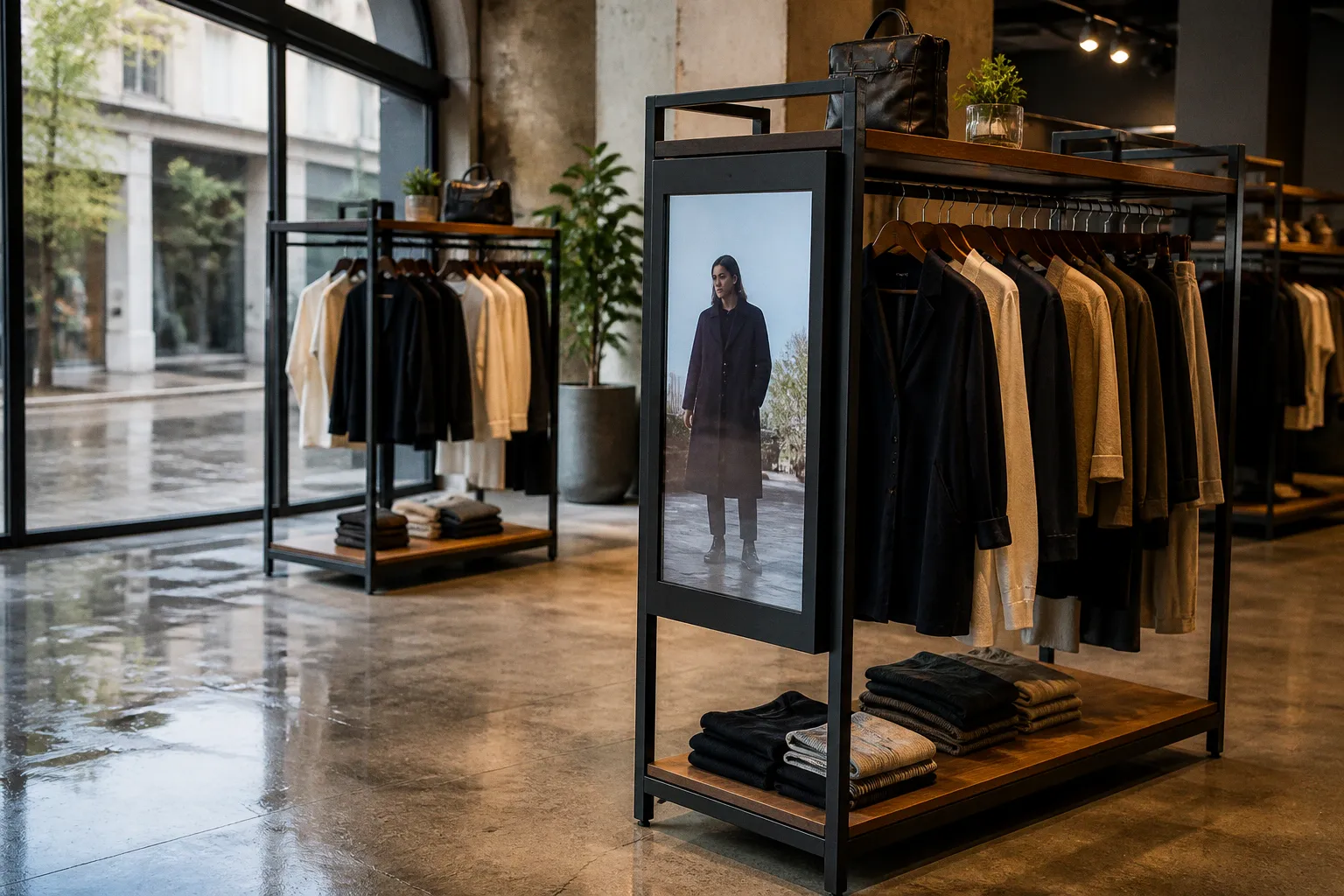
Sintop Fixtures reports that digital retail displays are increasingly being integrated with physical metal racks and gondola shelving, pointing to a broader 2026 shift in how stores combine merchandising hardware with digital communication. For retailers, the important change is not simply the arrival of another screen: it is the need to coordinate sightlines, product density, fixture flexibility, and customer messaging as one commercial system. That makes the rack itself part of the selling environment rather than a passive holder for stock.
The rack is becoming part of the media layer
The analysis from Sintop Fixtures places digital screens alongside conventional retail display fixtures, including metal racks and gondola systems. That combination matters because shoppers do not experience a store in separate technical layers; they see a sequence of products, prices, messages, lighting, and movement across the same sightline.
A screen positioned beside an endcap, for example, can direct attention toward a promotional bay, explain a product range, or support a seasonal change without requiring a full fixture replacement. The commercial opportunity is strongest when the digital element reinforces the physical planogram instead of competing with it. If the message points customers toward one category while the rack presents another, the result is visual noise and weaker conversion.
The same principle applies to garment storage. A clothing rail, wall rack, or gondola needs enough visual clarity for customers to understand the range quickly. Digital content should support that decision process, not increase SKU density to the point where the product disappears into the fixture.
Modularity is moving from convenience to operating discipline
A separate 2026 shopfitting report highlighted by VRI focuses on modular shelving, movable displays, and adaptable fixtures that allow retailers to reconfigure layouts more easily. This is a practical response to a store environment where campaigns, categories, and customer routes change faster than permanent interiors can handle.
For floor managers, modularity creates options. A fixture can be moved to protect a high-performing sightline, create a stronger endcap, open a congested aisle, or test a different product sequence without committing to a complete refit. The value is not flexibility for its own sake; it is the ability to make smaller layout decisions before a dead zone becomes a turnover problem.
Formwerk’s retail design guide adds a more specific signal: it says 42 percent of retailers now rely on circular, modular furnishing systems to reduce renovation costs. That figure should be treated as a reported industry finding, but its operational implication is clear. Retailers are looking at store furniture as an adjustable capital asset, not a fixed background. A modular rack system can support that approach when uprights, shelves, hanging components, and display surfaces can be reconfigured around the next commercial priority.
The challenge is coordination. Digital signage, power requirements, rack dimensions, and customer circulation must be planned together. A display that looks effective in isolation may block a key sightline once it is placed beside a tall shelving run. Likewise, a lightweight movable unit may improve flexibility but fail to deliver the load capacity or stability required for a dense merchandise presentation. Procurement teams should therefore assess the electronic and structural sides as one rollout rather than buying screens and fixtures through disconnected briefs.
What retailers should measure before expanding
OpenPR reports that DG Display Showcase plans to present luxury retail display solutions centered on custom showcases and visual merchandising fixtures. That announcement reinforces the split now visible across the market: some retailers are pursuing high-end, branded presentation, while others are prioritizing adaptable systems that can be changed quickly and economically.
The right choice depends on the job the fixture must perform. Use custom showcases where brand presentation and controlled visibility are central to the customer experience. Use modular racks and movable displays where assortment changes, seasonal turnover, or frequent planogram testing matter more. In both cases, the digital layer should earn its footprint by improving the customer journey around the merchandise.
Before approving a wider rollout, track the basics at store level:
- whether the display improves customer dwell time in the target zone;
- whether shoppers move from the digital message to the intended rack or endcap;
- whether product visibility improves without reducing usable capacity;
- whether staff can reconfigure the fixture without disrupting daily operations;
- whether the system supports the next layout change, not only the current campaign.
The 2026 signal is straightforward: digital displays are entering the fixture conversation, while modular hardware is becoming the practical counterweight. Retailers that connect both to clear planograms, reliable sightlines, and measurable sell-through will be better positioned than those treating screens as decorative add-ons or racks as permanent steel.