Dubai Desert Safari Prices: Step-by-Step Booking Route
Dubai Desert Safari prices are not a single market rate. They are the result of a package architecture: departure time, vehicle allocation, transfer mode, camp access, meal service, activity load, and guide-to-guest ratio.
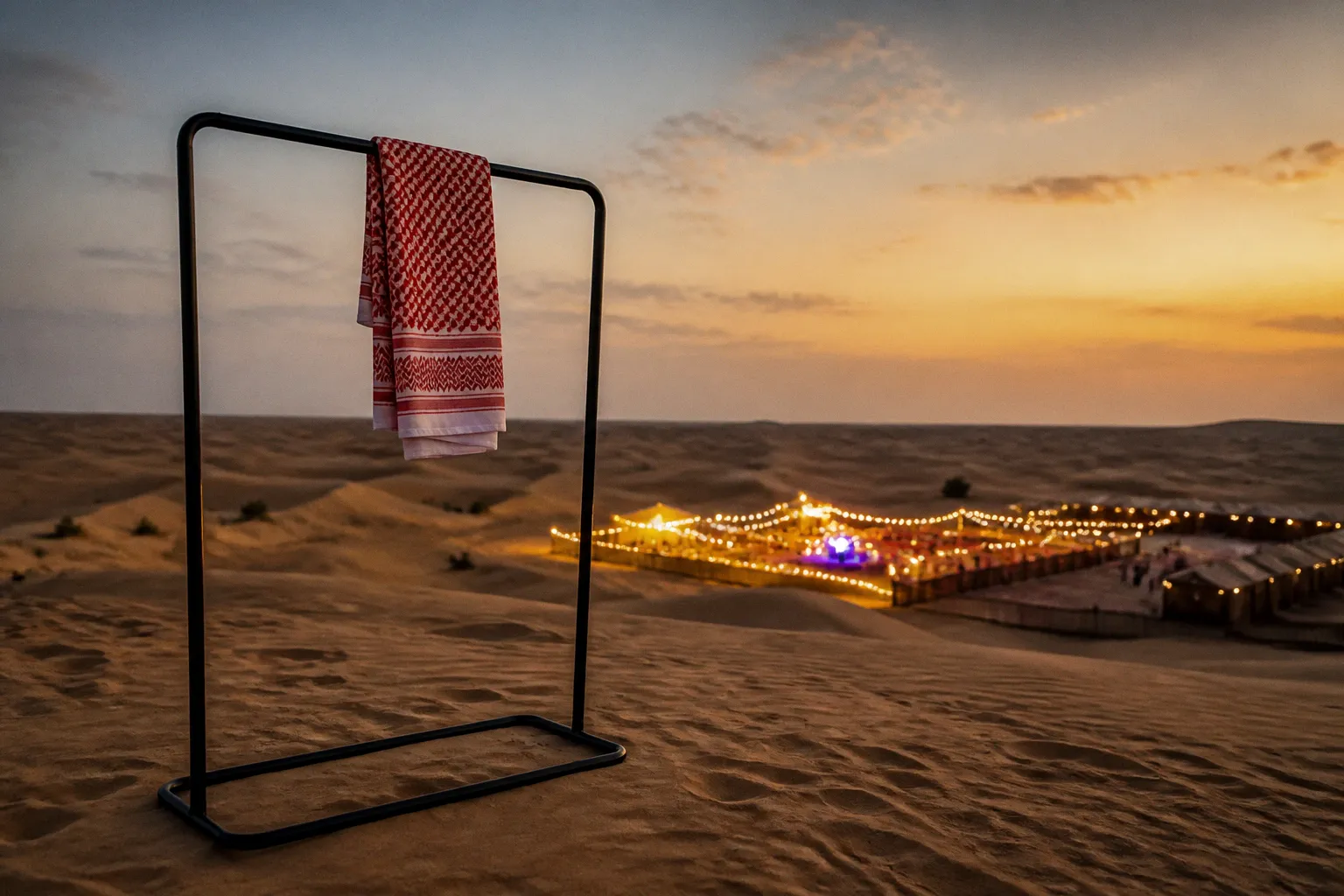
Two tours can both be described as an evening desert safari while delivering materially different operating conditions.
Tickets and prices
Dubai Desert Safari
I
Save
Box office and online booking
- Adult AED29.81
AED29.81
Official websiteII
guided tour
Guided tour · Camel ride & stargazing
This 4 to 5-hour guided tour includes Arabic tea, coffee, dates, sandboarding, a camel ride, sunset views, wildlife spotting, and stargazing.
III
other
Desert safari · Dune bashing & optional BBQ
Spend 4 to 7 hours dune bashing and sandboarding, with optional quad bike and camel rides plus an optional BBQ.
The lowest-cost packages usually compress the experience into shared transport, a fixed camp schedule, standard seating, and a limited activity set. Premium packages add private vehicles, reduced passenger density, upgraded dining, reserved seating, or access to conservation areas. The price difference is therefore not only a margin on the same product. It reflects a different load path through the operation.
The correct booking route begins by identifying the safari configuration, not by selecting the first low headline rate.
Tiered pricing: from budget evening safaris to private expeditions
The Dubai desert safari cost is governed primarily by what the operator must provide per guest. A shared 4x4 carrying a full passenger load has a different operating cost from a private SUV with an individual pickup route. A standard buffet has a different cost structure from table service and multi-course dining. A general camp has a different capacity model from a low-density conservation experience.
At the entry level, an evening safari generally combines:
- Hotel pickup and drop-off in a shared 4x4 vehicle.
- Dune bashing on a scheduled route.
- A short camel ride.
- Sandboarding, where the operator includes it in the standard program.
- Access to a Bedouin-style desert camp.
- BBQ buffet dinner.
- Live entertainment.
- Return transfer to Dubai after the evening program.
This package is built for throughput. Pickup routes are consolidated. Camp seating is organized around a common arrival window. Activities operate in rotation. The guest accepts less control over timing in exchange for lower operating cost.
A morning desert safari uses a different configuration. It usually lasts approximately four hours and focuses on the dunes rather than the camp program. The common inclusions are dune bashing, sandboarding, sunrise or early-desert photo stops, and light refreshments. Evening entertainment, buffet dinner, and extended camp access are normally absent because the tour ends before the main camp service begins.
VIP evening packages occupy the next tier. Their defining variables are not decorative. They reduce congestion and increase control. Typical features include premium camp seating, table waiter service, upgraded food options, and the possibility of private SUV transport. The vehicle may still follow the same broad desert route as a standard tour, but the transfer and camp conditions are less dependent on the schedule of unrelated passengers.
At the upper end are private and ultra-luxury desert expeditions. These may use a private Range Rover, include access to a wildlife sanctuary or conservation reserve, and provide multi-course dining rather than a standard buffet. The operating model is closer to a private field excursion than to a group attraction. The higher cost reflects vehicle exclusivity, specialist access, lower guest density, and a longer service chain.
The cheapest safari is usually not a reduced version of the most expensive one. It is a different operating system with different capacity, timing, and control variables.
Dubai desert safari package comparison
A package should be compared by included operating components. The advertised price is only the first data point, and often the least useful one.
| Package type | Typical duration | Transport configuration | Main inclusions | Main limitation |
|---|---|---|---|---|
| Morning safari | About 4 hours | Usually shared 4x4; private transfer may be available | Dune bashing, sandboarding, photo stops, refreshments | No evening camp program or dinner |
| Standard evening safari | About 6–7 hours | Shared 4x4 pickup and drop-off | Dune bashing, camel ride, camp access, BBQ buffet, entertainment | Fixed schedule and shared passenger load |
| VIP evening safari | About 6–7 hours | Shared or private 4x4, depending on package | Premium seating, waiter service, upgraded dining, standard desert activities | Higher cost for comfort and reduced congestion |
| Overnight safari | Roughly 17 hours | Shared 4x4 or private vehicle | Evening program, sleeping equipment or tents, stargazing, breakfast | Long duration, basic overnight conditions, limited schedule flexibility |
| Private luxury expedition | Variable | Private SUV, commonly a premium 4x4 | Conservation access, wildlife observation, private service, fine dining | Highest cost and more restricted availability |
The table shows why comparing only the words “desert safari” produces unreliable results. A morning route and an overnight route are not competing versions of the same product. They occupy different time windows, require different staffing, and expose the operator to different transport and accommodation obligations.
Budget evening safari: where the cost is compressed
A cheap desert safari in Dubai is generally created through aggregation. Several hotel pickups are combined into one route. Guests share a 4x4. Camp services are delivered to a large group. The dinner format is buffet-based, and the entertainment schedule is synchronized for the full site.
This model can be operationally sound when expectations match the configuration. It becomes problematic when a guest expects private transport, unrestricted dune time, a quiet camp, or individually timed activities while purchasing a group product.
The critical variables to confirm are:
- Whether pickup is shared or private.
- Whether the listed camel ride is a short camp activity or a longer trek.
- Whether sandboarding is included or available only on request.
- Whether the BBQ buffet is part of the standard package.
- Whether entertainment takes place at the same camp used by other large groups.
- Whether the booking includes hotel return rather than hotel pickup only.
A low rate does not automatically indicate weak vehicle standards or an unlicensed operator. Dubai desert safari vehicles must be 4x4 capable, fully insured, and operated by drivers holding the specialized desert driving license required for desert activity. The cost reduction is more commonly associated with passenger sharing, route consolidation, and standardized camp service.
VIP and private packages: paying for control
VIP service has measurable operational value. The guest is buying more than a better chair.
Private 4x4 transport can reduce pickup delays, eliminate unrelated hotel stops, and allow the group to maintain its own departure sequence. Premium camp seating reduces exposure to general crowd movement. Table service changes the food-delivery model from self-service throughput to staffed service. A private vehicle may also permit a more controlled pace between activity points, although the operator’s route restrictions still apply.
The correct question is not whether VIP is worth the premium in abstract terms. The useful question is which constraint is causing the purchase:
- Do you need a private departure rather than a shared pickup?
- Is reduced camp congestion more important than additional activities?
- Does the group require a fixed return time?
- Is dining service a primary requirement?
- Do you need a private SUV because the party cannot be divided between vehicles?
If none of these constraints apply, a standard evening safari may deliver the required activity set without the additional service layer.
Morning, evening, and overnight safari durations
Duration changes the entire package, not only the departure and return times.
Morning desert safari
The morning configuration is structurally simple. It avoids the camp dinner cycle and concentrates the vehicle’s operating time on the desert route. A typical program lasts about four hours.
The activity sequence commonly includes:
1. Pickup from the hotel or a designated meeting point.
2. Transfer into the desert in a shared or private 4x4.
3. Dune bashing on the approved route.
4. Photo stops in the dunes, sometimes timed around early light.
5. Sandboarding.
6. Light refreshments.
7. Return transfer to Dubai.
This is the most efficient format for visitors who want direct exposure to the dunes without reserving an entire evening. It also removes the dinner and entertainment components that account for a large part of the evening camp schedule.
The limitation is equally clear. A morning tour is not a substitute for a full evening desert safari. It does not normally include the same camp program, BBQ buffet dinner, or live entertainment sequence.
Evening desert safari
The evening format is the default configuration for most first-time visitors because it combines driving, camp access, food, and entertainment. The usual duration is approximately six to seven hours, including hotel transfer.
The vehicle component normally includes dune bashing and a route through the desert. The camp component may include a camel ride, sandboarding access, refreshments, dinner, and live shows. The timing is fixed around sunset and the camp’s service cycle. Delays at the pickup stage can therefore compress the time available for individual activities.
The operational difference between operators is often found in the transition between the vehicle route and the camp. Some tours move large groups through a standardized sequence. Others provide a more controlled arrival, reserved seating, or private dining. The activity names may be identical while the time allocation differs.
Overnight desert safari
An overnight safari extends the system to roughly seventeen hours. It generally includes the evening desert program, sleeping equipment or tents, stargazing, and breakfast.
This format introduces additional requirements:
- Sleeping arrangements must be specified rather than assumed.
- The guest should know whether the overnight position is a private tent, shared tent, or basic sleeping area.
- Morning departure timing must be confirmed.
- Food service extends beyond the evening buffet into breakfast.
- Personal luggage and clothing must be compatible with a night in exposed desert conditions.
- The return transfer may occur the following morning rather than after the camp program.
An overnight safari should not be selected solely because it appears to provide more activities. Its value depends on whether the additional night segment is part of the intended trip. The sleeping conditions are functional. They are not equivalent to hotel accommodation.
Add-ons: quad biking, dune buggies, and the cost of motorized access
Motorized activities are commonly listed beside the main safari package, but they are not automatically included in an entry-level ticket.
A 20-minute quad bike session is typically an additional charge. Dune buggy rental is also an add-on, with the final amount influenced by vehicle capacity and rental configuration. A two-seat buggy and a larger vehicle do not have the same operating cost, fuel demand, or passenger allocation.
The distinction between the main desert safari and the add-on matters for both budgeting and liability. Dune bashing is performed by the licensed safari driver in an approved 4x4. Quad biking and dune buggy sessions place the guest in a separate motorized activity with its own operating conditions.
Before adding either activity, establish:
- Whether the ride occurs at the same location as the main safari route.
- Whether the duration is measured from engine start or includes briefing time.
- Whether protective equipment is supplied.
- Whether the vehicle is shared or individually allocated.
- Whether an age or driving restriction applies.
- Whether the activity is affected by weather, site conditions, or operator discretion.
- Whether the add-on changes the hotel return time.
A quad bike session is not a free extension of the camel ride. A dune buggy rental is not included merely because the booking page displays it beside the safari package. The package must state the inclusion.
Camel riding and camel trekking
The phrase “camel ride” can describe two different operating units. At a camp, it may mean a short rotation intended to provide a basic riding experience. Camel trekking refers to a longer, route-based activity with greater duration and animal handling requirements.
This distinction should be resolved before booking. A guest seeking a short introduction should not pay for a trekking format without needing it. Conversely, a guest expecting a meaningful desert traverse should not infer that a brief camp circuit provides the same experience.
The same principle applies to sandboarding. In some packages, boards are available as part of the desert stop. In others, the activity is restricted by route, timing, or package type. It should be treated as an included component only when stated in the booking conditions.
Step-by-step booking workflow
The booking process is straightforward when handled in the correct order. Most errors occur when the guest selects a price before defining the operating requirements.
1. Select the time configuration
Choose between morning, evening, and overnight first.
Morning tours prioritize dune activity and finish within the same half-day. Evening tours combine desert driving with the camp program. Overnight tours extend through sleeping, stargazing, and breakfast.
Do not begin with the add-ons. A quad bike session attached to the wrong time configuration does not correct the underlying selection.
2. Define the transfer mode
The transfer decision is usually between a shared 4x4 and a private 4x4.
Shared transfer lowers the package cost but introduces route dependency. The driver collects and returns multiple guests, and the departure time may vary within the operator’s planned window.
Private transfer increases control. It is appropriate when the group has a rigid schedule, requires a dedicated vehicle, or does not want unrelated passengers in the cabin. It also reduces the chance that a delayed pickup at another hotel will affect the group’s route.
3. Select the package level
At this stage, compare the actual inclusions:
- Standard camp access or premium seating.
- Buffet dinner or upgraded food service.
- General camp seating or waiter service.
- Shared desert vehicle or private SUV.
- Standard route or conservation-focused access.
- Evening-only service or overnight equipment.
The words “premium” and “VIP” have no universal technical definition. Their meaning is determined by the inclusions listed under the specific booking.
4. Add motorized activities separately
Select quad biking or dune buggy rental only after confirming the main itinerary. Check the stated ride duration and vehicle capacity. Confirm that the add-on is paid and that it will not create a conflict with the dune bashing or camp schedule.
The booking should distinguish between:
- Included activities.
- Optional activities.
- Activities available at an additional fee.
- Activities subject to availability on the day.
This is a simple classification, but it prevents most package misunderstandings.
5. Enter pickup details precisely
Provide the hotel name, address, contact number, and any access restrictions. Large resorts may have multiple entrances, and a driver cannot retrieve a passenger efficiently from an unspecified location.
If the booking platform requests a room number, provide it only where appropriate and permitted. The operational requirement is a reliable meeting point, not unnecessary personal data.
6. Submit the booking and inspect the voucher
The electronic confirmation should show the selected safari timing, passenger details, transfer type, inclusions, and pickup instructions. The voucher is the controlling document for the booking. Do not rely on a thumbnail image or a package title alone.
Check whether the confirmation identifies:
- Pickup window.
- Pickup point.
- Vehicle type or transfer category.
- Dinner and entertainment inclusion.
- Camel ride and sandboarding inclusion.
- Add-on activities and their status.
- Cancellation or amendment conditions.
- Contact method for the operator.
7. Confirm driver details before departure
Operators commonly confirm driver information by WhatsApp or phone before pickup. Save the driver’s name, contact number, and vehicle information when supplied.
If the driver proposes a pickup point that differs from the voucher, resolve the discrepancy before leaving the hotel. A desert route is not a suitable location for correcting basic transfer information.
Electronic confirmation can be immediate, but immediate confirmation does not mean the operational details are complete. The final pickup communication remains important.
Licensed vehicles and desert safety requirements
Every desert safari is a vehicle operation first. The camp, dinner, and entertainment are secondary systems attached to the transport route.
In Dubai, drivers operating desert safari vehicles must hold the specialized desert driving license issued by the UAE government. Vehicles must meet legal safety requirements, including full insurance and 4x4 capability. These are baseline conditions, not premium features.
The 4x4 is selected for traction, clearance, and controlled operation on loose and changing surfaces. Dune bashing places different loads on the vehicle from ordinary road travel. Tire pressure, suspension condition, recovery equipment, passenger restraints, and driver competence all affect the operating margin.
The guest should also disclose relevant physical limitations before the vehicle route begins. Dune bashing produces repeated vertical and lateral accelerations. It is not an appropriate activity for every passenger. The research basis for this guide does not support claiming that it is safe for pregnant women, infants under three years old, or people with severe back or cardiac conditions. Those groups should obtain qualified medical advice and review the operator’s restrictions rather than relying on general booking descriptions.
A legitimate operator should be able to provide clear information about:
- Vehicle licensing and insurance.
- Driver qualification.
- Pickup and return procedure.
- Passenger restraint requirements.
- Activity restrictions.
- Weather or route contingencies.
- Emergency contact arrangements.
Self-drive access is a separate matter. Tourists should not assume that a privately rented vehicle can legally be taken into desert routes without licensed guides or approved arrangements. Desert driving is not equivalent to driving on a marked urban road. Route knowledge, recovery capability, and permission conditions are relevant.
How to read a low advertised rate
A low headline rate can be valid while still excluding components that the guest expects. The rate may apply to a shared vehicle, a standard camp, a short activity sequence, or a specific pickup zone. It may also exclude quad biking, dune buggy rental, private transfer, premium seating, or extended meal service.
Use the following comparison logic:
1. Normalize the duration. Compare four-hour morning tours with other morning tours, not with overnight programs.
2. Normalize the vehicle. Shared 4x4 and private SUV are different products.
3. Normalize the camp service. Standard buffet seating and waiter-served dining should not be treated as equivalent.
4. Normalize the activity list. Dune bashing, camel riding, sandboarding, quad biking, and dune buggy rental are separate line items.
5. Normalize the transfer. Confirm whether hotel pickup and drop-off are both included.
6. Normalize the timing. An evening tour that begins with a wide pickup window has less predictable usable time than a private departure.
7. Normalize the overnight conditions. Sleeping gear, tents, breakfast, and stargazing should be specified individually.
This method produces a functional package comparison rather than a superficial price ranking. It also explains why cheap desert safari Dubai price searches often return figures that cannot be compared directly.
Booking route by visitor requirement
The most efficient choice depends on the limiting variable.
| Visitor requirement | More suitable configuration | Reason |
|---|---|---|
| Direct dune activity within half a day | Morning safari | Concentrates the schedule on dune bashing, sandboarding, and photo stops |
| Full first-time desert program | Standard evening safari | Combines transport, camp access, dinner, camel ride, and entertainment |
| Lower passenger density and improved service | VIP evening safari | Adds premium seating, waiter service, upgraded food, or private transport |
| Stargazing and a full night outside the city | Overnight safari | Extends the itinerary through sleeping arrangements and breakfast |
| Private access and conservation-focused service | Luxury private expedition | Uses private vehicles and may include reserve access and fine dining |
| Motorized riding as the main priority | Safari with paid quad bike or buggy add-on | Treats the ride as a separate activity rather than assuming it is included |
The decision should be made from the required operating conditions. A guest who needs a private vehicle should filter by transfer mode. A guest who wants dinner and entertainment should filter by evening camp inclusion. A guest focused on dunes and daylight should not purchase an overnight package merely because it contains more line items.
Final recommendation
Dubai Desert Safari prices should be evaluated as a load-bearing package: identify the timing, transport, guest density, camp service, activities, and overnight obligations before comparing the displayed rate.
For a standard introduction, the evening safari is the broadest configuration because it combines dune bashing, camel riding, camp access, BBQ buffet dinner, and entertainment. For concentrated desert activity, the morning route is more efficient. For reduced congestion and greater schedule control, select VIP or private transfer conditions. For stargazing and a full night in the desert, use the overnight format. Treat quad bikes and dune buggies as paid additions unless the booking explicitly includes them.
The rule is direct. Match the package to the required duration and control level, then verify every inclusion in the electronic confirmation. Vehicle licensing, insurance, 4x4 capability, and driver qualification are non-negotiable baseline requirements. Everything else is a specification to compare.
Practical info
Currency: AED
Driving: on the right
Emergency number: 999