Brushed brass or polished gold: choosing the right finish
A luxury garment rack can either make a collection look more valuable or quietly turn into a maintenance problem that weakens the entire sales floor. The difference is rarely the silhouette alone.
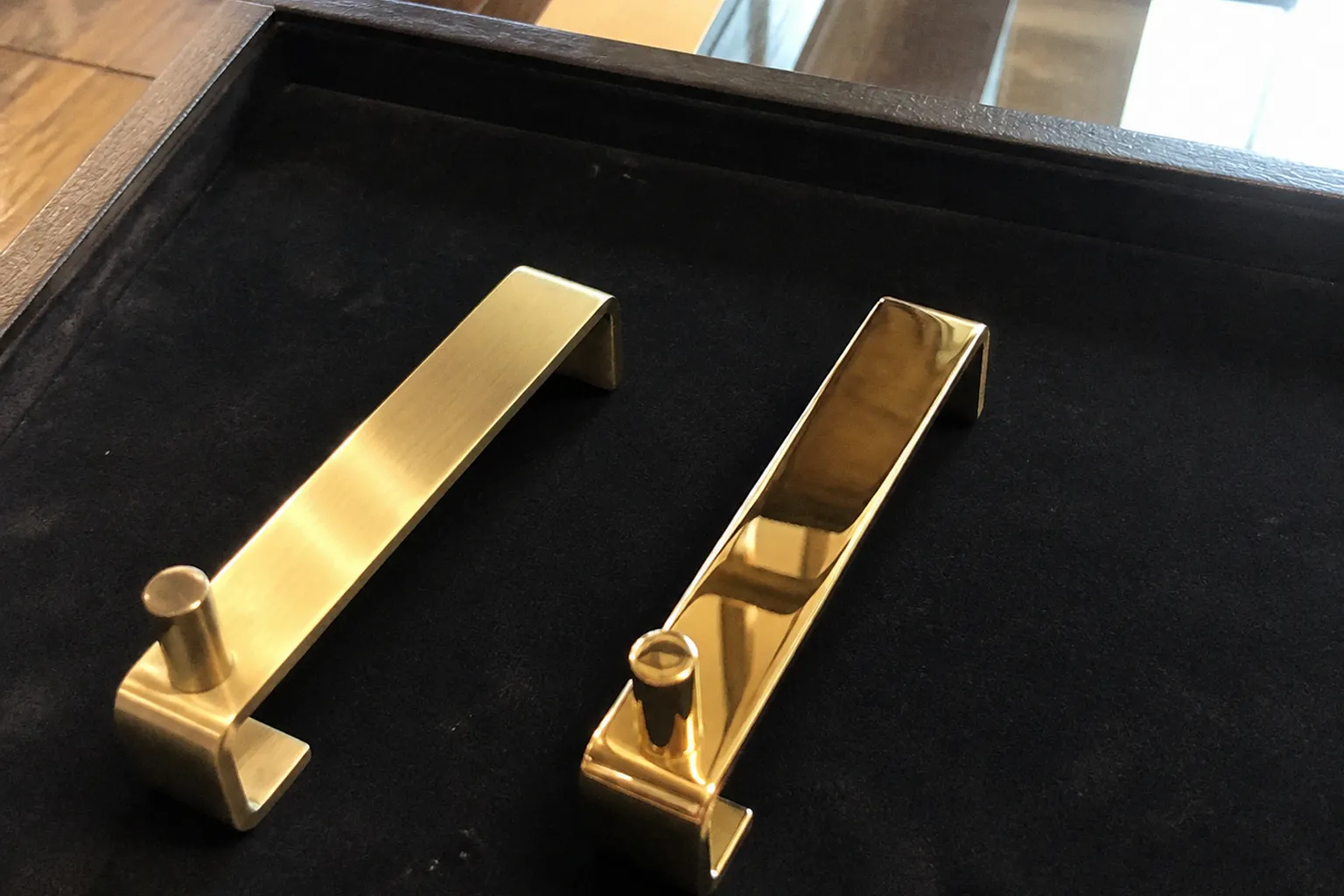
It is often the finish: whether the hardware diffuses light across a soft satin surface or throws sharp reflections into every sightline, whether fingerprints disappear into the texture or become part of the customer’s first impression.
Compare car rental deals in United Kingdom
See available offersPartner link — DiscoverCars comparisonThat is the real decision behind brushed brass vs polished gold garment racks. You are not choosing between two colors. You are choosing how the fixture behaves under retail lighting, how it ages beside garment hangers, how often staff must clean it, and whether the hardware supports the price architecture of the merchandise.
Brushed brass gives us controlled warmth, lower reflection, and a surface that is more forgiving during a busy trading day. Polished gold creates a stronger luxury signal, but its mirror-like character exposes every smudge, water spot, and small abrasion. Both can work beautifully. They simply ask different things of the floor team and the customer journey.
The physics of light: why the same rack can feel calm or theatrical
The first distinction is optical, not decorative.
A polished gold or polished brass finish uses specular reflection. Light strikes the smooth surface and bounces back in a concentrated, mirror-like direction. Under track lighting, the result is bright, crisp, and highly visible. A polished rack can catch attention from the entrance, define a premium endcap, and add a sharp highlight to a neutral interior.
Brushed brass behaves differently. The surface is mechanically scored with fine, parallel lines created by an abrasive wheel, belt, or similar process. Those lines break up the reflection and distribute light across the surface. Instead of a hard flash, we get a matte-to-satin glow—what is known as diffuse reflection.
That distinction matters when you are laying out a store with long sightlines. A polished rack placed in the first visual field can work as a beacon, particularly when the fixture frames a hero product or a limited assortment. But several polished fixtures facing the same track lights can create competing glare points. The customer notices the sparkle before noticing the garment, which is useful only if the sparkle is directing attention to the right SKU.
Brushed brass is quieter. It still reads as warm and elevated, but it does not fight the clothing for attention. This makes it a strong choice for:
- dense wall bays where SKU density is already high;
- multi-rack presentations with several adjacent fixtures;
- stores using strong spotlights or narrow-beam track lighting;
- soft, tonal interiors where the finish should support rather than dominate the merchandise;
- fitting-room approaches, where customers need a calm transition from browsing to trying on.
Polished gold is better when the fixture itself must carry visual weight. Think of a fragrance presentation, a jewelry-adjacent apparel zone, a hero display, or an entrance installation where a single rack needs to establish the store’s price point before the customer reads the product labels.
Polished gold wins the first glance; brushed brass often wins the longer conversation between customer, garment, and fixture.
The practical question is not whether one finish is more luxurious. It is whether your lighting plan needs a high-contrast focal point or a controlled background for the collection.
How reflection changes the customer’s reading of the floor
Customers do not inspect every fixture consciously, but they read the combined signals quickly: brightness, order, spacing, material quality, and the apparent care given to the environment. Finish influences that reading in three ways.
First, polished metal amplifies movement. As customers walk past, the fixture catches changing angles of light and produces a dynamic shimmer. That can increase visual energy near an entrance or promotional table. It can also make a narrow aisle feel busier if the customer sees repeated reflections from several racks.
Second, brushed metal stabilizes the scene. The directional grain gives the eye a consistent texture, which can help a large fixture run recede into the planogram. In a premium showroom, this is useful when the garment construction, color, or fabric needs to remain the star.
Third, the finish changes how spacing is perceived. A mirror-like rack can visually separate itself from the wall behind it, particularly in darker interiors. Brushed brass tends to merge more naturally with warm timber, plaster, stone, and muted paint. If your store already has multiple reflective surfaces—glass shelving, mirrors, lacquered cabinetry, polished flooring—brushed brass can prevent the environment from becoming visually overactive.
Surface durability and the camouflage effect of brushed texture
Retail hardware is not used gently. Garment hangers strike the rail, hands move across uprights, fixtures are repositioned during floor sets, and cleaning teams work around the rack while the store remains open. The finish therefore needs to be judged by its daily appearance, not by how impressive it looks in a product photograph.
Brushed brass has a practical advantage because its texture camouflages minor wear. The directional grain breaks up small scuffs and grazes, especially when they run in a similar direction to the original brushing. A mark may still be present, but it is less likely to become a bright, isolated defect visible from several feet away.
Polished gold offers no such visual cover. A smooth, high-gloss surface reflects its surroundings, so a small abrasion can interrupt a clean highlight. Fingerprints, oily smudges, water spots, and cleaning residue also show quickly. On a low-touch decorative plinth, this may be manageable. On a garment rack handled throughout the day, it becomes an operating issue.
This is where discussions about the durability of brass display fixtures often become too vague. The substrate, coating system, cleaning routine, and traffic pattern all matter. The finish name alone does not tell us how a rack will perform.
A brass-look fixture might use solid brass, a brass-colored plating, a lacquered surface, a powder-coated steel construction, or a PVD coating over a metal substrate. Those systems do not age in the same way. A polished appearance also does not prove that the fixture is made from solid brass, and a gold appearance does not mean the surface contains solid or pure gold. Commercial display hardware commonly achieves gold aesthetics through PVD titanium-nitride coatings, electroplated finishes, or clear-lacquered powder coats.
For a busy floor, ask the manufacturer to specify the finish system rather than accepting a color label as a technical description.
| Retail condition | Brushed brass | Polished gold |
|---|---|---|
| Daily contact with hangers | Texture helps disguise minor grazes and scuffs | Smooth surface makes abrasions more visible |
| Fingerprints and hand marks | Less visually prominent, especially on satin surfaces | Often immediately visible under directional light |
| Strong track lighting | Diffuses light and reduces glare | Creates bright specular highlights and possible hotspots |
| Hero display or entrance zone | Refined but visually restrained | High-impact, premium, attention-grabbing |
| Dense assortment | Supports the garments without adding visual noise | Can compete with color, texture, and signage |
| Cleaning tolerance | More forgiving of small inconsistencies | Requires a more consistent polish and inspection routine |
| Long-term visual character | Can retain a controlled, stable appearance | Looks excellent when clean but reveals neglect quickly |
The choice is therefore operational as much as aesthetic. If the floor team has limited time between replenishment, recovery, and fitting-room service, a brushed finish can protect the perceived quality of the store even when the rack has had a demanding day.
PVD technology changes the conversation about gold finishes
When a retailer rejects polished gold because of maintenance concerns, the next question should be: polished gold by which process?
Physical Vapor Deposition, or PVD, bonds a microscopic coating directly to the metal substrate. In commercial display applications, PVD is used to create durable gold and brass tones with substantially better resistance to tarnishing than softer electroplated or clear-lacquered brass finishes. It is not a license to ignore cleaning, and it does not make a rack immune to scratching. It does, however, give us a more stable surface for demanding retail environments.
That distinction is critical for luxury showrooms. A polished gold rack with a durable PVD coating can preserve the high-gloss visual language while reducing the risk of rapid tone change or tarnish. The result is a better fit for stores where the finish is part of the brand signature rather than a temporary styling choice.
PVD is especially useful when:
- the rack sits in a high-touch circulation path;
- the finish is used across multiple fixture types and must remain visually consistent;
- the store uses frequent cleaning but cannot afford aggressive refinishing;
- the environment includes moisture-prone areas, such as near fitting rooms or entrances;
- the hardware is expected to remain in place through several seasonal floor sets.
Still, we should separate corrosion resistance in gold plated racks from general surface durability. A coating can resist tarnish and environmental deterioration while the underlying finish remains vulnerable to abrasive cleaning, impact, or hanger contact. PVD improves the coating system; it does not cancel the realities of retail handling.
The specification should cover at least four points:
- the substrate beneath the finish;
- the coating or plating process;
- the recommended cleaning method;
- the expected behavior at cut edges, joints, welds, and high-contact points.
Those details matter because a rack is not judged by its center post alone. Customers see the base, casters, hooks, connector points, and every place where the finish has been touched or exposed during manufacturing. Display rack manufacturing quality becomes visible at the transitions: clean welds, even coating coverage, consistent color across components, and hardware that does not look like it came from several unrelated batches.
Do not confuse coating stability with scratch invisibility
A PVD gold finish can be the right solution when you want high visual impact without the maintenance burden of a soft, untreated surface. But the rack still needs sensible placement.
If a polished PVD rack is installed beside a tight queue where customers repeatedly brush against it, the finish will experience more contact than the same rack positioned inside a controlled luxury presentation. If it is used for heavy winter outerwear, hanger impact will be more pronounced than with lightweight knitwear. If staff frequently remove full groups of garments at once, the rail will see more friction than a fixture used for a carefully edited capsule.
The finish cannot compensate for a poor operating plan. Put the most visually sensitive hardware where the customer can see it but does not have to squeeze past it.
Living finishes: when unlacquered brass is part of the merchandising story
Unlacquered solid brass deserves separate treatment because it is not designed to remain visually fixed. Exposed to air, moisture, and touch, it naturally oxidizes and develops a richer antique patina. The surface becomes a record of use.
For some retailers, that is exactly the point. An independent fashion store, heritage-inspired label, or craft-led showroom may want the hardware to develop character rather than retain a factory-new appearance. In that setting, the changing finish can support the brand narrative and make the environment feel collected rather than newly assembled.
For a retailer expecting a stable gold or brass tone, however, unlacquered brass introduces a different maintenance model. The finish will vary according to handling, humidity, cleaning, and exposure. High-touch areas may darken or warm more quickly than sections customers rarely reach. Two identical racks can begin to look different if one is positioned near the entrance and the other is placed deeper in the store.
That is not a manufacturing defect. It is the behavior of a living finish.
Lacquered brass and PVD finishes take the opposite approach. They lock in the surface tone more effectively, giving the floor a consistent color language across fixtures. This is usually easier to manage in a chain environment, in a showroom with strict visual standards, or anywhere the planogram depends on repeated fixture finishes looking identical.
The decision can be framed simply:
1. Choose unlacquered brass when evolving patina supports the brand and the team is prepared to manage variation.
2. Choose lacquered brass when you want a more stable appearance but are comfortable following the coating’s cleaning limitations.
3. Choose PVD gold or brass when you want a durable, consistent metallic tone for a demanding commercial environment.
4. Choose brushed brass when surface forgiveness and low visual glare are more valuable than maximum shine.
5. Choose polished gold when the fixture must create a focal point and the cleaning cycle can support its appearance.
There is no universal winner. The right answer is the finish whose aging pattern matches the promise of the store.
Maintenance is part of the finish specification
The phrase gold finish maintenance for retail racks can sound like a back-of-house concern, but customers experience maintenance failures from the sales floor. They see the oily handprint on the upright, the streak across the base, the cloudy patch left by an unsuitable cleaner, and the scratched section where hangers have been dragged instead of lifted.
Polished surfaces require a disciplined cleaning rhythm because their visual value depends on uninterrupted reflection. A few marks on a brushed rack may disappear into the grain. The same marks on polished gold break the highlight and read as neglect.
Before approving a finish, map the rack against the actual service routine:
- Who cleans the fixtures, and during which part of the trading day?
- Are racks moved daily, weekly, or only during seasonal resets?
- Do staff handle the rail while replenishing?
- Are the fixtures located near entrance moisture, fitting rooms, or food and beverage areas?
- Does the cleaning team have a finish-specific method, or does every surface receive the same product?
- Will the rack be placed where customers naturally steady themselves while browsing?
A finish that demands careful handling needs a process that can deliver careful handling. Otherwise, the retailer pays for a premium visual effect and displays it in a permanently compromised state.
For polished gold, we should also watch the difference between cleaning and polishing. The wrong abrasive pad or aggressive chemical can alter the surface, especially where a softer plated or lacquered finish is involved. A manufacturer’s maintenance instructions are not optional paperwork; they are part of the commercial life of the fixture.
Brushed brass is not maintenance-free. Its grain can collect dust, and directional brushing may show inconsistent wiping if staff clean across the texture. But the visual penalty for a missed mark is generally lower, which gives the operation more resilience during peak trading periods.
Matching the finish to the merchandising zone
The best finish is often determined by where the fixture sits in the customer journey.
Entrance and decompression zone
At the entrance, customers are still forming their first impression of the store. A polished gold rack can provide a clear luxury cue, particularly when used for a tight edit rather than a crowded assortment. Keep the presentation disciplined: fewer garments, stronger spacing, and enough negative space for the reflective hardware to read as intentional.
A brushed brass fixture works here when the brand wants warmth rather than spectacle. It pairs well with natural materials and can establish a premium tone without creating a high-contrast flash at the threshold.
Main selling aisle
The main aisle usually carries more traffic, more replenishment, and more SKU movement. Brushed brass is often the safer choice because its diffuse reflection supports browsing and its texture hides the minor marks that accumulate during the day.
If you use polished gold in this zone, place it where it can function as an endcap or directional marker rather than repeating it across every bay. Repetition reduces the impact and increases the cleaning workload at the same time.
Feature wall and hero assortment
This is where polished gold earns its place. The aesthetic impact of polished metal racks is strongest when the assortment is edited and the lighting is controlled. A single high-gloss rail can frame a new collection, eveningwear, or a premium capsule. The surface becomes part of the display composition, not just a support structure.
Brushed brass is better when the garments already have strong visual language—pattern, texture, embellishment, or saturated color—and the fixture needs to maintain hierarchy.
Fitting-room approach
The fitting-room zone is high-touch and emotionally sensitive. Customers handle more products, carry hangers, and pause close to the hardware. Brushed brass generally offers the better balance of polish and resilience here. A polished finish can work, but only with adequate clearance and a clear maintenance routine.
Cash wrap and accessories
Polished gold can be effective around the cash wrap or a small accessories display because these areas benefit from a concentrated premium signal. The customer is already slowing down, and the fixture can reinforce the transaction moment.
Brushed brass creates a more relaxed, tactile environment and may be preferable when the cash wrap uses timber, stone, or soft lighting. It also avoids adding another sharp reflection close to screens, glass, and other hard surfaces.
Finish selection should follow the customer’s dwell time and hand contact, not just the mood board.
A practical comparison for luxury showrooms
When selecting metal finishes for luxury showrooms, we should evaluate the entire system rather than choosing the most attractive sample under showroom lighting. A small finish swatch cannot show how a 1.5-metre rail behaves under track lights, beside black clothing, or after a full day of customer contact.
Use the following decision path:
- If your lighting is intense and directional, begin with brushed brass or test polished gold at full fixture scale to control glare.
- If your merchandise depends on high visual drama, polished gold can create the focal point, especially on a hero rack or endcap.
- If your assortment is dense, brushed brass will usually keep the fixture from competing with product color and signage.
- If the rack is frequently touched or moved, prioritize a durable coating system and a finish that camouflages minor wear.
- If the brand welcomes patina, consider unlacquered solid brass, but make the evolving tone part of the store standard rather than an accidental outcome.
- If the finish must remain consistent across a rollout, look closely at PVD and the manufacturer’s color-matching process between components.
- If the floor team has limited cleaning capacity, avoid placing polished hardware in the highest-contact path.
- If the fixture is a long-term brand signature, confirm replacement and expansion availability so new racks do not introduce a visibly different gold or brass tone.
This is also where the broader construction deserves attention. A beautiful coating cannot correct a poorly engineered rack. Check the quality of the welds, the stability of the base, the fit between joined components, and the way the finish wraps around corners. Load capacity will depend on the specific construction and manufacturer specification, not on whether the surface is brushed or polished, so do not use the finish as a proxy for structural performance.
The decision: visual impact or operational forgiveness?
For most high-traffic retail floors, brushed brass is the more forgiving finish. It reduces glare, hides everyday micro-abrasions, and allows the garments to retain visual priority. It is particularly strong in dense planograms, warm interiors, and spaces where racks must look composed throughout a long trading day.
Polished gold is the stronger statement. It creates a high-end signal quickly, catches the eye across a room, and can make a carefully edited display feel more theatrical. Its weakness is not appearance but exposure: it shows the consequences of contact, inconsistent cleaning, and poor placement more readily than brushed metal.
The most commercially effective solution is often not to choose one finish for every fixture. Use polished gold where you need a focal point—entrance, hero assortment, premium endcap—and brushed brass where the store needs repeatable performance across the selling floor. That gives the customer a clear visual hierarchy while keeping the operational burden under control.
Before approving the order, walk the proposed finish through the store plan rather than viewing it only against a sample board:
- Stand at the entrance and follow the primary sightlines.
- Check whether the reflection lands on the garment or pulls attention away from it.
- Place the fixture beside the highest-touch customer path.
- Review the base, joints, hooks, and rail under the actual lighting specification.
- Confirm whether the coating is PVD, lacquered, plated, powder-coated, or unlacquered solid brass.
- Match the finish to the cleaning capability of the floor team.
- Define the visual standard: pristine mirror, controlled satin, or intentionally developing patina.
- Set a simple KPI after installation—such as dwell time at the feature zone, interaction with the displayed assortment, or conversion of the highlighted collection—and compare it with the previous fixture setup.
The right finish is the one that protects both sides of the retail equation: the customer’s perception of value and the team’s ability to maintain it. Brushed brass gives us control. Polished gold gives us impact. Choose based on where the rack works hardest, not where the sample looks brightest.