Why Repeatable Systems Are Essential for High-Performing Retail Display Floors
Daniel Gardner dropped a piece in NEREJ last week titled "Repeatable routine in commercial real estate," and within days, MarketScale and Commercial Observer were running companion arguments on the…
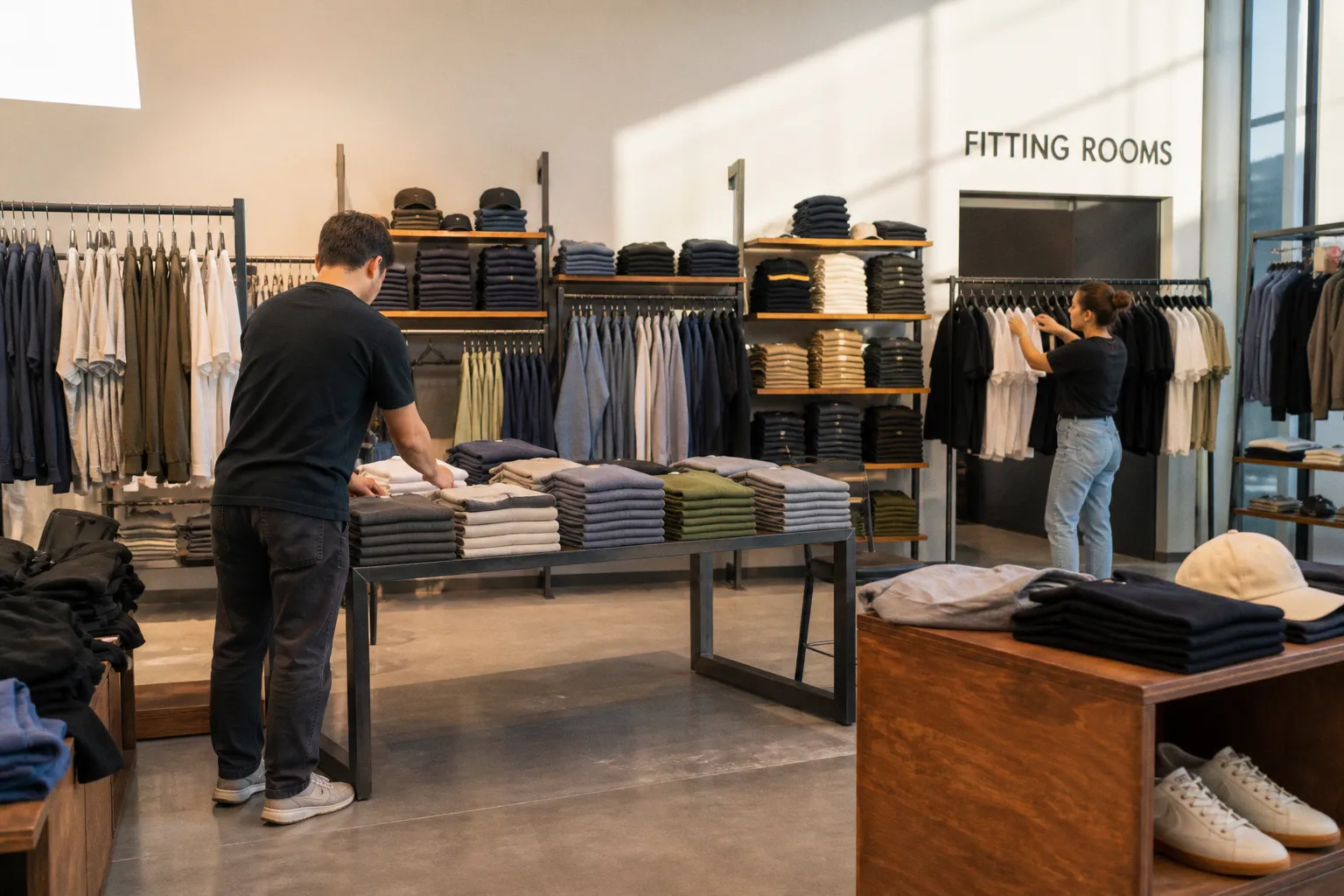
Daniel Gardner dropped a piece in NEREJ last week titled "Repeatable routine in commercial real estate," and within days, MarketScale and Commercial Observer were running companion arguments on the same theme: that the operator who treats modern tooling — particularly AI — as optional is now functioning below the baseline for commercial real estate teams. Translated to the retail display floor, the lesson is the same one we keep relearning — repeatable routine is what separates a dead zone from an endcap that earns its dwell time.
The AI angle, with real numbers
Per MarketScale's reporting, Adventures in CRE's Summer 2026 edition states that regular AI use has become the expected baseline across acquisitions, underwriting, asset management, investor relations, and brokerage. The outlet now maintains a live AI model leaderboard calibrated for CRE work, pulling performance data from Artificial Analysis and refreshed daily. As of July 2026, Anthropic's Claude Opus 5 holds the top slot with an Intelligence Index score of 60.7, priced at $5 per million input tokens and $25 per million output tokens. OpenAI's GPT-5.6 Sol sits fourth at 58.9 — same $5 input, $30 output. For raw throughput, Google's Gemini 3.5 Flash leads at 288 tokens per second. MarketScale flags accuracy as the value composite that should matter more than speed for any of us shopping API contracts or enterprise licences — a reminder that a confident-sounding answer is not the new standard, which is precisely what Commercial Observer's same-week headline, "In Commercial Real Estate, a Plausible Answer From AI Is Not Enough," hammers home.
The Friedman handoff and what it means on our floor
Friedman Real Estate made noise the same week with the completion of transition and onboarding for a 1.2-million-square-foot Illinois commercial portfolio — a working definition of "repeatable routine" at industrial scale. Scale that down to your store: the same reset cadence, the same sightline audit, the same endcap discipline, is what makes the difference between an aisle seven that bleeds square footage and a fixture that pays for itself every Thursday morning. Build the routine before you need it; the next reset becomes muscle memory instead of a fire drill.
Three things to put on the floor before month-end:
- Walk the store with a stopwatch. Note dwell time at every endcap and power aisle. Any fixture that can't earn its read is a broken routine, not a broken customer.
- Lock your reset cadence to the same clock every week — same crew, same a.m. start, same SKU list — and photo-document the run. Repeatable means inspectable.
- Run one AI-assisted experiment on a single workflow for thirty days: planogram compliance, fixture inventory, or reorder triggers. The point isn't to replace judgement — it's to shorten the loop between the sales floor and the data telling you what to do next.