Why Narrow Aisle Racking and AS/RS Integration Are Defining Modern Warehouse Strategy
According to IndexBox, the narrow aisle racks market is projected to double by 2035, a trajectory the firm attributes to AS/RS integration and the density demands of e-commerce fulfillment.
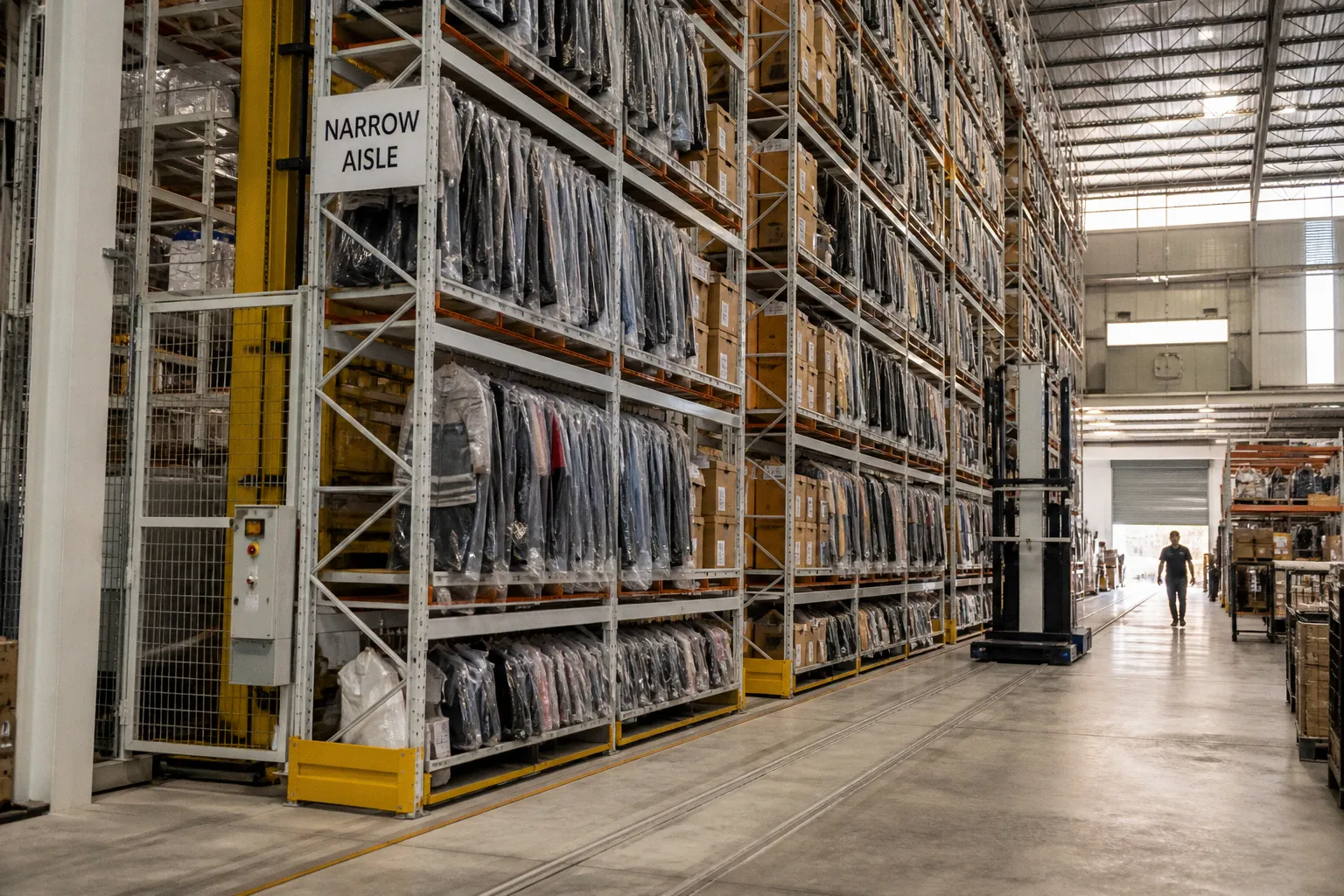
For us on the floor and in the warehouse, that headline is less about Wall Street and more about what we'll be installing, bidding on, and fighting for capacity around the next time we renovate. The signal is clear: vertical and horizontal density is becoming the new frontline of retail space strategy, and the suppliers are already rebuilding their pipelines to match.
Why density is rewriting the playbook
Walk any high-performing distribution center or back-of-house stockroom today and you'll see the same pattern: ceiling height matters more than floor footprint, and the aisle you don't use is the aisle you can't afford. Narrow aisle racking paired with AS/RS — automated storage and retrieval systems — lets operators compress the grid without sacrificing SKU variety or pick speed. When you tighten the aisle, the math is simple: a smaller cube yields more pick faces, which means better dwell time at the order level and fewer hours wasted by forklifts doing laps.
IndexBox pins this shift on e-commerce density demands, and we'd agree from the merchandising side. The unit economics of online fulfillment don't tolerate the generous walks and wide turns we designed for in the big-box era. Every inch between beams is now a question of unit flow, not open-floor aesthetics. If you're still spec'ing wide-aisle pallet racking for a new build, run the numbers twice — your throughput team will outgrow it before the paint dries.
What to track on your own floor
Here's where we pull this from headline to checkable action. First, get a current read on your SKU density per square foot of racked footprint, not just your sales per square foot — the two diverge fast when automation enters the picture. Second, pressure-test your sightlines and pick paths the way an AS/RS integrator would: if a turret truck or shuttle can't reach it, a picker isn't going to either, and your planogram is just a pretty drawing. Third, start conversations with two racking vendors instead of one, because lead times are about to extend as the market doubles. Lock in quotes now, even if your install is eighteen months out.
The narrow aisle conversation also reframes how we think about endcaps, cross-merchandising islands, and the retail floor's relationship to the warehouse behind it. When fulfillment density tightens, the front of house has to absorb the slack — which means smarter front-of-store display systems, better garment storage solutions on the sales floor, and a lot less dead zone under the back wall. The market is telling us where capital is going to flow. Our job is to make sure our layouts are ready to spend it well.