Optimizing Retail Floor Layouts to Capture Rising Consumer Demand
As reported by major outlets including WSJ, American shoppers stepped back up to the register in August, and that rebound is now a fresh test of whether our aisles, endcaps, and sightlines can keep…
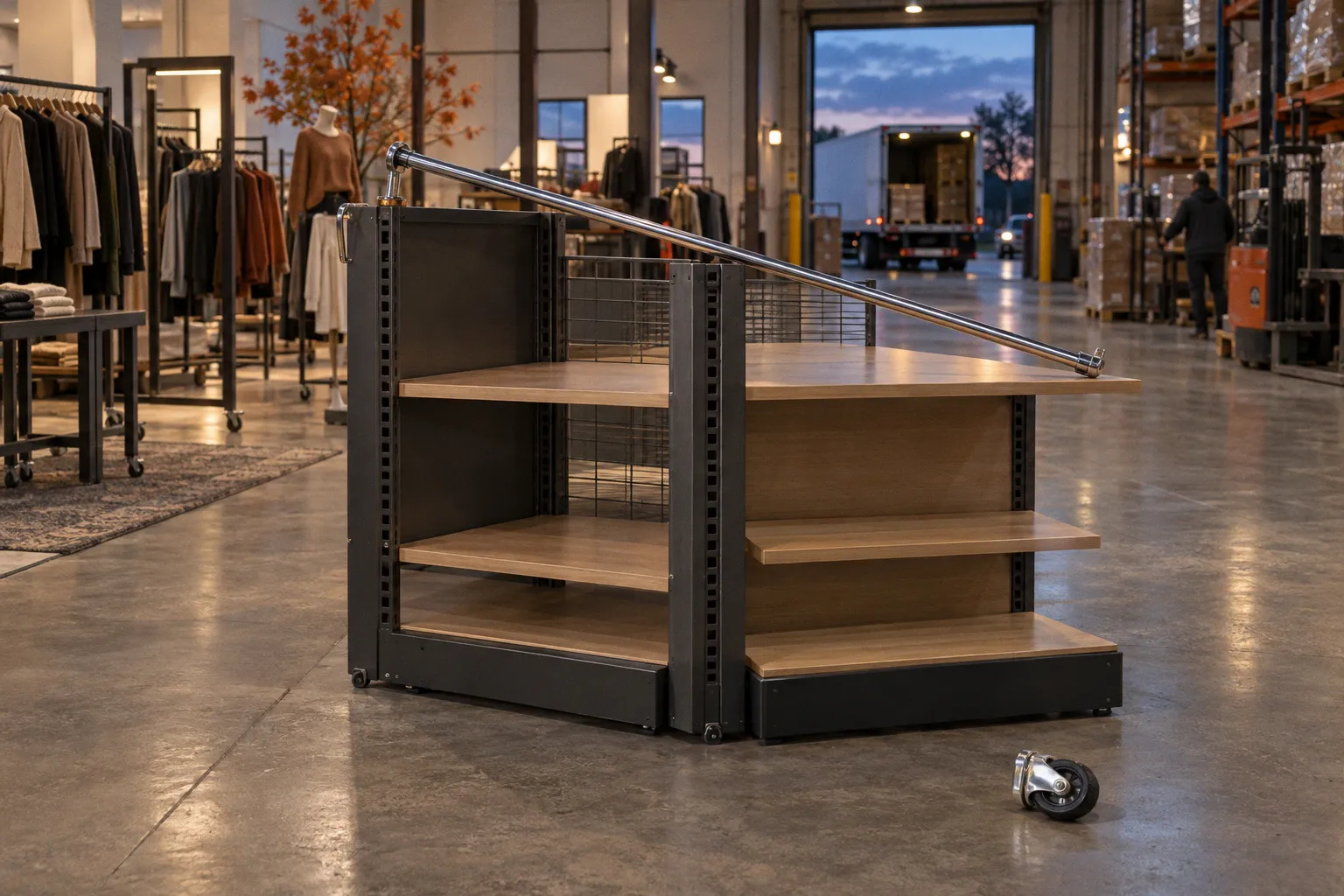
A 1.2% jump in U.S. retail sales last month — the biggest gain in five months — is more than a headline for store operators and merchandise planners. As reported by major outlets including WSJ, American shoppers stepped back up to the register in August, and that rebound is now a fresh test of whether our aisles, endcaps, and sightlines can keep up with renewed foot traffic. The question on every floor manager's desk this week isn't whether sales are up — it's whether our store layouts are ready to convert that walk-by energy into basket size.
What a 1.2% swing does to your floor
When sales climb this quickly after a flat stretch, the first pressure point is almost always dwell time. Shoppers who drifted past an under-energized aisle in July are now pausing again, and the racks they encounter need to reward that pause. If your gondola is over-stuffed, your SKU density is hiding the hero product, or your endcaps are still running last season's creative, you're leaving the rebound on the shelf. This is the moment to walk the floor with a stopwatch: time how long a customer spends in front of each fixture, and if it's under the benchmark, the problem is rarely the merchandise itself — it's the sightline, the signage stack, or the angle of attack from the main aisle.
Two things I'd tighten before the weekend rush. First, audit your planogram compliance — when sales rebound, store teams instinctively over-stock to chase the trend, and that crushes the visual breathing room your fixtures were engineered to provide. Second, re-evaluate your endcap rotation. August's gain came from broad-based categories, which means the right hero zone this month isn't necessarily the same one that worked in spring.
AI on the floor and fixtures in transit
Retailers aren't just watching the sales tape — most are experimenting with AI, and a few are pushing it into scale on the merchandising side, as Global Sources reports. For one to one conversations, that means real decisions: which wall system outperforms a slatwall, how a modular garment rack earns its footprint against a static gondola, and how planograms can be re-sequenced based on real traffic patterns rather than quarterly instinct. If your company is still running AI pilots, the display rack is one of the cheapest, fastest-to-measure test environments you have.
On the sourcing front, China's factory output picked up in August even as retail sales there slowed, per The Economic Times. Translation for anyone refreshing display hardware this fall: upstream production capacity is healthy, but downstream consumer demand abroad is what really drives the order book. U.S. buyers can still negotiate aggressively on lead times for shelving, garment racks, and slatwall — which means the smart move is to lock in Q4 fixture upgrades now, while the rebound is fresh and the supply side still has room.
Your move before the next data print
Three things to track between now and the next retail sales release. One, watch your own weekly comp-store traffic — a 1.2% national rebound should show up locally, and if it doesn't, your local merchandising mix is the suspect, not the macro. Two, if you've been sitting on an endcap refresh or a gondola re-plan, the data now justifies pulling it forward; consumer mood has shifted faster than most chains' fixture calendars. Three, document the AI pilots your team is running — whether it's computer-vision shelf audits or planogram optimization — because the retailers deploying AI at scale right now are doing it on the floor first, not in the back office.
The bottom line for those of us who think in racks and sightlines: a 1.2% sales jump means more eyes on more fixtures. Make sure what they're seeing earns the dwell time.