The Mall Renaissance: Why Retail Display Infrastructure is Seeing a Massive Budget Rebound
According to The Daily Upside, malls have quietly become the fastest-growing commercial real estate sector in the US, with property values up 13% over the past year - outpacing the other 10 property…
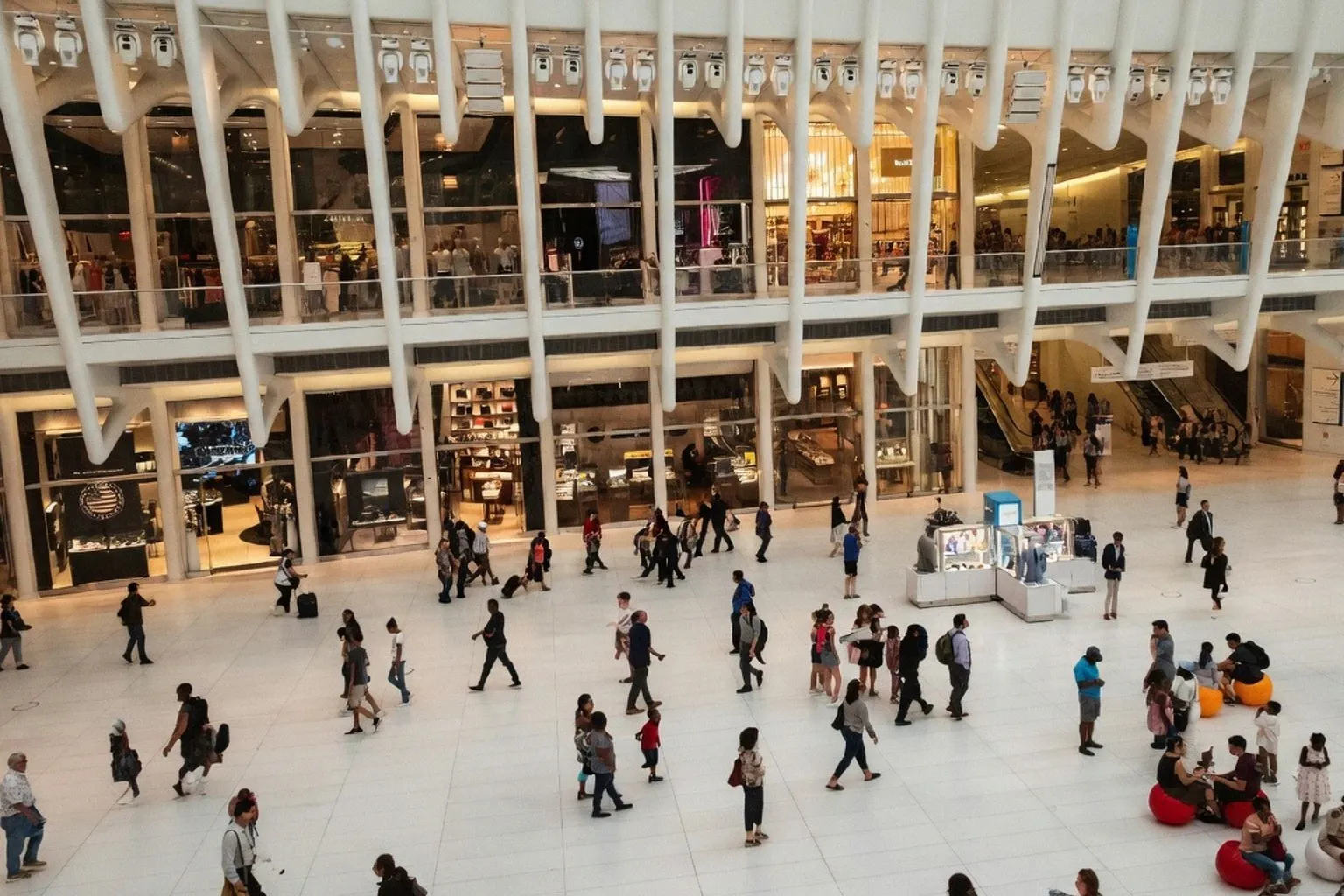
According to The Daily Upside, malls have quietly become the fastest-growing commercial real estate sector in the US, with property values up 13% over the past year - outpacing the other 10 property categories tracked by analytics firm Green Street, including offices, and running more than double commercial real estate's overall growth. For anyone running fixtures, racking, or visual merchandising inside these properties, that number is a green light: the box is back in fashion, and the display layer is getting a budget again.
The shelf math has reset
Green Street estimates roughly 900 malls remain standing in the US, down about 200 since 2008. The wave of closures that stripped staples like Victoria's Secret and J.Crew off the floor during the pandemic years left landlords with raw space and operators with fewer assumptions about what a "mall store" should look like. When we walk a vacant anchor bay with a client now, the conversation is no longer about replicating the old tenant mix - it is about sightlines, dwell time, and what the customer actually does once they cross the threshold.
Simon Property Group, the largest mall operator in the US, has seen its shares hit a summer high not reached since 2016, and has outperformed the S&P 500 year to date. That capital signal tells landlords they can re-invest in the physical layer - gondolas, endcaps, feature walls, fitting-room adjacencies - rather than strip it down to the studs.
Why the modern mall visit is a different beast
The Daily Upside notes the comeback bears little resemblance to 2016. Today's shopper may try on a jacket at the rack, scan the price, and complete the purchase on a laptop at home. We call this the showroom-cart split, and it complicates how you measure store success: conversion at the point of sale no longer captures the full value of a fixture placement.
What it does capture is engagement. If your endcap earns 90 seconds of dwell time and a try-on, you have still moved the needle - the receipt just lands somewhere else. For planogram work, this means we lean harder into touch-and-feel product zones and away from pure SKU density. Stock the wall with fewer facings, give each piece room to be picked up, photographed, and discussed. The fixture is the salesperson now.
What to watch on the floor
Three signals will tell you whether the 13% is a sugar high or a structural shift, and each one ties back to something you can measure in your own store:
- Teen return rate. The Daily Upside points to Gen Z driving traffic. If your sightlines are tuned for a 16-year-old's eye level rather than a 40-year-old's, your fixtures will earn more stops.
- Foot traffic versus till conversion. A widening gap means the showroom-cart split is real in your property. If dwell time is up but in-store conversion is flat, your layout is doing the work - re-budget accordingly.
- Reinvestment in the physical layer. New endcaps, modular gondolas, and perimeter displays signal a multi-year layout cycle, not a paint job.
The malls that failed were the ones that sold the same product, in the same way, in the same layout. The malls coming back are the ones treating every fixture as a conversion event - whether the sale closes at the register or lands in a cart three hours later.