Integrating Digital Displays into Modern Supermarket Shelving Systems
According to Sintop Fixtures, supermarkets are moving from traditional shelving toward intelligent retail systems that combine custom display racks with digital shelf displays.
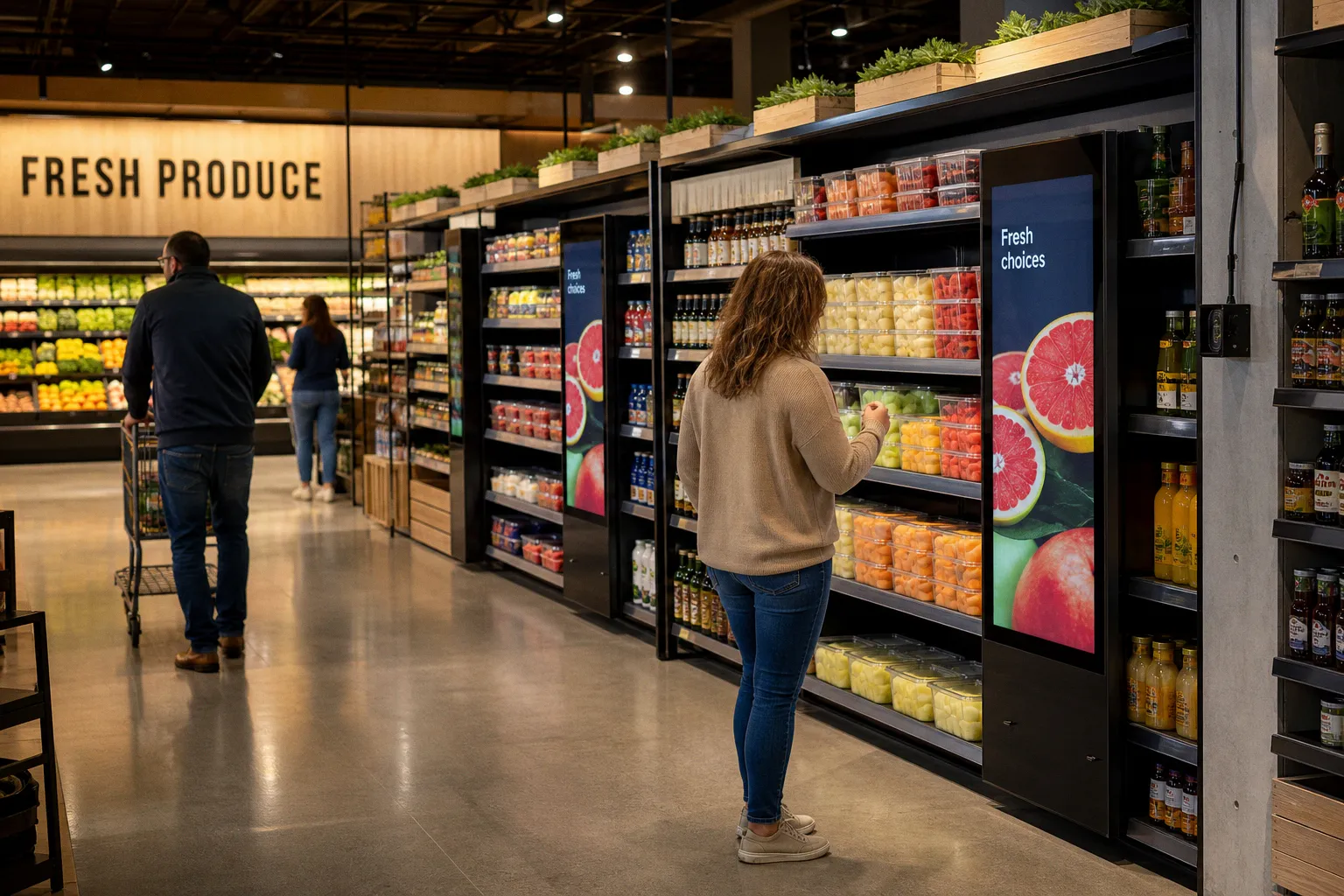
The shift matters because the shelf is being treated not only as a storage fixture, but as part of the store’s operating and customer-interaction system. For retailers, the key question is no longer whether a screen can attract attention, but whether the display configuration improves execution without weakening the physical selling floor.
The shelf becomes part of the operating system
The commercial appeal is straightforward: digital shelf displays are presented as a way to connect the physical rack with more efficient retail operations. Sintop Fixtures describes supermarkets investing in custom display racks, supermarket display fixtures, digital shelf display systems, smart supermarket shelving, electronic shelf labels and grocery-store fixtures as they pursue greater speed, accuracy and customer interaction.
That combination changes the merchandising brief. We are no longer planning only for SKU density, shelf height and product presentation; we are also planning where digital information sits within the customer’s sightline and how it fits the rack itself. A digital element that interrupts the product block can create visual noise, while one integrated into the fixture can support a clearer path from attention to purchase.
For a floor manager, this means the planogram and the technology cannot be specified separately. If the rack is custom-built around a particular display system, the physical structure must accommodate both merchandise and the digital component. The source makes the commercial point clearly: technology may attract attention, but the quality of the fixture keeps the operation running.
The practical gain is in faster execution
The strongest use case described in the source material is operational efficiency. Supermarkets with large product ranges and multiple locations face the burden of maintaining accurate shelf information. Digital systems are positioned as a way to update information centrally rather than relying on manual replacement of paper labels.
That does not automatically make every aisle more profitable. The business case depends on disciplined deployment. Start with the zones where pricing or promotional information changes often, then examine whether the digital display is improving clarity for shoppers and reducing work for the store team. If the fixture layout is difficult to access, the technology adds another maintenance consideration instead of solving a merchandising problem.
The same principle applies to promotional displays. Supermarket Perimeter’s source title points to innovative displays as a route to supporting fresh-food sales, while Installation-international highlights retail signage designed to capture attention. These snippets do not establish a single universal format, but together they reinforce a live retail priority: display hardware and information systems are being evaluated for their ability to compete for customer attention at the fixture level.
What retailers should verify before rollout
Treat digital shelf display as a rack-and-layout decision, not as a standalone electronics purchase. Before changing an aisle, we would check three things:
- Sightlines: does the digital element support the product presentation, or does it pull attention away from the SKU block?
- Fixture fit: can the custom display rack carry the intended combination of merchandise and digital hardware without compromising the layout?
- Operational value: will the system make updates and store execution more efficient, or simply add another layer to manage?
The most important KPI is not the presence of a screen; it is whether the new configuration produces a cleaner customer journey and more reliable floor execution. In 2026, the evidence points to a supermarket shelf becoming a more intelligent retail tool—but the commercial result will still depend on the fundamentals: strong structure, clear sightlines and a planogram built around how shoppers actually move through the store.