How Custom Hardwood Fixtures Elevate Retail Merchandising at Swadesh Mumbai
As VMSD Magazine reports, the Bangalore-based apparel and home goods retailer has opened a Mumbai store inside a historic movie theater with an art deco façade, and the team decked it out with custom…
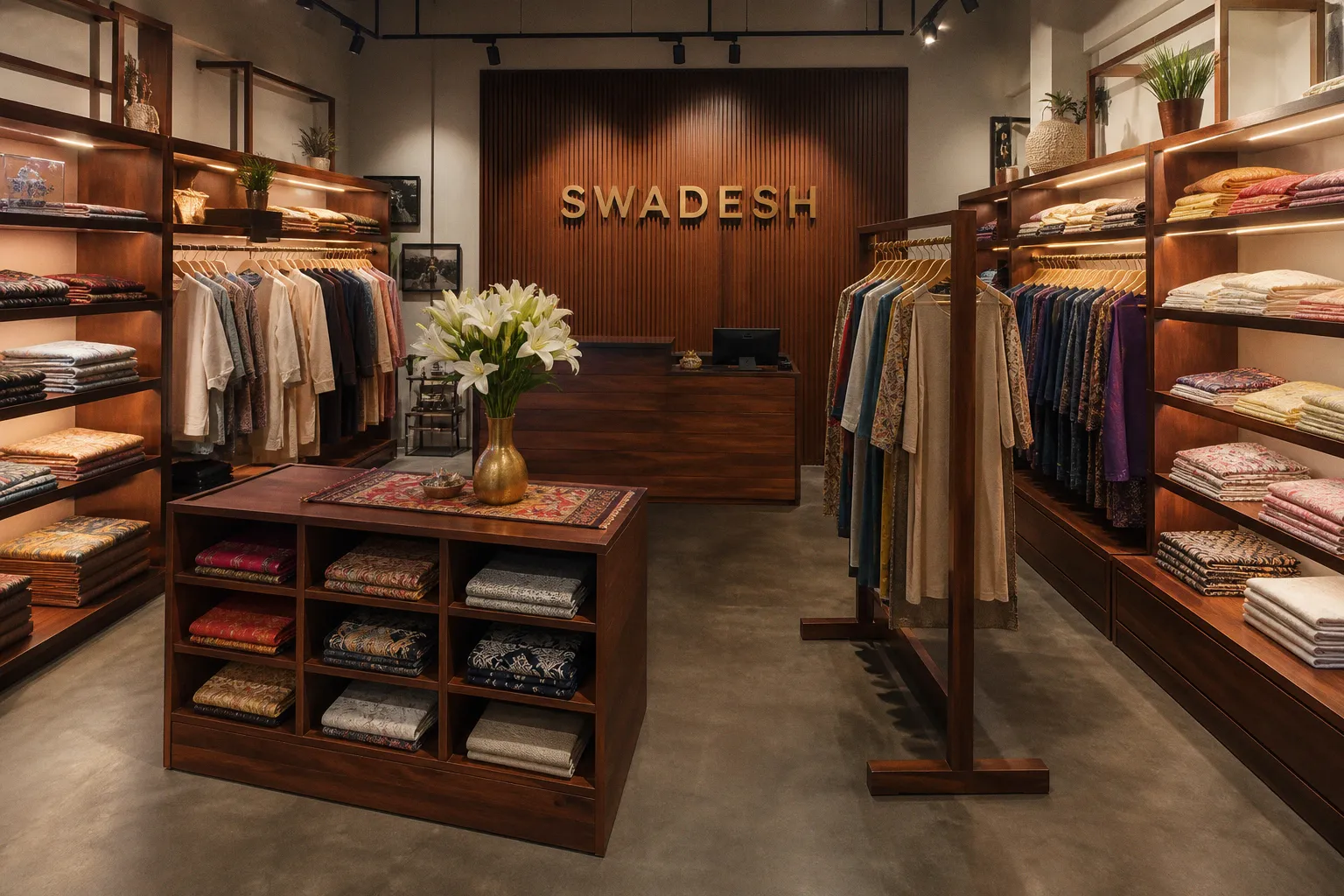
The new Swadesh flagship in Mumbai is the kind of project that makes us stop and audit our own fixture spec sheets. As VMSD Magazine reports, the Bangalore-based apparel and home goods retailer has opened a Mumbai store inside a historic movie theater with an art deco façade, and the team decked it out with custom retail fixtures built from dark Indian teak, rosewood, and acacia wood — finished with gold accents around the edges of the glass displays to amplify traditional Indian craftsmanship.
Let's walk the floor together, because there's more merchandising intelligence in this one install than in a dozen catalog pages.
Heavy timber, gold trim, and what that does to dwell time
These are solid hardwood fixtures, not veneer or laminate, and the material choice is doing serious heavy lifting on the sales floor. When a customer runs a hand across a teak or rosewood edge, the weight and warmth does the selling before any signage can. That extra-second touch is the dwell time spike we are all chasing — and it converts at the fixture level, not the register.
The dark wood palette also forces a smarter merchandising conversation. Bright, glossy, or chrome-heavy pieces would scream against this backdrop, so the planogram has to lean on silhouette, color blocking, and texture. If you are considering a move like this, count your SKU density assumptions before you commit — dark, ornate fixtures narrow the visual room you can give each piece, but they also raise the perceived value of what is on them.
Then there are the gold-edged glass displays. That trim is the quiet star of the install. It frames the product without competing with it, which is exactly how edge detailing should behave on a heritage-driven floor. The lesson: gold, brass, or bronze trim gives you luxury cues on a fixture that does not have to cost luxury money.
Architecture as part of the planogram
Swadesh took over a historic art deco movie theater, and the design runs patterned motifs from floor to ceiling. Read that again — the store itself is the visual merchandising. When the architecture is already doing the storytelling, every fixture becomes a stage prop, and every product on it becomes part of the installation.
For our stores, the takeaway is sharper than it looks. We spend a lot of time arguing about floor plan and grid, but the ceiling and wall are part of the sightline equation too. If your building is already loud, your racks should stage, not shout. If your building is quiet, your fixtures need to carry the pattern, color, and texture load.
Three moves you can run on the next reset
You do not need teak and rosewood to steal a page from this playbook. Try these before your next visual walkthrough:
- Match fixture tone to the architecture. Dark wood floor, dark wood fixtures. Exposed brick, matte black metal. White-box store, light oak or birch.
- Use edge detailing to frame the product without stealing focus. Brass channels, painted trim, even a single inlay line along an acrylic shelf resets the perceived value of the merchandise above it.
- Audit your background walls as part of the planogram. If your back wall is already patterned, echo it with low-saturation product. If your back wall is blank, let high-contrast or graphics-forward fixtures carry the visual.
Watch how customer flow changes when the fixture stops arguing with the room and starts finishing it.