Evaluating the 60-Degree Sliding Tile Rack for Modern Showroom Layouts
OpenPR reports that showroom owners are increasingly adopting 60-degree sliding tile display racks, which are said to improve product visibility and make more efficient use of compact retail space.
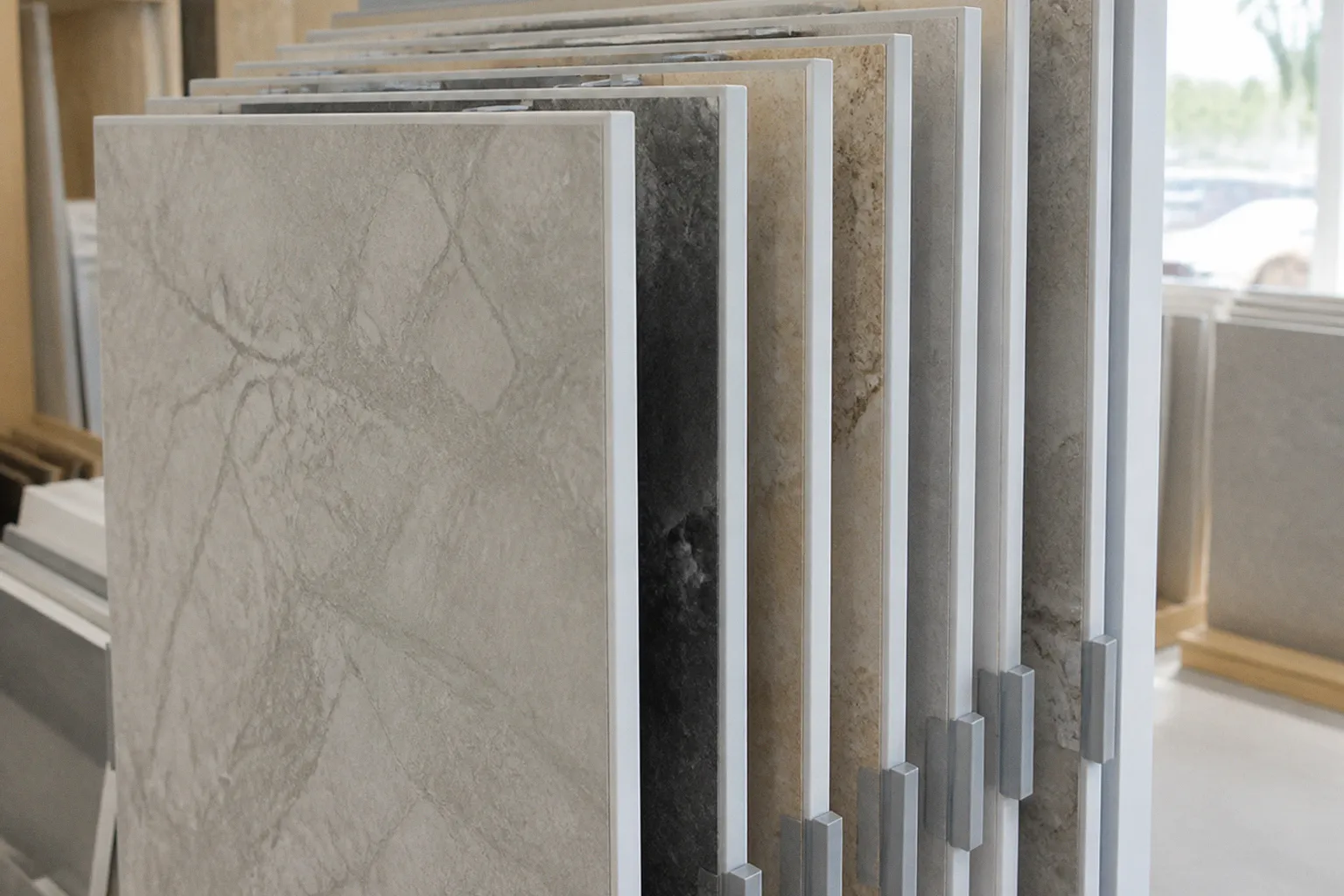
That is the right question for a showroom: does the fixture free usable space while keeping merchandise in the customer’s line of sight, or merely make a narrow aisle look clever in a drawing? I would treat the report as a layout lead rather than a product endorsement, since the available details do not include load ratings, exact dimensions, travel distance, or mounting method.
What the 60-degree format has to solve
A display rack is basically a negotiation between three physical demands: footprint, access, and visibility. OpenPR identifies space efficiency and product visibility as the main benefits of the 60-degree sliding tile rack. Those are sensible benefits for a compact showroom, but the report does not show how the sliding arrangement affects the customer’s approach or the installer’s working clearance.
If I were evaluating one, I would start by checking the actual travel path. Does the sliding action expose the next tile, or does it require the customer to step into the aisle? How much rear clearance does the unit need? Can staff reach the displayed face without pulling the entire fixture forward? These are the details that determine whether a clever angle is genuinely convenient or simply creates a new obstruction.
The evidence is also limited in another important way. The report does not state the rack’s load capacity, dimensions, materials, travel distance, or installation requirements. It also does not provide a direct comparison with fixed tile displays. The product may solve a compact-space problem, but the available information is not enough to establish that it is the best option for every showroom.
That distinction matters because this is a tile display system, not evidence of a new garment-hanging configuration. For garment storage, access, vertical use, and aisle clearance still need to be evaluated separately rather than inferred from a display fixture in another product category.
A smaller shelving reference point
A separate Liverpool Echo report describes a new £20 modular shelving unit that B&M shoppers are praising for its storage potential in small spaces. The item is the 4 Cube Shelving Unit - Black and Gold, with four open compartments, black shelves, gold-finish legs, and a flat top.
The listed dimensions are approximately 60 cm wide, 29 cm in the source’s diameter measurement, and 72 cm high. That wording deserves a measurement check before anyone treats the second figure as a confirmed depth. Still, the unit provides a useful compact-storage reference: it has a stated height and width, but no load capacity is given in the report either.
The same report also lists a smaller two-cube version for £12. An alternative 1-2-3 Slatted Cube Unit in an oak-effect finish is listed at £25, with three storage levels arranged as three sections, two sections, and one section. It is made from particle board and measures 90 cm wide, 29.5 cm deep, and 92.3 cm high.
These products are not like-for-like substitutes for a commercial tile display. They do, however, show the everyday appeal of a compact, visible structure. Open compartments make it easy to see what is stored, while a stepped layout changes the way the contents are presented. A modular-looking label is not proof of flexibility, though. The shopper must still confirm the dimensions, access, and strength of the actual unit.
Before purchase, check the physics
The practical question is not whether a 60-degree label sounds innovative. It is whether the rack fits the room, the merchandise, and the people moving around it. Before purchase, I would check:
- The real envelope: measure width, usable depth, height, and the aisle left after installation. The B&M unit’s dimensions are only a reference, not specifications for the 60-degree rack.
- The sliding route: confirm how far the rack moves and what clearance is required behind it. The OpenPR item does not provide those figures.
- The sightline: test whether the sliding face remains visible from the customer route instead of disappearing behind another section.
- The working load: request a load rating and check how the stated capacity applies to the products being displayed. No load rating is supplied in the report.
- The distinction between storage and display: open cubes, stepped shelving, and sliding tile racks solve different access problems. Do not buy one because it shares the word “modular.”
- The wording of the dimensions: verify unusual measurements, especially when a listing uses “diameter” for what should be treated as a shelving depth.
A clever angle does not create clearance by itself. The sensible choice is the system whose footprint, access pattern, and missing specifications are clear before the installer arrives.