Why the New Modular Retail Fixture Challenge Matters for Store Planning
According to fundsforNGOs, the go go NEXT Emerging Retail Design Challenge has opened applications for design and architecture students to develop modular retail fixture systems aimed at lifestyle fashion environments.
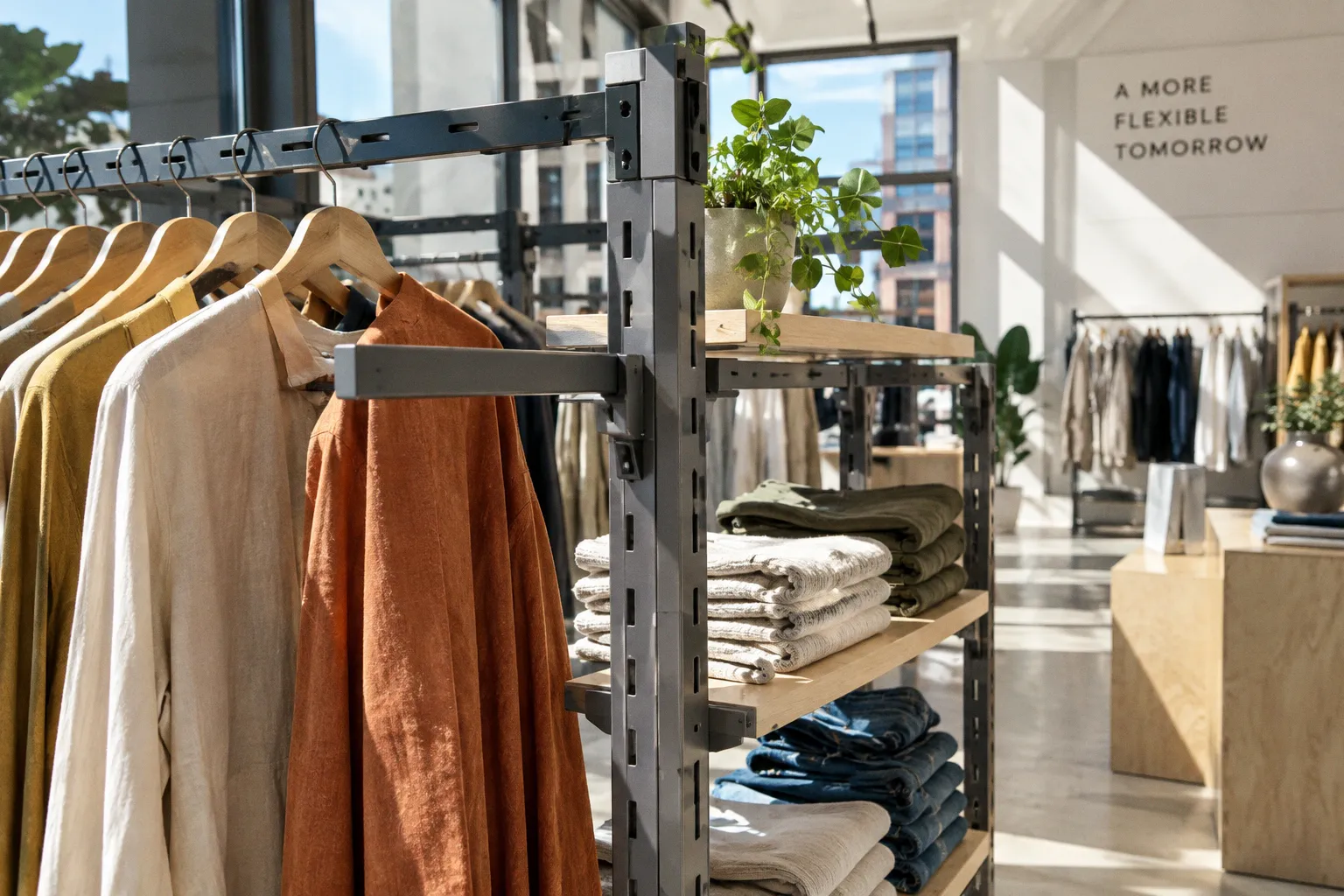
If you've ever watched a perfectly good square footage get eaten alive by a display that locks you into one layout, you'll understand why a student design competition suddenly matters to anyone spec'ing racks for a living.
The international competition is chasing concepts in flexible store planning, industrial clothes rack systems, and visual merchandising that can actually adapt without a full teardown.
What the brief is really asking for
Look past the student-friendly framing and the brief is a wish list that store planners have been drafting on whiteboards for years: modularity that doesn't collapse into "snap-together plastic," clothes racks that reconfigure without drilling new holes, and merchandising systems that survive a Friday-night rush without wobbling. The competition is framed around flexibility and adaptability — both of which sound great in a press release and turn into headaches the first time a fixture is asked to hold real inventory weight on a real floor.
I'd want to see any submitted design pass three tests before getting excited: clearance under crossbars when you add a hanging sign, footprint stability when shoppers lean on the end run, and what happens when the planogram changes mid-season. A "modular" system that can't be reconfigured without specialty tools is just flat-pack furniture with better marketing.
Context from the showroom floor
The same week the challenge opened, retail's bigger players were showing their own version of where fixtures are heading. Per PR Newswire, Target rolled out "Target by Design," a two-day New York City experience centered on accessible store fixtures and experiential display strategies. SAP News Center reported that SAP and N4XT Experiences launched a Retail Innovation Lab pop-up in SoHo during New York Fashion Week, featuring responsive clothing racks and interactive displays that update product details the moment garments are handled, tied into connected fitting rooms and a sales-floor command center.
For readers running actual stores, that's the signal worth tracking: the conversation in retail design has moved past "what does it look like" and into "what does the fixture communicate, sense, and reorganize." The student challenge is asking the next generation to solve the physical side of that question — the racks, rails, and frames — which is exactly the layer that gets the least attention until something fails.
What to actually watch
- Application deadlines, jury composition, and whether winning concepts ever leave the render stage and land on a real selling floor.
- Whether "modular" in the winning entries means reconfiguration by store staff with basic tools, or requires a vendor crew every time the layout shifts.
- Load ratings spelled out in the specs, not buried in marketing copy — the gap between "lifestyle fashion" and "industrial clothes rack" is mostly a question of steel gauge and bracket design.
- How adjacent showcases like Target's installation and the SAP/N4XT lab treat the rack as data infrastructure without making the garment handling experience worse for the shopper.