Powder coated retail racks: pre-order specification checklist
I've watched retailers order "powder coated racks" the way they'd order pizza toppings — pick a color, click confirm, hope for the best.
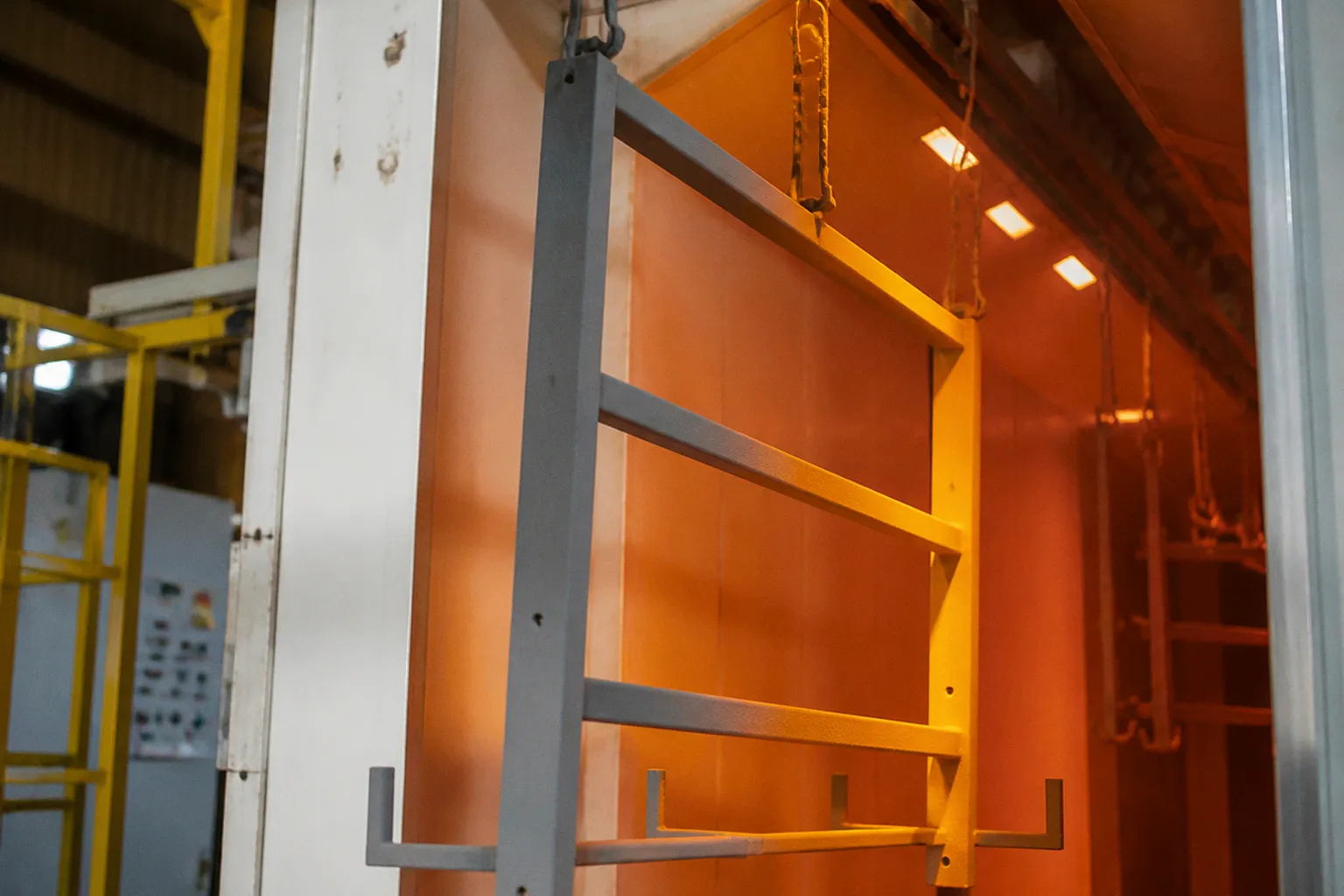
Six months later, the "matte black" has gone chalky under the fluorescents, the uprights have started flaking near the base plates, and someone's asking where the budget evaporated. The problem isn't powder coating itself. Powder coating, done right, is one of the toughest finishes you can put on a retail fixture. The problem is that "done right" is about a dozen separate technical decisions, and most buyers skip straight past them.
They get a color swatch and call it a specification. That's not a specification — that's a vibe. If you're ordering custom powder coated garment racks, retail shelving, or any commercial display hardware that has to survive customers, cleaning chemicals, and a loading dock's worth of inventory, you need to define the actual coating parameters before anything goes in writing. Here's what to pin down before the PO goes out.
Selecting the Right Resin Chemistry for Interior and Exterior Use
Let me get this out of the way first, because it derails everything else: epoxy powder coatings and polyester powder coatings are not interchangeable. They look similar in the spray booth. They feel similar out of the gate. They fail in completely different places.
For general interior retail shelving and display racks — the kind that live under fluorescent lights in a climate-controlled store — epoxy-polyester hybrid powder coatings are the standard call. They give you solid chemical resistance for routine wipe-downs with mild cleaners, decent thermal stability, and a finish that holds up against the constant hand-contact a busy retail fixture endures. It's the workhorse formulation, and most reputable coaters default to it for a reason.
The trouble starts when someone specs an epoxy system for a rack that will live near a storefront window, on an outdoor patio display, or in any environment with sustained UV exposure. Epoxy resins are UV-sensitive. They chalk, they yellow, they degrade. A "matte charcoal" epoxy rack under direct afternoon sun can turn into an uninvited shade of mustard within a season.
For UV-exposed or semi-outdoor retail applications, you want pure polyester — specifically TGIC-free polyester if you want to stay ahead of regulatory pressure. Polyester sacrifices some chemical resistance compared to epoxy, but it shrugs off UV the way epoxy can't. It's the right call for window displays, seasonal outdoor pop-ups, and any fixture that catches real sunlight.
The decision is binary in practice: interior controlled environment, go hybrid; exterior or UV-exposed, go polyester. There's no sensible reason to cheap out on this — the cost difference between the two formulations is usually dwarfed by the cost of refinishing or replacing a failed batch.
Specify the resin system by name, not by brand. "Polyester" or "epoxy-polyester hybrid" written into the PO beats "durable powder coat" every single time.
Substrate Pretreatment Protocols for Ferrous and Aluminum Fixtures
Here's where I see the most shortcuts, and the most expensive failures. The powder itself is only as good as what's underneath it. If the substrate isn't prepped correctly, the coating is decorative at best.
For ferrous steel — which is what most retail rack uprights, brackets, and base plates are made of — iron phosphate or zinc phosphate pretreatment is the baseline. This isn't optional polish work. It's a chemical conversion coating that etches the steel surface and gives the powder something to mechanically bond to. Skip it, and you get the classic failure mode: the powder looks fine for a few months, then starts chipping at impact points because it was sitting on a layer of mill oil and oxidation the whole time.
For aluminum components — increasingly common in higher-end garment rack systems and lightweight display hardware — you need a multi-stage conversion coating, traditionally chromate-based but moving toward chrome-free alternatives to meet environmental standards. Aluminum forms its own oxide layer almost instantly, and that layer has to be either removed and replaced with a controlled conversion coating or the powder will adhere to the wrong surface entirely.
Either way, the substrate needs to be clean, dry, and properly pretreated before a single gram of powder touches it. That means:
- No mill scale, rust, or heavy oxidation on incoming steel
- No drawing oils, cutting fluids, or fingerprint contamination
- A documented pretreatment stage — iron or zinc phosphate for steel, conversion coating for aluminum
- A rinse stage and a dry-off before the powder booth, so you're not spraying powder onto a wet substrate
If your coating supplier shrugs when you ask what their pretreatment process is, that's your cue to find a different supplier. Pretreatment is the unsexy half of the equation, and it determines whether your finish lasts one season or fifteen years.
Defining Dry-Film Thickness and Gloss Level Requirements
Retail buyers love gloss levels because they're easy to picture. "I want matte black" or "give me that satin finish." But gloss is downstream of two other specs that matter more: dry-film thickness and the resin system underneath.
Dry-film thickness (DFT) is the actual thickness of the cured powder film on the substrate, measured in microns. For electrostatic spray powder coatings on retail fixtures, the typical specified range is 60 to 100 microns — roughly 1.5 to 5 mils. The lower end of that range works fine for most interior color coats. The upper end matters for high-traffic zones, impact-prone brackets, and any fixture that will see abrasion from sliding garments, dropped boxes, or aggressive cleaning.
If your spec just says "powder coated" with no DFT range, the coater will land wherever their gun settings happen to put them. Sometimes that's 40 microns, sometimes it's 120. You want a number written down because DFT directly affects:
- Impact resistance — thinner films chip easier under point loads
- Coverage — hiding power over the substrate color requires adequate film build
- Long-term durability — corrosion protection scales with film thickness
For gloss, the standard scale runs from high gloss above 85% down to matte at around 10%, with satin and semi-gloss stages in between. Gloss is measured at 60° geometry per typical industry convention. Don't spec gloss by eye. Spec it by number — "20–25 gloss units at 60°" — and require a sample panel signed off before the production run starts.
A color you pick off a screen is a guess. A color you sign off on a physical sample chip is a specification.
Quick DFT and Gloss Reference Table
| Parameter | Interior Retail Standard | High-Traffic / Abrasive Use | Notes |
|---|---|---|---|
| Dry-film thickness | 60–80 microns | 80–100 microns | Higher DFT improves impact and corrosion resistance |
| Gloss (60° geometry) | 20–40 (satin / semi-gloss) | 10–25 (matte to satin) | Lower gloss hides minor surface imperfections |
| Edge coverage | Standard | Specify enhanced | Sharp edges need extra attention during application |
Thermal Curing Standards and Peak Metal Temperature Control
Powder coating is a thermoset finish. That means it doesn't just dry — it chemically cross-links during a thermal cure cycle, and that cure is what turns the powder from a paint-like film into a durable, bonded coating. Get the cure wrong and you get a finish that looks right but fails under the first real load.
The standard cure schedule for most thermosetting powder coatings sits in a specific window: peak metal temperature of 180°C to 200°C held for 8 to 10 minutes. Different formulations tune within that window — some cure fully at the cooler end, others need the higher heat — but anything outside that range is where things break down.
Under-cured powder feels fine to the touch right out of the oven. It looks fine. It isn't. The cross-linking is incomplete, and the coating will fail prematurely — poor chemical resistance, soft film that marks easily, weak adhesion at impact points. This is the most common failure mode I see in low-bid coating work: the rack arrives looking perfect, then develops problems within months.
Over-cured powder is a different problem. Excessive peak metal temperature or dwell time can cause discoloration (especially in whites and light grays), brittleness, and in extreme cases, degradation of the resin itself. This shows up as yellowing, micro-cracking, or a finish that chips rather than dents under impact.
The cure window is the coater's responsibility, but the spec is yours. Make sure the PO includes:
- The required peak metal temperature range, written as a number (e.g., "190°C ± 5°C")
- The required dwell time at peak temperature (typically 8–10 minutes)
- A note that cure should be verified by the coater using temperature strips or a data logger on representative parts
- Cure profile documentation for your records, especially for the first production batch
If you're running a mix of gauges — say 1.2mm uprights and 1.5mm base frames — note that heavier steel takes longer to reach peak metal temperature than lighter gauge material. Your coater should be adjusting line speed or oven zones accordingly, not running everything through the same time cycle.
Quality Assurance Metrics for High-Traffic Retail Environments
Here's the part the glossy brochures skip: a powder coated retail rack doesn't live in a showroom. It lives in a store with shopping bags, customers yanking garments off hangers, carts bumping into uprights, and cleaning crews hitting it with whatever spray bottle they grabbed last.
Quality assurance, before you accept a production run, needs to cover at least the following:
1. Adhesion testing — cross-hatch adhesion (typically ASTM D3359) is the baseline. The coating shouldn't lift between cut lines. If it does, the pretreatment or cure was off.
2. Impact resistance — usually a falling-weight or dart impact test on representative coated panels. The coating should withstand a defined impact load without cracking or flaking.
3. Film thickness verification — spot-check DFT with a calibrated gauge on delivered parts. Anything outside your specified 60–100 micron range is a conversation you need to have before accepting the batch.
4. Gloss verification — confirm gloss readings match the spec on actual production parts, not just sample panels.
5. Visual inspection — under consistent lighting, look for orange peel, pinholes, craters, color variation between batches, and any contamination in the film. A single visible defect on a sample panel should trigger a wider inspection.
6. Color consistency — powder coating rarely matches a digital screen swatch exactly. If you need brand color accuracy (and most retail brands do), require a signed-off physical color chip before production and verify production batches against it. Expect some variation between production runs; reject runs that fall outside an agreed ΔE tolerance.
For retail fixtures that will see heavy loading — think 1.2mm to 1.5mm gauge steel uprights supporting 100–200 kg per shelf bay — the coating isn't just cosmetic. It's part of the structural protection package. A failure in the coating accelerates corrosion at the welds and base plates, and that's where the structural problems start. The finish has to hold, or the rack's footprint in your store is shorter than you planned for.
Pre-Order Reality Check
Before you sign off on a powder coating spec for any retail display rack order, run through this. Not as a wish list — as a written spec attached to the PO.
- Resin system named explicitly — epoxy-polyester hybrid for interior, TGIC-free polyester for exterior or UV-exposed
- Substrate pretreatment documented — iron or zinc phosphate for steel, conversion coating for aluminum
- Dry-film thickness range written as a number — typically 60–100 microns depending on use case
- Gloss level specified in numeric units at 60° — not "matte" or "satin" as a vibe
- Cure schedule defined — peak metal temperature 180–200°C, dwell time 8–10 minutes, verified by the coater
- First-article sample signed off — physical color chip, gloss reading, DFT reading, adhesion test result
- Batch-level QA documented — adhesion, impact, DFT spot checks, visual inspection criteria
- UV exposure clarified — interior controlled environment vs. storefront window vs. outdoor display
- Cleaning chemistry aligned with finish — confirm your store's cleaning agents are compatible with the specified resin system
If your supplier balks at any of these being in writing, that's data. It tells you how the rest of the order will go.