Peppa Pig Theme Park Dallas-Fort Worth: a visitor route guide
A visit to Peppa Pig Theme Park Dallas-Fort Worth is governed by a simple capacity equation: five primary rides, nine themed playscapes, water-play areas, live shows, and a preschool-age audience with limited tolerance for queueing.
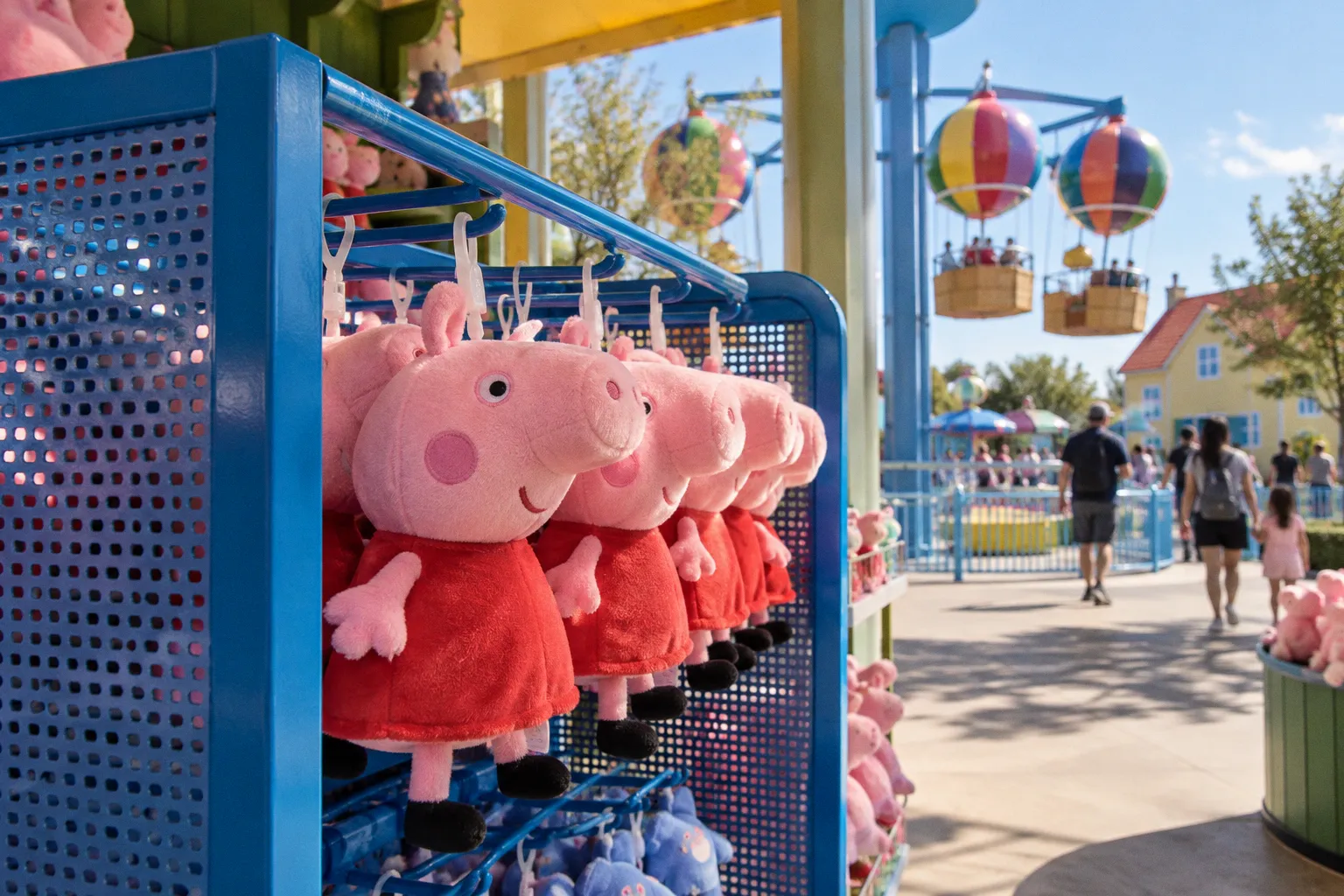
The park is compact in concept, but the day still requires sequencing. Families who treat admission as the entire plan will spend more time relocating, waiting, and managing fatigue than using the attractions.
Tickets and prices
Peppa Pig Theme Park Dallas-Fort Worth
I
Save
Box office and online booking
- Adult USD14.95
USD14.95
Official websiteII
entry ticket
Entry ticket · Available today and tomorrow
This ticket includes admission with access to rides, themed playscapes, and live shows.
USD30.16
Check availabilityThe park opened on March 1, 2025, at 8851 Boulevard 26 in North Richland Hills, Texas. It is a standalone outdoor theme park operated by Merlin Entertainments in partnership with Hasbro. It is not Peppa Pig World of Play inside Grapevine Mills Mall. Those are separate attractions with different operating formats.
The correct approach is to secure the date-specific admission first, then build the route around ride height requirements, water-play conditions, show times, meal breaks, and the child’s tolerance for transitions. Children aged 2 and over require admission. Children under 2 enter free.
Booking Peppa Pig Theme Park Dallas-Fort Worth tickets
The ticket process is date-led rather than based on an unrestricted general admission model. Select the intended visit date, review the available admission option, and confirm the number of guests in each age category. The booking interface is the controlling source for availability and the operating schedule attached to that date.
There is no need to treat a separate attraction reservation as an additional step. The relevant product is the date-specific park admission. Availability can change, particularly around weekends, school breaks, holidays, and periods of favorable weather. Tickets and tour variants are available online, but the exact options displayed depend on the selected day.
A practical booking sequence is:
1. Choose the date before planning the route.
The park’s operating hours and available admission products should be checked for the selected date. Do not rely on a generic schedule copied from another day.
2. Count every guest aged 2 or older.
The ticket threshold starts at age 2. A child who has recently reached the threshold must be included in the paid admission count.
3. Check the attraction conditions before purchase.
Exact height requirements for every ride are not consolidated in the available information. Confirm the current restrictions in the official booking and park materials before building the day around a particular ride.
4. Store the confirmation on the device used at entry.
Keep the booking email or mobile ticket accessible. Screenshots can be useful when connectivity is poor, but the original ticket terms remain controlling.
5. Review the weather and water-play plan.
Muddy Puddles Splash Pad is a water feature, not a passive viewing area. Pack clothing and footwear that can handle water, or accept that the attraction may be skipped.
The park also offers annual passes. These are relevant only when the expected number of visits justifies the fixed cost and the pass terms match the family’s schedule. A single planned visit should be evaluated against standard admission. Repeated local visits require a separate calculation that includes blackout dates, included benefits, and the cost of returning to North Richland Hills.
The efficient booking decision is not the cheapest ticket in isolation. It is the ticket that matches the correct date, guest count, operating window, and expected time inside the park.
Admission structure and the age threshold
Peppa Pig Theme Park Dallas-Fort Worth is designed for preschool children, but the admission rule is not limited to children who can use every ride. Guests aged 2 and over require admission. Adults accompanying young children therefore form part of the admission plan even when they are not the primary users of the attractions.
This matters because the park is not an indoor soft-play room where one adult can remain outside while a child circulates independently. Several attractions involve an accompanying adult or direct supervision. The ticket count should be prepared for the entire family group rather than calculated only from the number of children.
The available admission products may include standard entry and other booking variants. The online display is the current reference for the selected date. Ticket prices change, and a long-lived visitor article should not be treated as a price sheet. Use the booking widget or current ticket page for the amount charged at the time of purchase.
Annual passes can be considered when:
- the family lives within practical driving distance of North Richland Hills;
- the intended visit count is more than one within the validity period;
- the pass restrictions do not conflict with school holidays or preferred weekends;
- the family values repeat access to playscapes and water areas rather than a single concentrated day;
- the pass terms provide the required access for the adults who will normally accompany the child.
The operating model is different from a large regional theme park with dozens of attractions. A repeat visitor may use the park as a short-duration activity, particularly when the child has a preferred playscape or ride. That can make an annual pass more rational for local families than for visitors making a single trip from outside the Dallas-Fort Worth area.
Park operating hours and arrival control
The phrase “opening hours” should be treated as a date-specific field, not a permanent property of the park. Theme parks alter schedules for seasonal operations, maintenance, private events, weather, and demand. Check the hours attached to the intended admission date before travel.
The most useful time is not necessarily the first minute after the gates open. The useful time is the period when the child is rested, the temperature is manageable, and the family can complete the attractions that have the highest priority. For many families, an early arrival reduces the risk of spending the first part of the day in entry procedures and then reaching the first ride at peak demand. For others, a later arrival may be rational if the child’s sleep schedule makes an early start unstable.
The route should be based on three constraints:
- Ride priority. Identify the attraction the child is most likely to remember and place it early enough that a later fatigue event does not eliminate it.
- Heat and water exposure. Outdoor water areas have a different value in warm conditions than in cool or wet weather.
- Show timing. Live performances and character meet-and-greets operate on a schedule. They cannot be treated as continuously available attractions.
A basic arrival procedure is:
1. Confirm the date and operating hours on the morning of the visit.
2. Check the weather before leaving.
3. Place the admission ticket and any accessibility or sensory information on the lead adult’s phone.
4. Decide whether water play is a core activity or an optional stop.
5. Select one primary ride and one secondary attraction for the first operating period.
6. Leave capacity for a meal, restroom break, and unplanned pauses.
The park includes free on-site parking. Parking should therefore be treated as a logistics advantage rather than a separate admission expense. The exact walking distance from the parking area to the entrance can vary by space and crowd conditions, so a stroller or other mobility support may still be useful for the approach.
A route through the five primary rides
The five main rides are distributed across different themes and provide the clearest structure for a first visit:
| Attraction | Operating role in the route | Practical planning note |
|---|---|---|
| Daddy Pig’s Roller Coaster | The most obvious higher-intensity ride in the core lineup | Place it early if it is the child’s priority and confirm current height rules |
| Peppa Pig’s Balloon Ride | A slower aerial ride with a wheelchair-accessible basket and ramp | Suitable for direct roll-on access for guests using wheelchairs |
| Grandad Dog’s Pirate Boat Ride | A themed boat attraction | Allow for queueing and boarding time rather than treating it as a quick walk-through |
| Grampy Rabbit’s Dinosaur Adventure | A dinosaur-themed ride | Use as a transition attraction between larger play areas |
| Mr. Bull’s High Striker | A compact themed ride in the main attraction set | Check current participation and height conditions before arrival |
The list above is not a guaranteed operating sequence. Ride availability can change during the day because of maintenance, weather, staffing, or safety procedures. A route should therefore remain modular.
First operating block
Use the first block of the day for the highest-priority ride. If the child has no clear preference, start with Daddy Pig’s Roller Coaster or another attraction with a likely queue. The objective is not to collect rides in a fixed order. The objective is to remove the attraction most likely to generate disappointment if it is left until late afternoon.
Do not assume that a preschool child who meets a height threshold will want to ride. The ride list includes different motion profiles. A child may accept an aerial ride and reject a coaster, or prefer a boat ride to both. The adult’s role is to manage the sequence without converting the visit into a forced completion exercise.
Peppa Pig’s Balloon Ride has a specific accessibility feature: the wheelchair-accessible basket includes a ramp that allows a guest using a wheelchair to roll directly onto the ride vehicle. This is a physical access provision, not a general statement that every attraction has identical boarding conditions. Families requiring access support should review the current attraction-by-attraction guidance.
Second operating block
After one or two rides, move to a playscape rather than immediately joining another queue. The park contains nine themed playscapes, including Peppa’s Treehouse, George’s Fort, Rebecca Rabbit’s Playground, and the Muddy Puddles Splash Pad. These areas change the physical demand on the child and can make the day more stable than a continuous ride sequence.
A useful order is:
1. one priority ride;
2. one lower-intensity ride;
3. a playscape or water area;
4. food, hydration, and rest;
5. live entertainment or a character interaction;
6. the remaining rides according to energy and queue conditions.
This order is deliberately non-linear. A small child’s usable capacity is not equivalent to the adult’s available time. The park should be treated as a system with recovery periods.
Playscapes, water areas, and live entertainment
The nine themed playscapes are not filler between rides. For a preschool-focused park, they are a major part of the operating capacity. A child may spend more sustained time in a familiar play structure than on a ride with a short cycle. The practical mistake is to schedule every minute around the five rides and treat the play areas as unplanned overflow.
Peppa’s Treehouse and George’s Fort provide themed activity zones. Rebecca Rabbit’s Playground adds another play destination. The Muddy Puddles Splash Pad introduces water exposure and should be planned with clothing, towels, footwear, and a change of clothes.
Water play creates a hard transition. Once a child is wet, the family either continues with wet clothing, changes before entering other activities, or abandons the water area. The route should account for this rather than placing the splash pad between two time-sensitive reservations or shows.
Use the water area when:
- the weather supports it;
- the child has suitable clothing;
- the family can carry or access a dry change of clothes;
- there is enough remaining time for the child to play without rushing immediately to another attraction.
Avoid making water play the final unplanned stop if the family still needs a dry ride, meal, or departure transfer. The attraction can consume more time than its physical footprint suggests because changing clothes and drying equipment become part of the sequence.
Live entertainment takes place at Mr. Potato’s Showtime Arena, with performances and character meet-and-greets. These events are schedule-controlled. Check the day’s entertainment times on arrival and select one or two events that fit the route. Attempting to attend every show can create unnecessary cross-park movement, especially when a child has already reached the fatigue threshold.
Meet-and-greet planning also requires tolerance for waiting. The value is highest when the child actively wants the interaction. If the child is hungry, overheated, or already distressed, a character queue is a poor use of remaining capacity. The correct decision is operational, not sentimental.
At a preschool park, the playscape is not the gap between attractions. It is one of the attractions that determines whether the rest of the route remains usable.
Accessibility and Certified Autism Center provisions
Peppa Pig Theme Park Dallas-Fort Worth is designated as a Certified Autism Center. This signals that the park has established sensory and inclusion procedures, but it does not remove the need for family-specific planning. Certification should be used as an entry point to the available support information, not as a guarantee that every sound, crowd, queue, or transition will be suitable for every guest.
Families should review the park’s current sensory guide and accessibility information before arrival. Useful planning points include:
- the location of quieter areas or lower-stimulation spaces;
- how queues are managed;
- the procedure for requesting attraction assistance;
- the availability of visual planning materials;
- sensory conditions around live shows and character interactions;
- restroom and changing facilities;
- the process for handling a child who needs to leave a queue.
The park’s accessibility features are attraction-specific. Peppa Pig’s Balloon Ride has a wheelchair-accessible basket and ramp for direct roll-on access. Other rides may use different boarding layouts or impose separate physical requirements. Do not generalize the balloon ride’s boarding method to the entire attraction set.
For a child with sensory or mobility requirements, reduce the number of fixed commitments. Select one ride, one play area, and one show as the core route. Treat the remaining attractions as optional capacity. This creates a usable plan when a queue, sound level, or transition exceeds the child’s tolerance.
Adults should also identify the point at which the visit stops producing value. A park day does not improve by extending it after the child has lost the ability to transition safely between activities. A controlled departure is part of the route plan.
Practical equipment and family logistics
The park is outdoors, and the equipment requirement follows from that fact. The exact load carried will depend on the child’s age, weather, and water-play plan, but the following items have direct operational value:
- refillable water bottles;
- sun protection suitable for the season;
- a change of clothes for any child using the splash pad;
- a lightweight towel or drying layer;
- closed footwear suitable for walking and play;
- stroller or mobility support if the child cannot sustain the full walking distance;
- the day’s admission confirmation;
- sensory or accessibility documentation required by the family;
- medication and comfort equipment that cannot be replaced easily inside the park.
Free parking reduces one cost and simplifies arrival, but it does not eliminate the walking and transfer problem. A child may manage the park’s rides and still fail during the return to the vehicle. Keep the departure route in reserve when deciding how much activity to schedule late in the day.
Food timing should be set before the child reaches the point of refusal. A meal break after several rides and a play area is more efficient than an emergency search for food during a queue transition. Hydration is especially relevant when the route includes outdoor waiting, climbing, and water play.
Do not build a schedule with no buffer. A five-ride park can still produce delays through boarding, accessibility assistance, show timing, restroom use, and child-led play. The route must absorb those variables.
A controlled one-day plan
A first visit can be organized as follows:
Arrival and orientation
Enter after confirming the current operating hours and reviewing the day’s show schedule. Identify the nearest restrooms, food locations, major playscapes, and the position of Mr. Potato’s Showtime Arena. Do not begin by crossing the entire park without a priority.
Priority attraction
Complete Daddy Pig’s Roller Coaster, Peppa Pig’s Balloon Ride, Grandad Dog’s Pirate Boat Ride, Grampy Rabbit’s Dinosaur Adventure, or Mr. Bull’s High Striker according to the child’s preference and the live queue. Confirm height and access conditions before committing.
Play interval
Use one of the nine themed playscapes to reduce the concentration of queueing. Select the splash pad only if the family has planned the clothing and drying transition.
Food and recovery
Schedule food before fatigue becomes a constraint. This is also the correct point to reassess the remaining route. If the child is stable, continue to another ride or show. If not, keep the afternoon uncommitted.
Entertainment
Attend a performance or meet-and-greet at Mr. Potato’s Showtime Arena if the timing fits. Do not cross the park repeatedly to preserve a schedule that no longer matches the child’s condition.
Final attraction and departure
Use the final operating period for a nearby ride, play area, or repeat favorite. Keep the departure uncomplicated. The last activity should not be placed so far from the exit that the family adds an avoidable transfer at the end of the day.
Final recommendation
Book Peppa Pig Theme Park Dallas-Fort Worth admission against the exact visit date, count every guest aged 2 and over, and verify the date-specific operating hours before travel. Treat the park as a route-management problem: five primary rides, nine playscapes, water exposure, scheduled entertainment, and a preschool audience with limited reserve capacity.
For a first visit, prioritize one ride, one play area, one meal interval, and one live entertainment block. Add the remaining attractions only when the child’s energy, queue conditions, weather, and access requirements allow it. Use the Certified Autism Center resources before arrival, and treat attraction accessibility as a ride-by-ride question rather than a park-wide assumption.
The rule is direct. Secure the correct date, remove the highest-priority ride early, use playscapes as planned recovery zones, and preserve enough capacity for the return to the vehicle. That produces a controlled visit. A fixed attempt to complete every attraction does not.