Optimizing Retail Wire Fixtures: A Guide to Durable Shelving and Display Components
According to a new manufacturing overview from Fhope Machinery, the supply chain behind those unsung components is getting a technical reset — and the question for those of us running the floor is…
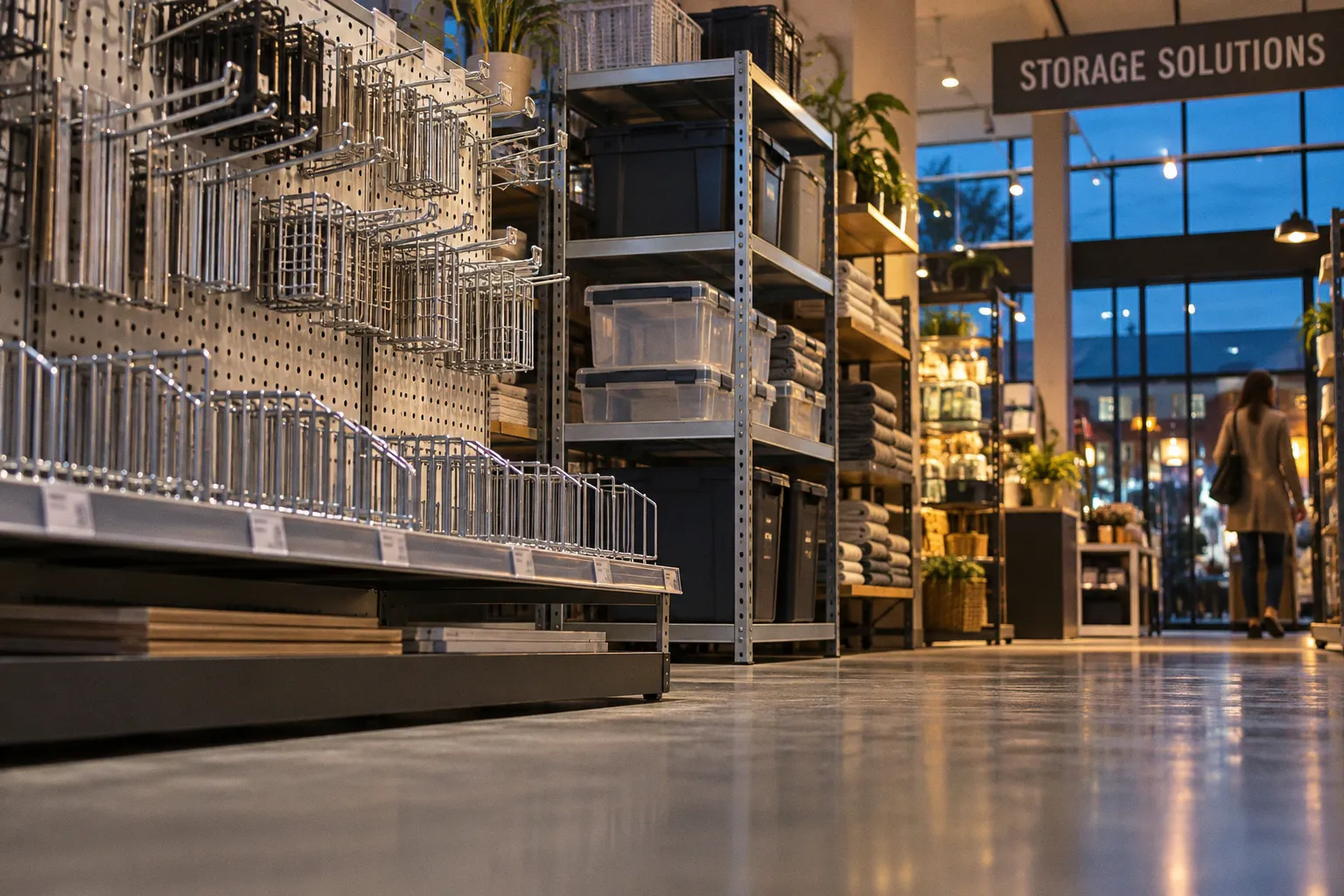
Walk into any high-turnover grocery aisle and the wire fixtures quietly carry the store: pegboard hooks holding thousands of bagged snacks at eye level, shelf dividers keeping pasta rows from cascading into a free-for-all, heavy-duty grid panels absorbing the Saturday-morning cart crush. According to a new manufacturing overview from Fhope Machinery, the supply chain behind those unsung components is getting a technical reset — and the question for those of us running the floor is how that reset translates into tighter dwell time, cleaner sightlines, and fewer damaged-goods write-offs by quarter's end.
What's Actually Changing on the Factory Floor
The overview walks through automated and semi-automated fabrication methods for wire retail fixtures — pegboard hooks, shelf dividers, heavy-duty grid panels — with quality-control benchmarks built around two pain points every store manager recognizes: weld integrity and finish durability. If a hook pops loose under a customer's yank, you've got a safety claim waiting to happen. If the powder coat flakes off after one season of cart bumps, your endcap looks like a clearance aisle before the holidays ever arrive.
Here's the if-then test to run before the next sourcing call. If the spec sheet doesn't carry a documented weld-testing protocol, walk away. If the salt-spray rating isn't tied to a real-world scrub-and-spray cycle, negotiate it in. And if you can't see how the finish holds up against scuffing from shopping cart wheels, plan on a reorder six months earlier than your budget wanted — because that's exactly when planogram resets expose the weak points.
The European Squeeze Is Reaching U.S. Importers
You don't need a single storefront in Berlin to feel the compliance pressure spelled out in Sunlight Display's sourcing guidelines for European retailers. EN 15512 for shelving steel and EN 15635 for retail racking are quickly becoming baseline specs on export-grade production runs, and REACH-compliant powder coatings are moving in the same arc. If your wire fixtures come off the same lines that supply EU grocery chains, you can request those standards alongside the order — essentially free engineering upgrades on the volume you're already shipping.
The liability math alone justifies the conversation. Wider base uprights and anti-tip anchoring are precisely the stability details that prevent aisle accidents under peak Saturday traffic — the exact kind of incident that escalates into a regional news cycle and a six-month insurance review. When a fixture fails in a public aisle, the rebuild cost isn't the rack; it's the perimeter, the documentation, and the weekend overtime.
The Price-per-Pound Anchor in Your Customer's Head
A four-tier Walmart storage shelf recently landed at $40 with a 400-pound load rating, per coverage on TheStreet. That pencils out to roughly a dime per pound of rated capacity, and while residential specs don't translate directly to commercial-grade fixtures, the benchmark matters for one reason: it tells us where the customer's mental model of "good value" sits by the time they walk through our doors. If a shopper can buy a sturdy wire shelf for forty dollars at home, the threshold for what looks engineered versus improvised in our aisle has shifted up — and our merchandising has to keep pace.
Run your next wire-fixture order against four floor checkpoints: a documented weld test on the spec sheet, a scratch-resistance rating tied to actual cart traffic, EN-standard compliance if you're sourcing through European production, and a visible load rating the shopper can spot when they reach for a product. Nail all four and the post-reset damage reports get noticeably shorter — which is the only KPI that matters when you're closing the books.