How Premium Retailers Are Redefining Store Layouts and Display Strategy
According to China Daily Global Edition, Swire Properties sees exactly this kind of foot traffic as the new competitive currency in China's premium retail market — and their numbers back it up.
When the Floor Plan Becomes the Brand Strategy
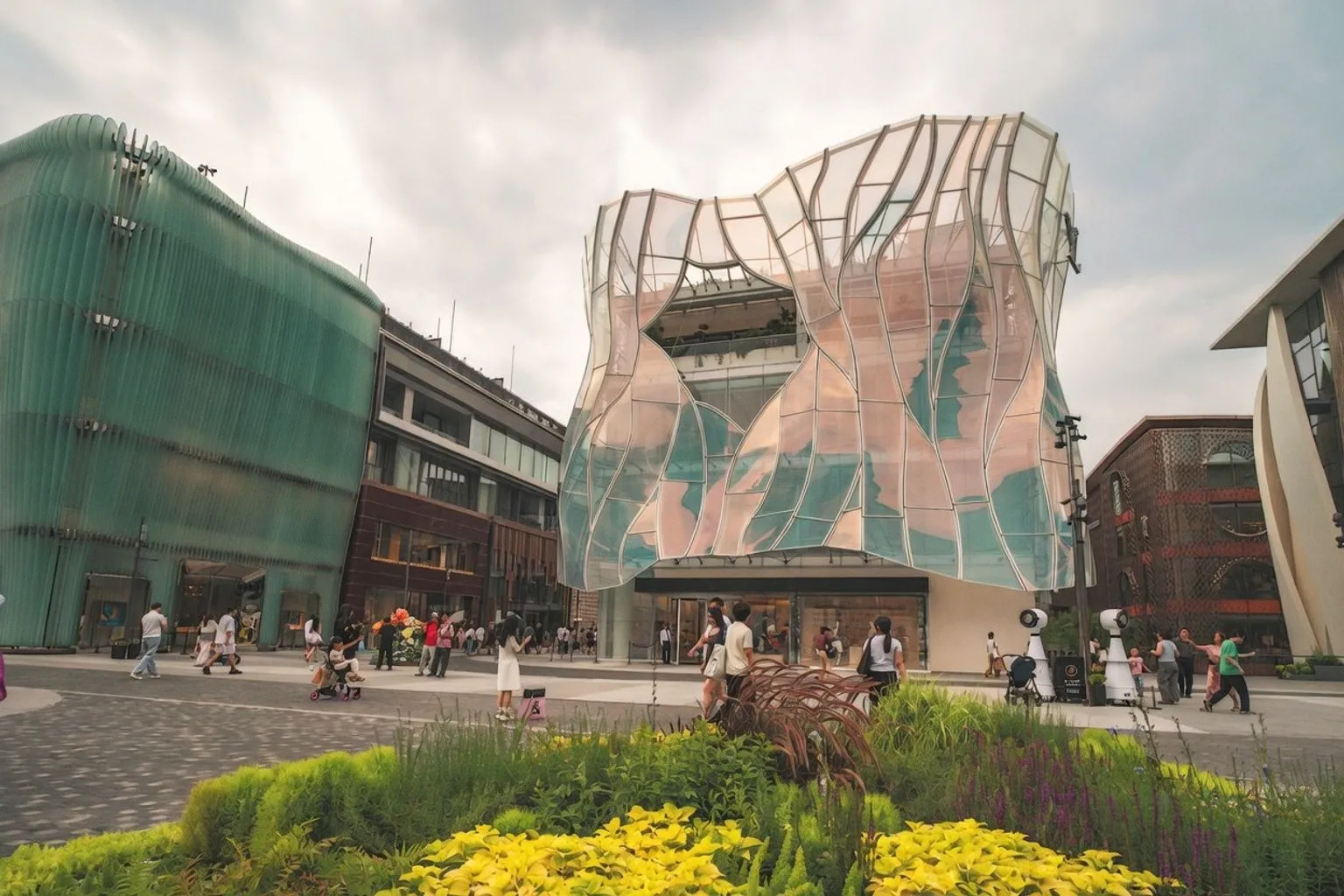
Walk into Taikoo Li Sanlitun on any given afternoon and you'll see something that planograms alone can't explain: young consumers queuing outside Pop Mart, street-style photographers working the lanes, international visitors lingering over Chinese designer labels. According to China Daily Global Edition, Swire Properties sees exactly this kind of foot traffic as the new competitive currency in China's premium retail market — and their numbers back it up. Beijing's Taikoo Li Sanlitun posted a 63 percent jump in retail sales after a major repositioning anchored by Hermès' global flagship, while HKRI Taikoo Hui surged 82 percent on the back of Louis Vuitton's "The Louis" concept and a Rolex Prestige store. If you're specifying display systems or reworking a floor layout right now, these aren't abstract market signals — they're direct instruction on where premium merchandising is headed.
From Square Footage to Story Footprint
The core shift is straightforward: leading Chinese mall operators are competing on brand mix, cultural experiences, and destination appeal rather than sheer retail square meters. Swire Properties has committed HK$50 billion ($6.38 billion) to its Chinese mainland pipeline with seven projects in development, and its mainland retail rental income climbed 13 percent in the first half to HK$2.57 billion. China Resources Land's shopping mall arm reported revenue of 12.44 billion yuan ($1.85 billion), up 19.4 percent year-on-year, while its self-owned malls generated 128.19 billion yuan in retail sales — a 16.4 percent increase that comfortably outpaced overall consumer retail growth in the country.
What does that mean at the fixture level? Luxury remained the strongest driver, with sales rising 13.1 percent year-on-year and accounting for 37 percent of total mall sales. Hang Lung Properties' Plaza 66 in Shanghai saw tenant sales climb 24 percent while holding 98 percent occupancy. When every square meter carries that kind of weight, the display rack isn't just holding product — it's performing. Endcap design, sightline engineering, and dwell-time optimization become revenue levers, not afterthoughts. The brands winning inside these malls are the ones demanding fixtures that let them tell a story at eye level and below, not just push SKU density.
What This Means for Your Next Rack Specification
If you're planning a premium retail rollout or retrofit, here's the checklist worth walking through this quarter:
- Rethink dead zones. Swire Properties' repositioning success at Sanlitun shows that even underperforming zones can become destination areas with the right spatial intervention. Before you lock a planogram, map customer dwell time against sightline gaps — the fix is often a display reconfiguration, not a tenant swap.
- Design for narrative, not just adjacency. Louis Vuitton's "The Louis" concept and the Rolex Prestige store both work because their display environments support a brand story across multiple touchpoints. Modular rack systems that allow branded backdrops, lighting integration, and flexible height tiers are moving from nice-to-have to baseline spec.
- Plan for near-full occupancy economics. With Taikoo Li Chengdu, Taikoo Li Qiantan, and Plaza 66 all running at or near full occupancy while posting double-digit growth, retailers and landlords alike have less tolerance for display systems that don't convert. Every fixture should justify its footprint with measurable sales lift — track conversion by zone, not just by store.
- Watch the luxury-to-lifestyle crossover. Hang Lung Properties is actively broadening its tenant mix to include lifestyle and Chinese designer brands alongside traditional luxury. Your rack specifications need the same versatility: a single display module should accommodate heritage leather goods one season and a contemporary streetwear drop the next without a full rebuild.
The optical retail segment is also reportedly poised for significant growth — projections suggest the global optical retail chain market could reach USD 185.95 billion by 2031, driven by premium eyewear and omnichannel integration. That's another category where the physical display does the heavy lifting for perceived value.
The takeaway for anyone specifying commercial display systems right now: the premium retail market isn't just growing, it's reorganizing around experience-first spatial logic. The rack, the shelf, the endcap — they're not infrastructure anymore. They're the brand's opening argument. Make sure yours is built to win it.