Scaling Retail Success: How Brand Expansion Drives Demand for Flexible Display Systems
Per Kalkine coverage, Universal Store Holdings (ASX:UNI) is reportedly building fresh retail momentum through brand expansion and margin growth.
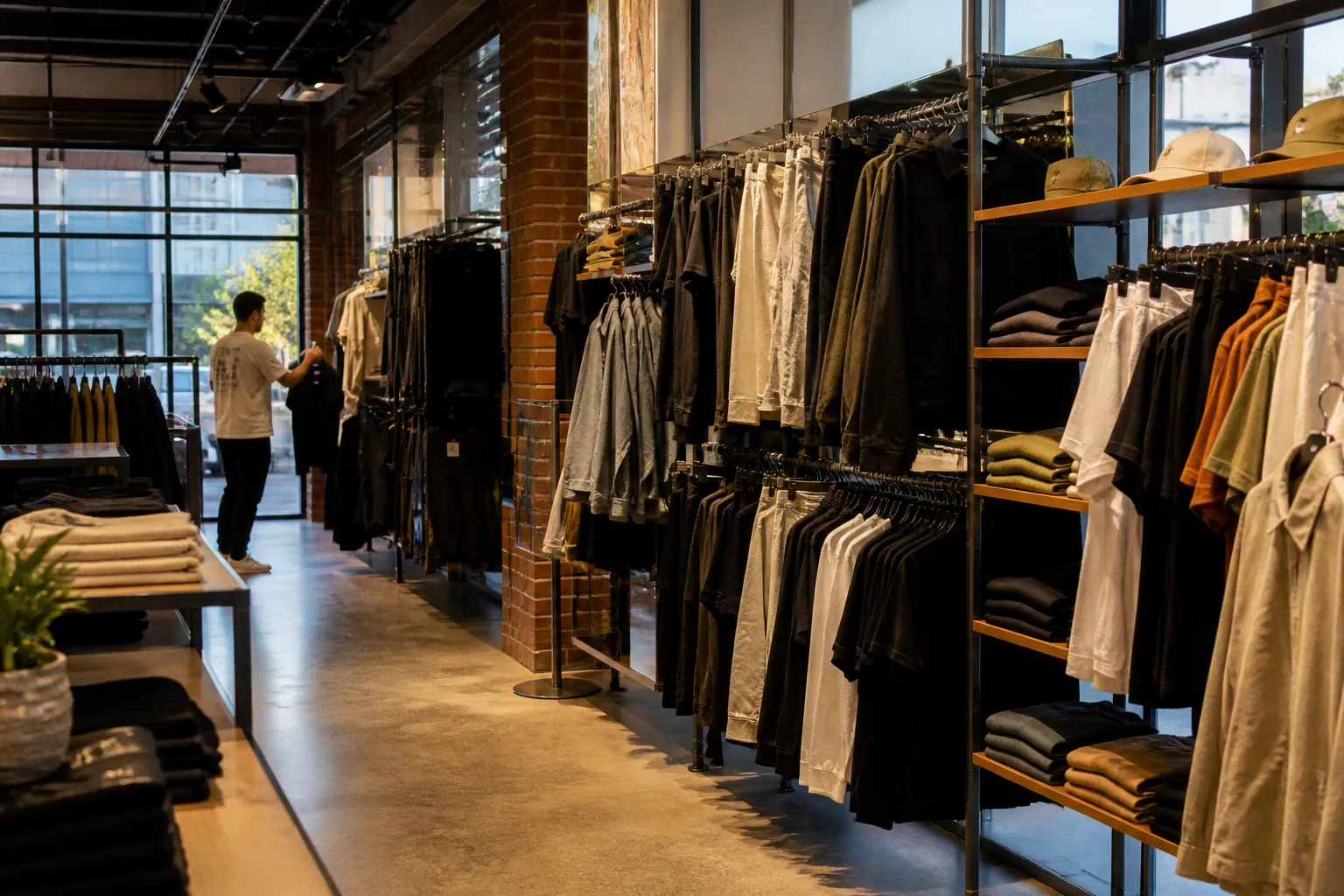
For anyone running a multi-brand floor, that's a signal worth reading twice — because brand mix and margin discipline are exactly where store layout earns or loses its keep.
What the headline is really telling us about the floor
The story, as Kalkine frames it, is less about a single blockbuster announcement and more about the compounding effect of rolling out more brands across more doors while protecting gross margin. In our world, that translates directly into a merchandising puzzle: how do you give each label its own sightline, its own endcap moment, and its own planogram rhythm — without blowing up your SKU density or starving your core range of dwell time?
A growing multi-brand chain is, quietly, one of the best demand signals for adjustable display hardware. Think slatwall with universal brackets, four-way garment racks, and cross-merchandising tables that can be re-zoned overnight. When a retailer is adding brand count, they're almost always pushing SKU count per square metre higher — which means your sightline planning needs to work harder, not just wider.
Where this connects to your fixture brief
If you're a fixture supplier, a merchandising service provider, or a small-format operator benchmarking against ASX-listed peers, here's how we'd translate the reported momentum into actionable questions:
- New store productivity per square metre. That's the real KPI any fixture investment has to answer to. Does the chain open flagship-size boxes, or seed compact formats first?
- Brand mix shifts inside existing doors. When you add a label, do you test it in the highest-traffic sightline, or tuck it into a back wall and let it earn its way forward? Your back-of-house replenishment flow has to support whichever answer they pick.
- Margin per brand tier. Premium fixtures on a value label — or budget racks under a premium drop — both bleed conversion. The reported margin improvement only sticks if the store-level execution keeps up.
Three checkpoints before your next fixture order
1. Can this rack system be re-merchandised between brand drops without a full refit? If not, it's the wrong system for a chain in expansion mode.
2. Do your endcaps rotate on a known cadence? Dead endcaps in a multi-brand store are the fastest way to flatten dwell time.
3. Are your fitting rooms close enough to the impulse-buy zone? That's where margin either compounds or leaks.
Brand expansion is, fundamentally, a spatial discipline problem before it's a marketing one. Get the sightlines right, get the endcaps rotating, get the fixtures flexible — and the margin story tends to follow.