Scaling Dark Store Infrastructure for India’s Rapid E-commerce Expansion
According to ET Retail, India's e-commerce market is on track to nearly triple to USD 345 billion by 2030 — and the country's dark-store footprint is set to triple right alongside it.
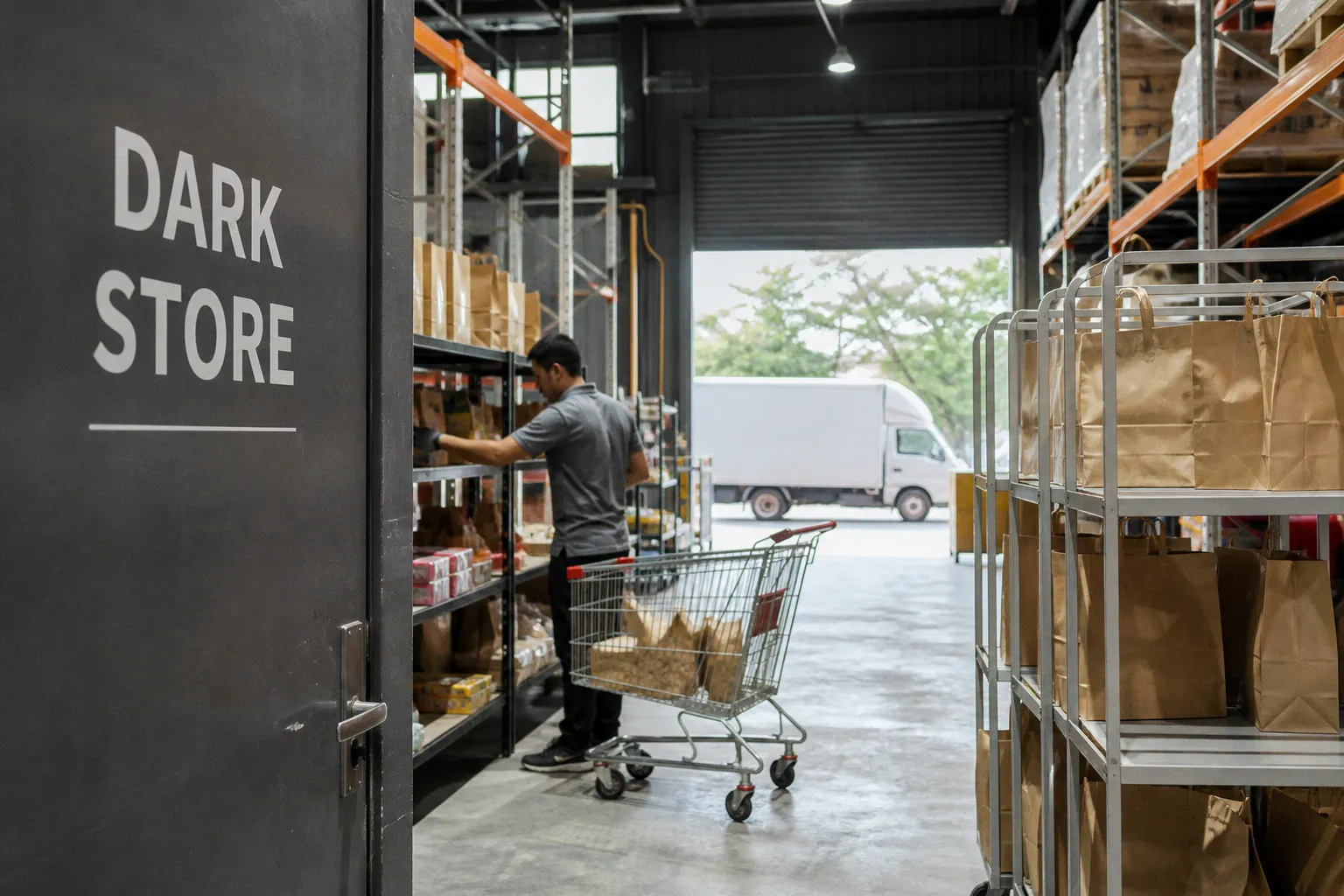
India's e-commerce market to hit USD 345 bn by 2030; dark stores to triple
For anyone sourcing commercial shelving, garment racks, or micro-fulfillment layouts, that isn't a forecast to file away. It's a procurement signal, and your next RFQ probably needs to be rewritten.
Read the dark-store math
Dark stores tripling inside this compressed window means the picker-and-fulfillment footprint expands threefold faster than the front-of-house retail square footage most store planners are still budgeting for. Quick commerce is flagged as the fastest-growing segment of that USD 345 bn pie, and it runs on SKU density and click-to-door windows measured in minutes. That moves the racking spec away from "store-grade" and toward "light-industrial" without giving up agility — cantilever rows for hanging apparel and folded-garment bins, structural mezzanines overhead to recover costly vertical real estate, and pick-faces set at picker chest height so dwell time collapses on every single order.
The Gen Z racking test
With Gen Z positioned to become the largest digital spending group, the dark store is also quietly turning into the data store. Eye-level is no longer just where premium SKUs live on a planogram — it's the row where an AI-assisted substitution decision lands when an item goes out of stock. Your merchandising grid now has to read clean for overhead cameras as much as for human pickers: color-blocked SKUs, one consistent hanger spec across the floor, and geometry a vision system can lock onto quickly. This is the new shelf reality, even when there isn't a single customer walking the aisle.
What to pressure-test on the next RFQ
Before you greenlight the next facility, push three things onto the vendor's table: racking load class (you're stacking denser as inventory pools shift closer to demand nodes), modularity (vertical Indian real estate means mezzanine-friendly systems pay back inside a single lease cycle), and WMS-friendly slotting — rack labels and identifiers that map cleanly onto your software stack. ET Retail's reporting points to AI lifting retail productivity, so if a vendor can't walk you through a quick-commerce case study with measurable pick rates, they're selling you yesterday's grid.
Quick floor checklist before you sign the PO:
- Cantilever rows wide enough for garment bags, not just shipping cartons
- Pick-face height calibrated to the picker, not the browsing customer
- Slot labels readable to both handheld scanners and overhead vision
- Mezzanine clearance planned against next year's SKU growth, not today's planogram